The Cold War (1945–1991) was a sustained geopolitical, ideological, military and economic rivalry between the United States and its allies and the Soviet Union and its satellites.
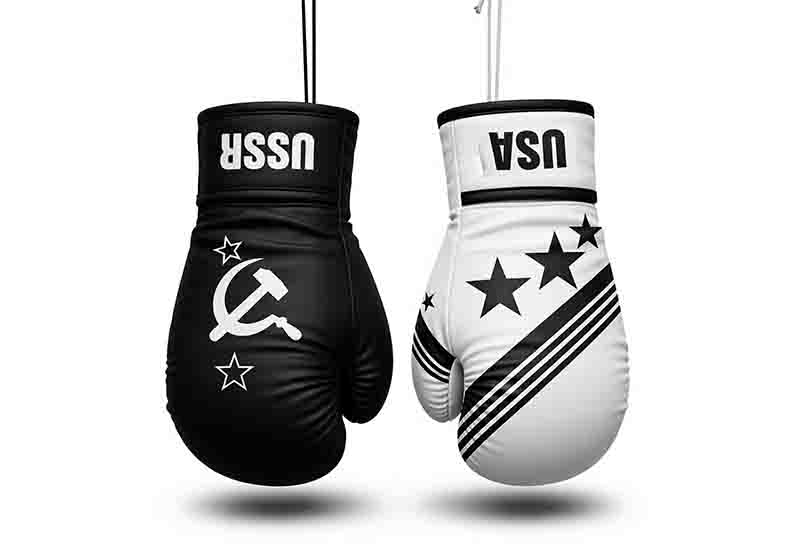
The Cold War was marked by nuclear deterrence, proxy conflicts, alliance politics, espionage, technological competition, and competing models of political economy, shaping global institutions, regional wars, and political culture without direct large-scale warfare between the two superpowers.
At soviet-union.com, we examine the Cold War through comprehensive analysis, primary sources, and multiple perspectives, including the often, underrepresented Soviet viewpoint. This pillar page connects you to detailed articles on every major aspect of the conflict that defined the twentieth century.
Origins: How the Cold War Began
The Cold War's roots lay in the uneasy wartime alliance between the Soviet Union and Western powers. Despite fighting together against Nazi Germany, fundamental ideological and geopolitical differences created inevitable conflict once that common enemy was defeated.
From Allies to Adversaries
The wartime partnership began deteriorating even before Germany's surrender. At the Yalta Conference in February 1945, Stalin, Roosevelt, and Churchill agreed on postwar occupation zones but clashed over Poland's future. By the Potsdam Conference in July 1945, Truman had replaced Roosevelt and Attlee had replaced Churchill, while Soviet forces occupied Eastern Europe.
The American atomic bomb, tested successfully as Truman arrived at Potsdam, fundamentally altered the balance of power. When the United States dropped atomic bombs on Hiroshima and Nagasaki in August 1945, Stalin accelerated Soviet nuclear development, convinced that American monopoly threatened Soviet security.
The Containment Strategy
In February 1946, American diplomat George F. Kennan sent his famous "Long Telegram" from Moscow, arguing that Soviet expansionism was driven by ideological necessity and Russian historical insecurity. His solution, containment, called for resisting Soviet influence without resorting to general war.
Winston Churchill's Iron Curtain speech in March 1946, delivered in Fulton, Missouri with Truman at his side, declared that "from Stettin in the Baltic to Trieste in the Adriatic, an iron curtain has descended across the continent." This marked the Western powers' refusal to accommodate further Soviet expansion.
Causes: Why the US and USSR Became Enemies
The Cold War emerged from the convergence of incompatible economic systems, competing security interests, and revolutionary technologies that made direct war unthinkable yet constant competition inevitable.
Ideological Incompatibility
The conflict was fundamentally a clash between capitalism and communism, two incompatible visions of modernity:
| United States | Soviet Union |
|---|---|
| Private property and free markets | State ownership of production |
| Multi-party democracy | Single-party communist rule |
| Individual rights and religious freedom | Collective good over individual liberty |
| Open international trade | Autarkic economic blocs |
The Truman Doctrine and Marshall Plan
The Truman Doctrine, announced in March 1947, committed the United States to "support free peoples who are resisting attempted subjugation by armed minorities or by outside pressures." This doctrine transformed containment from theory into practice, beginning with $400 million in aid to Greece and Turkey.
Three months later, Secretary of State George C. Marshall announced the Marshall Plan, $13 billion (approximately $150 billion in 2024 dollars) to rebuild Western European economies. The plan required recipient nations to open markets to American trade and reject communist control. The Soviet Union refused participation and prevented Eastern European satellites from accepting aid, deepening Europe's division.
The Iron Curtain Descends
Winston Churchill's metaphor became literal reality as Europe split into two armed camps, separated by borders that claimed hundreds of lives and separated millions of families.
The Division of Germany
Germany became the Cold War's central battlefield. The 1945 Potsdam Agreement divided the country into four occupation zones, with Berlin, 110 miles inside the Soviet zone, similarly divided. This geographic absurdity made Berlin a permanent flashpoint.
In June 1948, Soviet authorities blockaded all land access to West Berlin, attempting to force Western powers to abandon the city. The Berlin Airlift (June 1948–May 1949) defeated this strategy: American and British aircraft delivered 2.3 million tons of supplies, landing every 90 seconds at peak operations.
The Berlin Wall
By 1961, 3.5 million East Germans, 20% of the population, had fled to the West through Berlin. On the night of August 12-13, 1961, East German authorities sealed the border and began constructing the Berlin Wall.
The Wall evolved from barbed wire to a complex system of concrete barriers, watchtowers, anti-vehicle trenches, and a "death strip." Between 1961 and 1989, at least 140 people were killed attempting to cross. Its fall on November 9, 1989, marked the Cold War's effective end.
Military Alliances: NATO vs. Warsaw Pact
The North Atlantic Treaty Organization (NATO), signed April 4, 1949, committed the United States, Canada, and ten Western European nations to mutual defense. Article 5 declared that an attack on one member would be considered an attack on all.
The Soviet response came six years later. The Warsaw Pact (May 1955) united the Soviet Union and its Eastern European satellites in a military alliance that served primarily to legitimize Soviet military intervention in member states, a function demonstrated in Hungary (1956) and Czechoslovakia (1968).
Major Cold War Crises
The Cold War remained "cold" because nuclear weapons made direct superpower war suicidal. But this very terror produced repeated crises that brought the world to the brink.
The Cuban Missile Crisis (October 1962)
The Cold War's most dangerous moment began when American U-2 reconnaissance photographs revealed Soviet medium-range ballistic missiles under construction in Cuba, 90 miles from Florida. For thirteen days (October 16-28, 1962), the world stood at nuclear precipice.
President Kennedy's ExComm debated options: air strikes, invasion, or naval blockade. Kennedy chose the blockade, combined with secret negotiations. On October 27, "Black Saturday", a Soviet surface-to-air missile shot down Major Rudolf Anderson's U-2 over Cuba. Nuclear war seemed imminent.
The resolution came through back-channel diplomacy. Kennedy secretly agreed to remove American Jupiter missiles from Turkey and promised not to invade Cuba. Khrushchev publicly withdrew the missiles. The crisis demonstrated that nuclear superpowers could not risk direct confrontation.
Other Flashpoints
Hungarian Revolution (1956): Soviet tanks crushed reformers' attempt to leave the Warsaw Pact; the West offered only rhetorical support
Prague Spring (1968): The Brezhnev Doctrine justified invading Czechoslovakia to prevent "Socialism with a human face"
U-2 Incident (1960): Francis Gary Powers' shootdown destroyed the Paris summit
Suez Crisis (1956): Anglo-French-Israeli invasion coincided with Hungarian Revolution
Proxy Wars Around the Globe
Superpower competition killed millions in conflicts where Americans and Soviets armed, trained, and directed local forces without engaging each other directly.
Korean War
1950-1953
First proxy war. 36,000 Americans; 2 million civilians dead. Korea remains divided.
Vietnam War
1955-1975
Containment's tragic overextension. 58,000 Americans; 1-3 million Vietnamese dead.
Soviet-Afghan War
1979-1989
The USSR's Vietnam. Led to Taliban rise and unintended consequences.
Other Major Conflicts
| Conflict | Duration | Death Toll |
|---|---|---|
| Chinese Civil War | 1945-1949 | 6 million |
| Greek Civil War | 1946-1949 | 158,000 |
| Angolan Civil War | 1975-2002 | 500,000+ |
| Nicaraguan Contra War | 1981-1990 | 30,000+ |
The Nuclear Arms Race
The Cold War's defining feature was the simultaneous development of weapons capable of ending civilization and the elaborate strategies developed to prevent their use.
Peak Nuclear Stockpile (1986)
70,300 warheads
Combined US and Soviet arsenals—sufficient to destroy human civilization multiple times over.From Monopoly to Parity (1945-1969)
The American atomic monopoly lasted exactly 1,420 days. The Soviet atomic bomb (August 29, 1949), tested years ahead of CIA predictions, ended unipolar nuclear power. The hydrogen bomb, 1,000 times more powerful than Hiroshima, followed: American test (1952), Soviet (1953).
By 1969, the Soviet Union achieved strategic parity, rough equality in deliverable warheads.
Mutually Assured Destruction
The MAD doctrine rested on terrifying logic: any nuclear attack would trigger annihilating retaliation. This required constant preparation for war, nuclear triads (bombers, ICBMs, submarines), early warning systems, and hair-trigger alerts.
The Space Race
The Cold War extended beyond Earth's atmosphere as superpowers competed to demonstrate technological, and ideological, superiority.
Soviet Achievements
- Sputnik 1 (Oct 4, 1957) - First satellite
- Yuri Gagarin (Apr 12, 1961) - First human in space
- Valentina Tereshkova (1963) - First woman in space
American Response
- Apollo 11 (Jul 20, 1969) - First moon landing
- Neil Armstrong - "One small step"
- President Kennedy's challenge fulfilled
The End of the Cold War
The Soviet system's collapse, economic, ideological, and imperial—ended the bipolar world order with stunning speed between 1985 and 1991.
Gorbachev's Revolution
Mikhail Gorbachev, General Secretary from March 1985, recognized that Soviet military spending (25% of GDP) and economic stagnation threatened systemic collapse. His reforms, perestroika (economic restructuring) and glasnost (openness), aimed to revitalize socialism.
"New Thinking" in foreign policy accepted mutual security. The INF Treaty (December 1987) eliminated an entire weapons class. Withdrawal from Afghanistan (February 1989) ended the bleeding ulcer of Soviet imperialism.
The 1989 Revolutions
Gorbachev's refusal to use force, abandoning the Brezhnev Doctrine, permitted peaceful revolution:
- Poland (June 1989): Solidarity comes to power
- Hungary (Sept 1989): Border opening triggers East German exodus
- Berlin Wall (Nov 9, 1989): The fall
- Czechoslovakia (1989): Velvet Revolution
Soviet Collapse (1991)
The August Coup (1991), hardline Communists' failed attempt to remove Gorbachev, destroyed the Communist Party's authority. Boris Yeltsin, standing on a tank outside the Russian White House, became the decisive power.
The Belavezha Accords (December 8, 1991) declared the Soviet Union dissolved. Gorbachev resigned December 25; the Soviet flag lowered from the Kremlin.
Cold War Timeline
| Year | Key Events |
|---|---|
| 1945 | Yalta Conference (Feb); Germany surrenders (May); Potsdam Conference (July); Atomic bombs on Japan (Aug); UN established (Oct) |
| 1946 | Churchill's Iron Curtain speech (Mar); George Kennan's Long Telegram (Feb) |
| 1947 | Truman Doctrine (Mar); Marshall Plan announced (Jun); CIA established (Sep) |
| 1948 | Berlin Blockade begins (Jun); NATO founded (Apr); Airlift ends (May 1949) |
| 1949 | NATO established (Apr); Soviet atomic bomb (Aug); Chinese Communist victory (Oct); Two German states created |
| 1950-53 | Korean War |
| 1956 | Hungarian Revolution (Oct-Nov); Suez Crisis |
| 1961 | Bay of Pigs invasion (Apr); Berlin Wall built (Aug) |
| 1962 | Cuban Missile Crisis (Oct) |
| 1968 | Prague Spring (Jan-Aug); Tet Offensive (Jan-Mar) |
| 1975 | Helsinki Accords (Aug); Vietnam War ends (Apr) |
| 1979 | Soviet invasion of Afghanistan (Dec) |
| 1987 | INF Treaty signed(Dec) |
| 1989 | Fall of Berlin Wall (Nov 9); Revolutions across Eastern Europe |
| 1991 | August Coup (Aug); Soviet Union dissolves (Dec 26) |
12 Key Facts About the Cold War
Duration: The Cold War lasted 46 years, from 1945 to 1991.
Death Toll: Despite being "cold," proxy wars killed an estimated 11-12 million people worldwide.
Nuclear Peak: In 1986, the US and USSR possessed 70,300 nuclear warheads combined—enough to destroy civilization multiple times.
First Proxy: The Korean War (1950-1953) was the first major proxy conflict, establishing the pattern of superpower confrontation through third parties.
Closest Call: The Cuban Missile Crisis (1962) brought the world closer to nuclear war than any other event in history.
Economic Cost: The US spent an estimated $8 trillion (inflation-adjusted) on Cold War military spending.
Space Milestone: Sputnik 1 (1957) was the size of a beach ball but triggered a technological revolution and educational reforms worldwide.
Berlin Wall: The Wall's construction in 1961 stopped 3.5 million East Germans from fleeing to the West, 20% of the population.
Intelligence Wars: The CIA conducted over 900 major covert operations during the Cold War, while the KGB maintained files on one-third of the Soviet population.
Non-Aligned Movement: 120 countries attempted neutrality, though most were eventually drawn into one sphere or the other.
Afghanistan: The Soviet-Afghan War (1979-1989) became known as the "Soviet Vietnam" and contributed directly to the USSR's collapse.
Peaceful End: Unlike previous great power transitions, the Cold War ended without direct superpower war, a historical anomaly.
Frequently Asked Questions
On This Page
Featured Articles
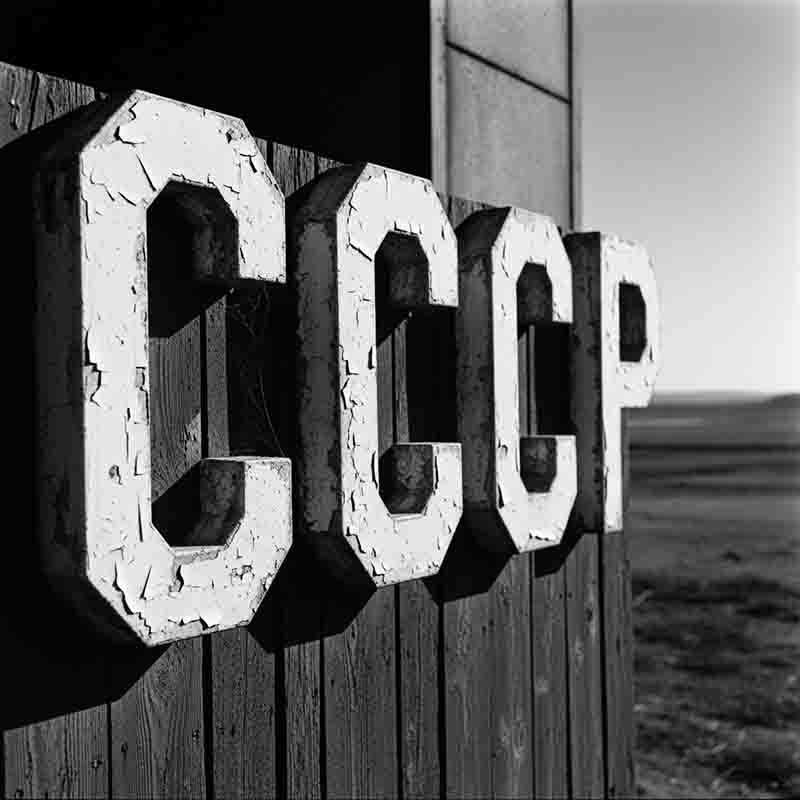
The abbreviation was widely used on official documents, currency, and state symbols of the Soviet Union.
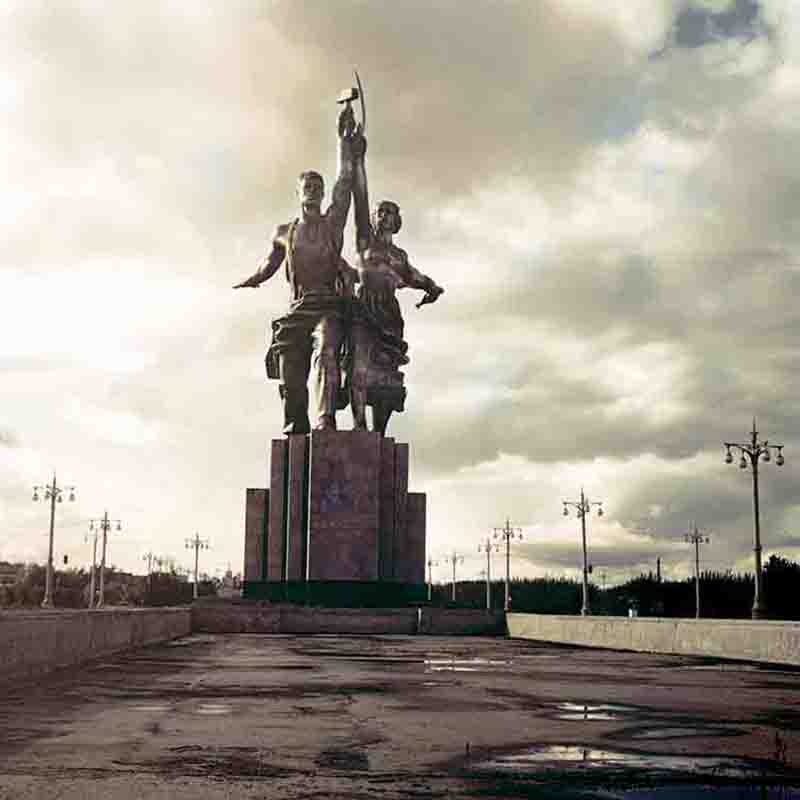
The iconic sculpture "Worker and Kolkhoz Woman", created by Vera Mukhina for the 1937 World's Fair in Paris.
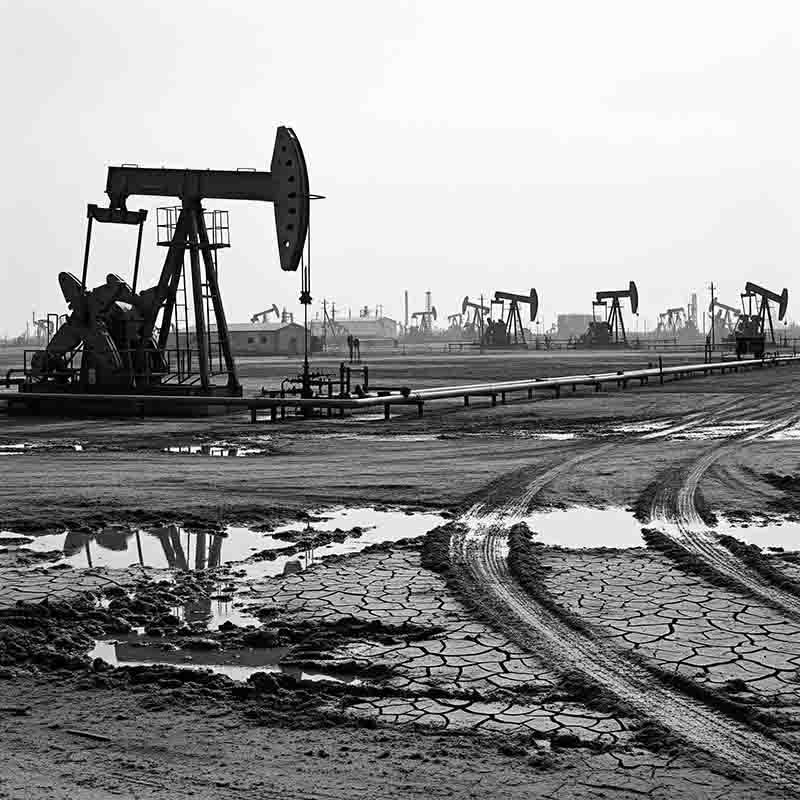
Located on the Absheron Peninsula, the area's rich oil and gas deposits have profoundly shaped local and world history.
Deep Dive: Cold War Topics
Origins & Early Cold War
Berlin & Germany
Crises & Conflicts
Competition & Technology
End of the Cold War
About This Article
This overview serves as the central hub for soviet-union.com's Cold War coverage. Each linked article provides comprehensive analysis, primary sources, and multiple perspectives on specific topics. Our goal is to provide the most authoritative, accessible, and comprehensive Cold War resource available online.
Last Updated: February 8, 2026 | Next Review: Quarterly updates scheduled