The end of the Cold War came with stunning speed. Between 1989 and 1991, the entire post-war international order transformed. The Berlin Wall fell. Communist regimes collapsed across Eastern Europe.
The USSR itself dissolved into 15 independent republics. What had seemed permanent, the division of Europe, the Iron Curtain, the Soviet empire, evaporated in months.
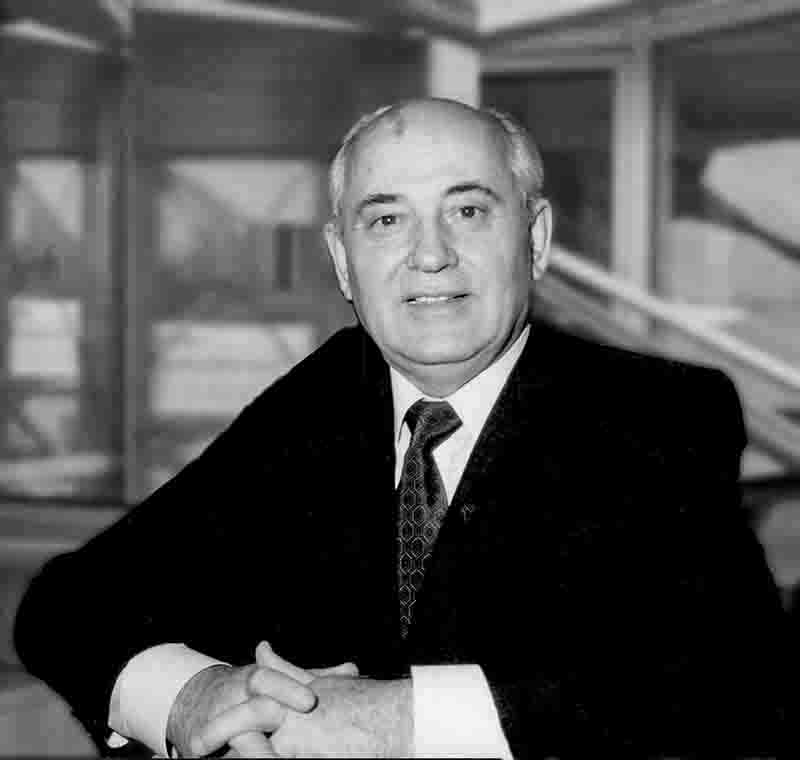
The story begins with Mikhail Gorbachev. When he became General Secretary of the Communist Party in March 1985, the Soviet Union faced crisis. The war in Afghanistan drained resources. The arms race with the United States burdened an already stagnant economy. The population was restive. Gorbachev concluded that fundamental reform was necessary for the system's survival.
He introduced glasnost (openness) and perestroika (restructuring). These reforms were intended to save communism. Instead, they unleashed forces that destroyed it. Once people could speak freely, they demanded more than economic efficiency, they wanted democracy, national independence, and an end to one party rule.
Key Concept: The Gorbachev Paradox
Mikhail Gorbachev remains one of history's most consequential and paradoxical figures. He set out to reform and preserve the Soviet system but instead presided over its dissolution. He refused to use force to maintain empire, yet his non-intervention policy allowed the very collapse he sought to prevent. He won the Nobel Peace Prize in 1990 for ending the Cold War without bloodshed, yet became a man without a country when the Soviet Union ceased to exist. His legacy embodies the contradiction of reform within a totalitarian system: once openness is granted, it cannot be controlled.
Timeline: The End of an Era
The collapse of Soviet communism unfolded through a series of dramatic events between 1985 and 1991. This timeline traces the critical moments when reform turned to revolution.
Gorbachev Becomes General Secretary
Mikhail Gorbachev is selected as General Secretary of the Communist Party following the death of Konstantin Chernenko. At 54, he is the youngest Soviet leader since Stalin. He immediately signals reform, speaking of the need for "openness" and criticizing alcohol abuse and economic stagnation.
Chernobyl Disaster
The explosion at the Chernobyl nuclear power plant exposes the incompetence and secrecy of the Soviet system. Gorbachev's delayed response and the attempted cover-up convince him that glasnost is essential—problems cannot be solved if they cannot be discussed.
Glasnost and Perestroika
Gorbachev introduces his twin reform policies. Glasnost relaxes censorship, allowing public discussion of previously taboo subjects including Stalin's crimes. Perestroika attempts to introduce market mechanisms into the socialist economy. Political prisoners are released, including Andrei Sakharov.
INF Treaty Signed
Gorbachev and President Reagan sign the Intermediate-Range Nuclear Forces Treaty in Washington, eliminating an entire class of nuclear weapons. It is the first arms reduction treaty, not merely limitation. The agreement signals a fundamental shift in superpower relations.
Soviet Withdrawal from Afghanistan
The Soviet Union announces it will withdraw its troops from Afghanistan, ending a disastrous nine-year war that cost 15,000 Soviet lives and billions of rubles. The withdrawal demonstrates Gorbachev's "new thinking" in foreign policy—military intervention is no longer viable.
Polish Elections
Poland holds partially free elections. The Solidarity trade union movement wins 99 of 100 seats in the newly created Senate and all 161 contested seats in the Sejm. The communist government is forced to appoint a Solidarity member as Prime Minister—the first non-communist leader in the Soviet bloc.
Hungary Opens Border
Hungary removes border fortifications with Austria and allows East German refugees to cross to the West. Thousands of East Germans "vacation" in Hungary and flee to freedom. The opening creates a hole in the Iron Curtain and triggers the crisis that will bring down the Berlin Wall.
East German Crisis
East Germany celebrates its 40th anniversary with Gorbachev as guest of honor. He tells Erich Honecker that "life punishes those who come too late." Mass demonstrations erupt. On October 18, Honecker is forced to resign. The regime is losing control.
Fall of the Berlin Wall
East German official Günther Schabowski accidentally announces immediate opening of the border during a press conference. Thousands gather at checkpoints. Overwhelmed guards open the gates. East and West Berliners celebrate together on the Wall. The Iron Curtain has fallen.
Velvet Revolution
Czechoslovakia's communist government collapses after weeks of peaceful protests. Dubbed the "Velvet Revolution" for its lack of violence, the movement installs dissident playwright Václav Havel as president. In Romania, a violent uprising overthrows and executes dictator Nicolae Ceausescu.
Lithuania Declares Independence
The Lithuanian Soviet Socialist Republic becomes the first Soviet republic to declare independence. Gorbachev imposes an economic embargo but does not use military force. The Baltic example inspires other republics to demand sovereignty.
German Reunification
East and West Germany formally reunify. The speed is remarkable—less than a year after the Wall fell. The new Germany remains in NATO, a condition Gorbachev accepts in exchange for German financial assistance and a commitment to reduce NATO forces in the former East Germany.
START Treaty Signed
Bush and Gorbachev sign the Strategic Arms Reduction Treaty (START I), committing to reduce nuclear arsenals by 30%. The treaty represents the culmination of the arms control process that began with Gorbachev's "new thinking." It is the last major agreement signed while the Soviet Union still exists.
The August Coup
Hardline communists attempt to overthrow Gorbachev while he vacations in Crimea. They declare a state of emergency and send tanks into Moscow. Boris Yeltsin stands atop a tank outside the Russian parliament and calls for resistance. The coup collapses after three days, but Gorbachev returns to Moscow diminished.
Belovezha Accords
The leaders of Russia, Ukraine, and Belarus meet in a hunting lodge in Belarus and declare the Soviet Union dissolved. They form the Commonwealth of Independent States (CIS). Gorbachev is not consulted. The document states: "The USSR as a subject of international law and geopolitical reality ceases its existence."
Gorbachev Resigns
In a televised address, Gorbachev resigns as President of the Soviet Union. He declares: "We now live in a new world. The Cold War is over. The arms race has stopped. The threat of world war has been removed." At 7:32 PM, the Soviet flag is lowered from the Kremlin for the last time, replaced by the Russian tricolor.
Gorbachev's Reforms: Glasnost and Perestroika
When Gorbachev came to power in 1985, he faced a system in crisis. The Soviet economy had stagnated for two decades. Consumer goods were scarce. Agricultural production was unreliable. The war in Afghanistan was a quagmire. The arms race with the United States consumed resources the civilian economy desperately needed.
Glasnost: Openness
Glasnost meant transparency, freedom of speech, and the release of information. Gorbachev believed that exposing problems was the first step toward solving them. Censorship was relaxed. Previously banned books were published. Newspapers began reporting on corruption, environmental disasters, and Stalin's crimes.
The Chernobyl disaster of April 1986 demonstrated both the need for and limits of glasnost. Initially, the Kremlin attempted a cover-up. But as radiation spread across Europe, the truth could not be contained. Gorbachev eventually addressed the nation, criticizing the "years of covering up shortcomings." The episode convinced him that secrecy was dangerous.
By 1988, glasnost had evolved far beyond what Gorbachev intended. Citizens used their new freedom to criticize not just specific policies but the communist system itself. Nationalist movements in the Baltic republics, Ukraine, and the Caucasus used glasnost to demand independence. The genie could not be put back in the bottle.
Perestroika: Restructuring
Perestroika aimed to modernize the Soviet economy by introducing limited market mechanisms. State enterprises would become self-financing, responsible for their own profits and losses. Limited private enterprise—cooperatives—was legalized. Price controls were partially lifted.
The results were disappointing. The economy did not improve; in many ways, it worsened. Shortages became more acute as the old planning system broke down before the new market mechanisms could function. Inflation, previously hidden, became visible. Workers faced unemployment for the first time in Soviet history.
Gorbachev's economic reforms suffered from a fundamental contradiction: he sought to introduce capitalism while preserving socialist structures. The Communist Party retained political monopoly even as its economic monopoly was dismantled. This half-measure approach satisfied no one—communists saw betrayal, reformers saw timidity.
"The point is that the Communist Party was in a state of ideological and moral crisis. We had to overcome the gap between words and deeds, between promises and reality."
The Liberation of Eastern Europe
Gorbachev's most consequential decision was his refusal to use force to preserve communist rule in Eastern Europe. The Brezhnev Doctrine—the Soviet commitment to intervene to defend socialist governments—was effectively abandoned. When East European populations demanded change, Soviet troops remained in their barracks.
Poland: Solidarity's Victory
Poland led the way. The Solidarity trade union, founded in 1980 and suppressed under martial law in 1981, had survived as an underground movement. In 1988, strikes forced the communist government to negotiate. In early 1989, roundtable talks produced agreement on partially free elections.
The June 1989 elections were a landslide. Solidarity won every contested seat in the lower house and 99 of 100 seats in the newly created Senate. The communist prime minister resigned, and Solidarity leader Tadeusz Mazowiecki became the first non-communist leader in the Soviet bloc. The message was clear: communism was finished.
Hungary: Cutting the Fence
Hungary's communist leadership, recognizing the tide of history, moved faster. In May 1989, they began dismantling the fortifications on the border with Austria. By August, thousands of East German "tourists" were fleeing to the West through Hungary. The hole in the Iron Curtain was open.
The Hungarian Socialist Workers' Party dissolved itself and refounded as the Hungarian Socialist Party, committed to democracy. Free elections in March 1990 produced a center-right government. Hungary's peaceful transition became a model.
East Germany: The Wall Falls
The German Democratic Republic was the Soviet bloc's showcase—and its most repressive regime. Erich Honecker refused reform. Mass demonstrations began in Leipzig and spread to East Berlin. On October 9, 1989, 70,000 protesters defied threats of violence. The security forces backed down.
On November 9, 1989, the regime attempted to ease pressure by announcing new travel regulations. Spokesman Günther Schabowski, not fully briefed, announced that the regulations took effect "immediately, without delay." Thousands converged on border crossings. Overwhelmed guards opened the gates. The Wall had fallen.
Czechoslovakia: The Velvet Revolution
Czechoslovakia's communist regime collapsed in weeks. The November 17 police attack on student demonstrators triggered mass protests. Within days, hundreds of thousands filled Wenceslas Square. The communist leadership resigned. Dissident playwright Václav Havel became president. The revolution was "velvet" because it involved no violence.
Romania: Violent Overthrow
Romania was the exception. Dictator Nicolae Ceausescu attempted to crush protests in Timisoara with mass killings. But the violence triggered nationwide revolt. On December 22, 1989, Ceausescu fled Bucharest. He and his wife were captured, tried by a military court, and executed on Christmas Day. Over 1,000 died in the violence.
German Reunification
The fall of the Berlin Wall made German reunification inevitable. The question was not whether but how—and on what terms.
Kohl's 10-Point Plan
West German Chancellor Helmut Kohl moved with remarkable speed. On November 28, 1989—just 19 days after the Wall fell—he announced a 10-point plan for reunification. The plan envisioned confederation leading to federation, with a unified Germany remaining in NATO and the European Community.
The plan alarmed the Soviet Union, Britain, and France. Margaret Thatcher and François Mitterrand feared a resurgent Germany. Gorbachev insisted that a unified Germany could not be part of NATO. But Kohl had American support. President George H.W. Bush believed a unified, democratic Germany in NATO was preferable to a neutral, unstable Germany.
The Two Plus Four Treaty
Intensive diplomacy produced the "Two Plus Four" framework—the two Germanys plus the four occupying powers (United States, Soviet Union, Britain, and France) negotiating the terms of reunification. The critical breakthrough came in July 1990, when Gorbachev agreed that a unified Germany could remain in NATO, in exchange for German financial assistance and a commitment to reduce NATO forces in the former East Germany.
The treaty, signed in Moscow on September 12, 1990, restored full German sovereignty. The Allies renounced their occupation rights. Germany committed to peaceful borders, nuclear non-proliferation, and reduced military forces. On October 3, 1990, Germany was officially reunified.
"We are one people."
The Collapse of the Soviet Union
While Eastern Europe was liberating itself, the Soviet Union was disintegrating. Gorbachev's reforms had unleashed nationalist movements that could not be contained.
The Baltic Independence Movement
The three Baltic republics—Estonia, Latvia, and Lithuania—had been independent states between 1918 and 1940 before Soviet annexation. They never accepted Soviet rule as legitimate. Under glasnost, independence movements emerged, culminating in the 1989 "Baltic Way"—a 600-kilometer human chain from Tallinn to Vilnius.
On March 11, 1990, Lithuania declared independence. Gorbachev imposed an economic embargo but stopped short of military invasion. Latvia and Estonia followed. The Baltic example inspired other republics. By 1991, all 15 Soviet republics had declared sovereignty or independence.
The August Coup
Gorbachev attempted to preserve some form of union through a new treaty that would grant republics autonomy while maintaining a federal state. The treaty was scheduled for signing on August 20, 1991. Hardline communists—Vice President Gennady Yanayev, KGB chief Vladimir Kryuchkov, Defense Minister Dmitry Yazov—decided to act.
On August 19, 1991, while Gorbachev vacationed in Crimea, the State Committee for the State of Emergency announced that Gorbachev was ill and had been relieved of duty. Tanks rolled into Moscow. The coup leaders expected passive acceptance.
They miscalculated. Boris Yeltsin, President of the Russian Soviet Federative Socialist Republic, climbed atop a tank outside the Russian parliament building (the "White House") and called for resistance. Thousands of Muscovites built barricades. Some military units defected. The coup collapsed after three days. The plotters were arrested attempting to flee.
Yeltsin on the Tank
The image of Boris Yeltsin standing on Tank Number 110 outside the White House became the iconic photograph of the Soviet collapse. It symbolized popular resistance to dictatorship and the transfer of legitimacy from the Soviet center to the Russian republic. Yeltsin's courage—he had faced down armed men who could have killed him—made him the dominant figure in post-Soviet politics. The coup's failure was Gorbachev's failure too: he returned to Moscow to find power had shifted irrevocably to Yeltsin.
Dissolution
The failed coup accelerated the Soviet Union's disintegration. Gorbachev returned to Moscow diminished. He resigned as Communist Party General Secretary and dissolved the Central Committee. Yeltsin banned Communist Party activities in Russia.
On December 8, 1991, the leaders of Russia, Ukraine, and Belarus met in Belovezha Forest and signed the Belovezha Accords, declaring the Soviet Union dissolved and forming the Commonwealth of Independent States (CIS). Gorbachev was not consulted. Other republics joined the CIS or declared complete independence.
On December 25, 1991, Gorbachev addressed the Soviet people for the last time. "We now live in a new world," he said. "The Cold War is over. The arms race has stopped. The threat of world war has been removed." At 7:32 PM, the Soviet flag was lowered from the Kremlin. The Russian tricolor rose in its place. The Soviet Union was no more.
Aftermath: The Post-Cold War World
The end of the Cold War transformed international relations. The bipolar world gave way to American unipolarity. New nations emerged. Old conflicts, suppressed by superpower rivalry, erupted.
American Primacy
The United States emerged as the world's sole superpower. Its military, economic, and cultural dominance seemed unchallengeable. President Bush spoke of a "new world order" based on American leadership, international law, and collective security. This vision was tested in the 1991 Gulf War, where an American-led coalition repelled Iraq's invasion of Kuwait.
The Russian Transition
Russia's transition to capitalism and democracy proved traumatic. "Shock therapy" economic reforms led to hyperinflation, plummeting living standards, and the rise of oligarchs who acquired state assets at fraction of value. Life expectancy fell. Many Russians associated democracy with chaos and came to view the Soviet collapse as a tragedy rather than liberation.
NATO Expansion
The question of NATO's future was contentious. Gorbachev later claimed Western leaders promised NATO would not expand eastward, though this is disputed. What is certain is that NATO did expand—first to former Warsaw Pact countries (Poland, Hungary, Czech Republic in 1999), then to Baltic states (2004), and ultimately to Russia's borders. This expansion would become a major grievance in Russian foreign policy.
New Conflicts
The end of superpower rivalry unleashed ethnic and nationalist conflicts previously suppressed. Yugoslavia dissolved into a decade of wars and genocide. The Caucasus erupted in violence between Armenia and Azerbaijan, and within Georgia. Tajikistan experienced civil war. The post-Cold War world was not the peaceful "end of history" some had predicted.
The Unipolar Moment
The 1990s were the "unipolar moment"—a brief period when the United States faced no peer competitor. American power seemed limitless. But unipolarity contained the seeds of its own erosion. Russia's resentment, China's rise, and the costs of global leadership would eventually challenge American dominance. The post-Cold War settlement, achieved with remarkably little violence in Europe, left unresolved questions about the new international order that would resurface in the 21st century.
12 Key Facts About the End of the Cold War
Gorbachev's Reforms: Mikhail Gorbachev introduced glasnost (openness) and perestroika (restructuring) after 1985, intending to save communism but instead unleashing forces that destroyed it.
Fall of the Berlin Wall: On November 9, 1989, East Germany accidentally announced immediate opening of the border. Thousands gathered and the Wall fell.
Velvet Revolution: Czechoslovakia's communist regime collapsed in weeks of peaceful protests in November 1989. Václav Havel became president.
Romanian Exception: Romania's dictator Nicolae Ceausescu was overthrown and executed on Christmas Day 1989 after violent uprising.
German Reunification: East and West Germany reunified on October 3, 1990, less than a year after the Wall fell.
INF Treaty: The 1987 Intermediate-Range Nuclear Forces Treaty eliminated an entire class of nuclear weapons, the first actual reduction.
Afghanistan Withdrawal: Soviet troops withdrew from Afghanistan in February 1989, ending a disastrous nine-year war.
August Coup: Hardline communists attempted to overthrow Gorbachev on August 19, 1991. The coup failed after three days.
Yeltsin's Resistance: Boris Yeltsin stood atop a tank outside the Russian parliament, calling for popular resistance to the coup.
Belovezha Accords: On December 8, 1991, Russia, Ukraine, and Belarus declared the Soviet Union dissolved.
Gorbachev's Resignation: On December 25, 1991, Gorbachev resigned and the Soviet flag was lowered from the Kremlin for the last time.
15 New Republics: The Soviet Union dissolved into 15 independent states, from Estonia to Kazakhstan.
Frequently Asked Questions
Continue Reading
On This Page
Key Figures
- Mikhail Gorbachev — Soviet Leader
- Boris Yeltsin — Russian President
- Helmut Kohl — West German Chancellor
- George H.W. Bush — U.S. President
- Ronald Reagan — U.S. President
- Václav Havel — Czech President
- Lech Walesa — Solidarity Leader
Key Data
- Gorbachev: March 1985
- Wall Falls: Nov 9, 1989
- Germany United: Oct 3, 1990
- August Coup: Aug 19-21, 1991
- USSR Dissolved: Dec 26, 1991
- New Republics: 15
Related Articles
Download
Get the complete Cold War end timeline and primary sources.
Cold War End Documents PDF | Available 16.04.26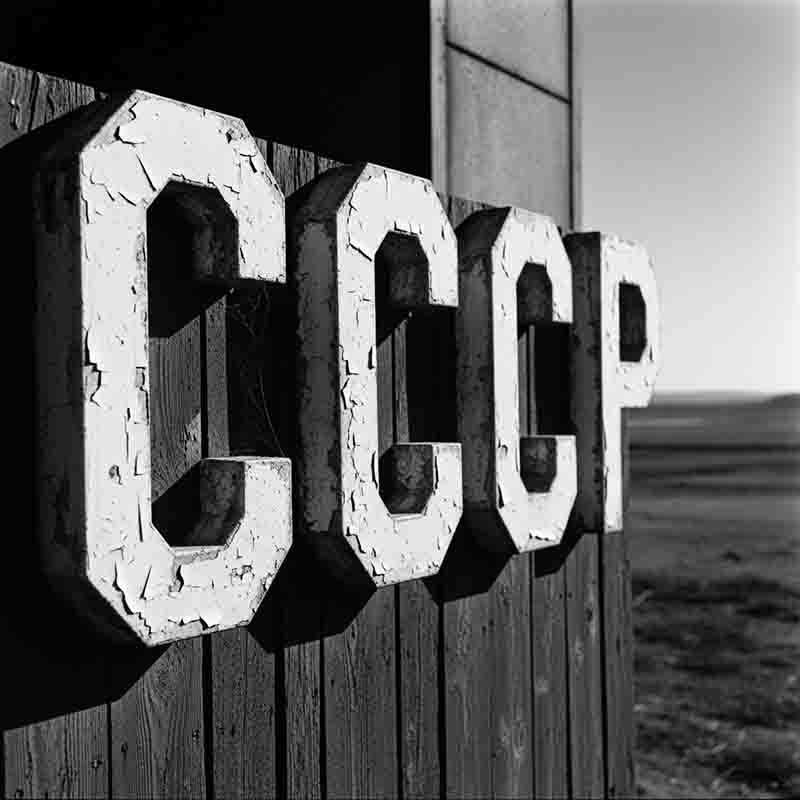
The abbreviation was widely used on official documents, currency, and state symbols of the Soviet Union.
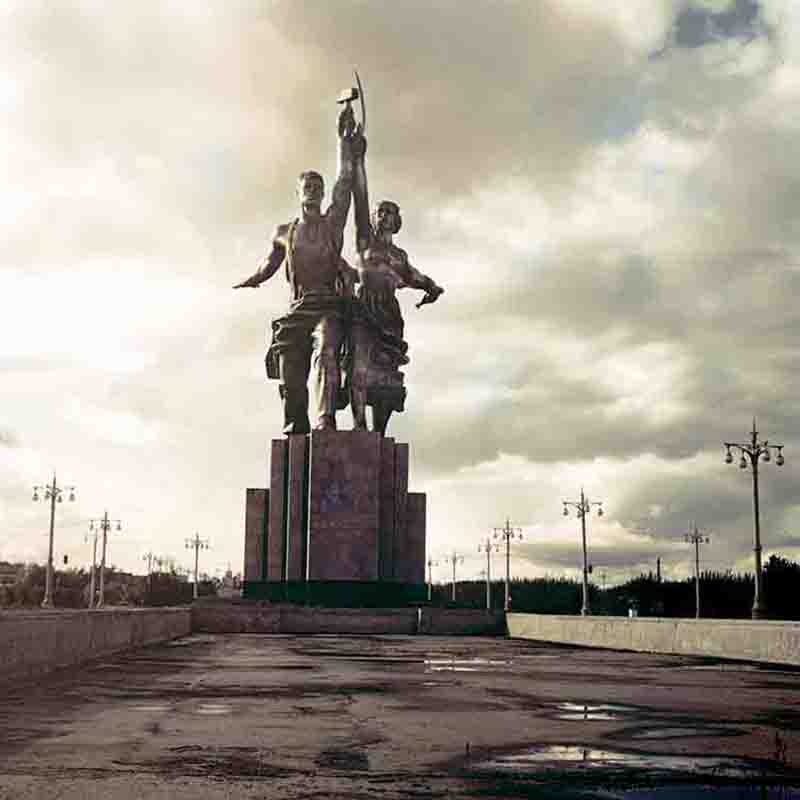
The iconic sculpture "Worker and Kolkhoz Woman", created by Vera Mukhina for the 1937 World's Fair in Paris.
About This Article
This article examines the end of the Cold War (1989-1991), from Gorbachev's reforms through the fall of the Berlin Wall to the dissolution of the Soviet Union. Part of the Cold War series on soviet-union.com.
Last Updated: February 11, 2026 | Reading Time: 20 minutes