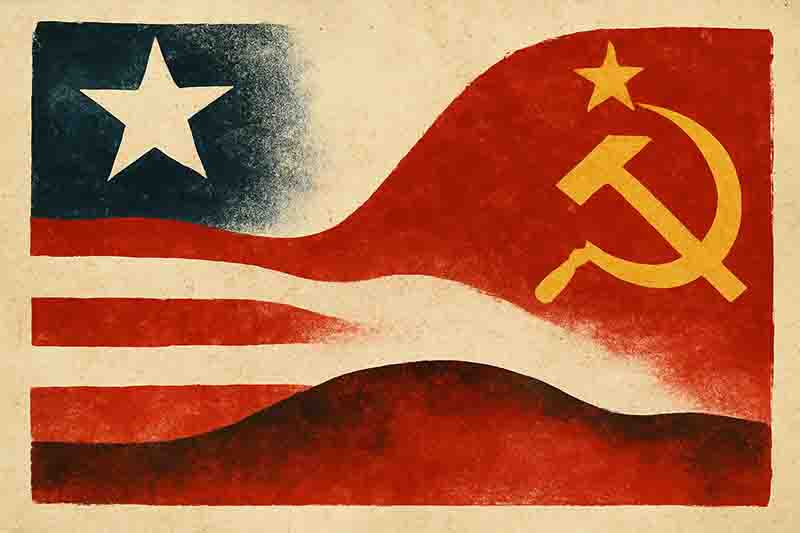
While the ideologies remained distinct, Détente represented a pragmatic effort to de-escalate the threat of nuclear conflict through treaties like SALT I and increased cultural exchange.
Détente (French for "relaxation of tension") was a period of improved relations between the United States and the Soviet Union lasting from approximately 1969 to 1979. After two decades of Cold War confrontation, from the Berlin Blockade to the Cuban Missile Crisis, the superpowers sought to manage their rivalry through diplomacy rather than brinkmanship.
The era produced unprecedented nuclear arms control agreements, including SALT I (1972) and SALT II (1979), the Helsinki Accords (1975) addressing security and human rights across Europe, and symbolic cooperation like the Apollo-Soyuz Test Project (1975). Yet détente's achievements proved fragile; by 1979, the Soviet invasion of Afghanistan shattered the illusion of superpower harmony and ushered in a "Second Cold War."
Historical Significance
Détente represented a fundamental shift in Cold War strategy. Rather than seeking victory over the adversary, both superpowers aimed to manage their competition to reduce the risk of nuclear war. It was the first sustained attempt to institutionalize arms control and establish "rules of the game" for superpower competition.
The Architects of Détente
Détente emerged from the convergence of several leaders who recognized the dangers of unchecked superpower rivalry. Each approached the thaw from different national perspectives and ideological frameworks.
Richard Nixon
U.S. President (1969-1974)
The anti-communist hardliner who became the unlikely architect of détente. Nixon sought to extricate America from Vietnam and use triangular diplomacy (US-USSR-China) to maintain American influence.
Leonid Brezhnev
Soviet General Secretary (1964-1982)
Sought to consolidate Soviet gains in Eastern Europe while securing Western recognition of postwar borders. Believed détente would allow the USSR to focus on domestic economic problems.
Willy Brandt
West German Chancellor (1969-1974)
Pioneer of Ostpolitik who broke the diplomatic ice in Europe by recognizing postwar borders and establishing relations with Eastern Europe. Won the 1971 Nobel Peace Prize.
Henry Kissinger's Role
National Security Advisor and later Secretary of State Henry Kissinger provided the intellectual framework for détente. His concept of "linkage" sought to connect Soviet progress on arms control to restraint in Soviet behavior worldwide. Kissinger conducted secret negotiations with Soviet Ambassador Anatoly Dobrynin, establishing the "Channel" that produced many détente breakthroughs.
Kissinger's realpolitik approach, accepting Soviet equality as a great power in exchange for responsible behavior, drew criticism from American conservatives who viewed any accommodation with communism as immoral and dangerous. Nevertheless, his diplomacy produced concrete achievements that reduced nuclear dangers.
Origins of Détente
The Crisis of the Cold War
By the late 1960s, both superpowers faced compelling reasons to reduce tensions. The Cuban Missile Crisis of 1962 had brought the world terrifyingly close to nuclear war. The Vietnam War had exhausted American resources and divided American society. The Soviet Union faced economic stagnation and a growing technological gap with the West while maintaining costly commitments to Eastern Europe and the Third World.
The Sino-Soviet split fundamentally altered Cold War dynamics. By 1969, Soviet and Chinese forces were fighting border clashes along the Ussuri River. The USSR needed to reduce tensions with the West to guard against potential conflict with China. Meanwhile, Nixon saw an opportunity to exploit the communist split through "triangular diplomacy", improving relations with both Moscow and Beijing to gain leverage over each.
Ostpolitik: Breaking the Ice
West German Chancellor Willy Brandt's Ostpolitik (Eastern Policy) created the conditions for broader détente. Brandt accepted the reality of postwar borders, including the Oder-Neisse line and the existence of East Germany. In 1970, he signed treaties with the Soviet Union and Poland recognizing these boundaries. His emotional kneeling at the Warsaw Ghetto memorial in December 1970 symbolized Germany's reconciliation with its past and its neighbors.
These bilateral agreements between West Germany and Eastern European states reduced tensions in the most dangerous flashpoint of the Cold War, Central Europe. They paved the way for superpower negotiations by demonstrating that compromise was possible without surrender.
The Key Agreements
Détente produced a series of landmark agreements that established the framework for superpower relations throughout the 1970s.
SALT I (1972)
• ABM Treaty: Limited missile defenses to 200 interceptors each
• Interim Agreement: Froze ICBM and SLBM launchers for 5 years
• First major nuclear arms control treaty
• Signed May 26, 1972, in Moscow
Helsinki Accords (1975)
• Basket I: Security and border inviolability
• Basket II: Economic and scientific cooperation
• Basket III: Human rights and freedom of movement
• Signed by 35 nations on August 1, 1975
Apollo-Soyuz (1975)
• First joint US-Soviet space mission
• Docking in Earth orbit July 17, 1975
• "Handshake in Space" symbolized cooperation
• Paved way for future international space efforts
SALT II (1979)
• Limited strategic delivery vehicles to 2,250
• MIRV limitations: 1,320 total
• Signed June 18, 1979, in Vienna
• Never ratified due to Afghanistan invasion
The Moscow Summit 1972
The May 1972 Moscow Summit between Nixon and Brezhnev marked the high point of détente. Over eight days, the leaders signed the SALT agreements, the ABM Treaty, and established the "Basic Principles of Relations" governing future superpower conduct. They also initiated agreements on trade, science, technology, and the environment.
"There must be room in this world for two great nations with different systems to live together and work together. We cannot do this, however, by mushy sentimentality or by glossing over differences which exist."
The summit produced more than agreements, it created a personal relationship between Nixon and Brezhnev that facilitated future negotiations. The two leaders toasted each other, cruised the Volga River together, and established a pattern of regular summit meetings that continued through the Ford and Carter administrations.
The Helsinki Accords
The Conference on Security and Cooperation in Europe (CSCE), culminating in the Helsinki Accords of August 1, 1975, represented détente's most comprehensive achievement. Thirty-five nations, including all European states except Albania, plus the United States and Canada—signed the Final Act at Finlandia Hall in Helsinki.
The Three Baskets
The Helsinki Accords organized cooperation into three "baskets":
Basket I (Security): Recognized postwar borders as inviolable, renounced the use of force, and established confidence-building measures for military transparency. The Soviets sought this Western recognition of their territorial gains from World War II.
Basket II (Economic): Promoted trade, scientific cooperation, environmental protection, and industrial collaboration between East and West.
Basket III (Human Rights): Committed signatories to respect human rights and fundamental freedoms, including freedom of movement, information, and cultural exchange. This "human dimension" would prove unexpectedly consequential.
The Helsinki Effect
Though the Helsinki Accords were not legally binding treaties, they created international standards for human rights that dissident groups in Eastern Europe exploited. The "Helsinki Monitoring Groups" that formed across the Soviet bloc used Basket III commitments to challenge communist rule. Historians credit the Accords with accelerating the eventual collapse of Soviet control in Eastern Europe.
Ford's Controversial Decision
President Gerald Ford's decision to attend the Helsinki Summit proved domestically controversial. Conservative critics, including Ronald Reagan challenging Ford for the 1976 Republican nomination, accused him of abandoning Eastern Europe to Soviet domination. Ford defended his decision, arguing that engaging the Soviets on human rights would ultimately undermine their system.
History largely vindicated Ford's judgment. The human rights provisions provided moral and legal foundations for dissident movements throughout the Eastern bloc. By the 1980s, the "Helsinki process" had become a mechanism for holding the Soviet Union accountable to its international commitments.
The Apollo-Soyuz Test Project
While diplomats negotiated arms control in conference rooms, American astronauts and Soviet cosmonauts prepared for an unprecedented mission: docking their spacecraft in Earth orbit. The Apollo-Soyuz Test Project (ASTP) of July 1975 represented détente's most visible and symbolic achievement.
The Handshake in Space
On July 17, 1975, after two days of orbital maneuvers, the American Apollo and Soviet Soyuz spacecraft docked 140 miles above the Earth. Astronaut Tom Stafford and cosmonaut Alexei Leonov exchanged the first international handshake in space, witnessed by millions on live television.
"The handshake in space was not just a symbol of détente. It was a demonstration that the two superpowers could work together on complex technical projects despite their ideological differences."
The mission required solving formidable technical challenges. The Apollo spacecraft used pure oxygen at low pressure; the Soyuz used nitrogen-oxygen at sea-level pressure. Engineers designed a special docking module that served as both an airlock and transfer corridor. The successful cooperation demonstrated that superpower rivalry could be channeled into peaceful competition.
Legacy of Cooperation
ASTP established the precedent for future space cooperation. The Shuttle-Mir program of the 1990s and the ongoing International Space Station (ISS) trace their lineage to this 1975 mission. The partnership proved that even during the Cold War, science and exploration could transcend politics.
The Decline and Fall of Détente
Détente began unraveling almost as soon as its major agreements were signed. The very success of arms control negotiations revealed their limitations—neither superpower was willing to abandon its global interests or ideological commitments.
Third World Competition
While superpowers limited nuclear competition, they intensified proxy conflicts across the Third World. Soviet and Cuban support for the MPLA in Angola (1975) alarmed American policymakers. The 1973 Yom Kippur War and subsequent Arab oil embargo demonstrated that Middle East conflicts could still threaten Western interests. Soviet advisors and Cuban troops appeared across Africa, from Ethiopia to Mozambique.
American conservatives, led by Senator Henry Jackson and columnist William F. Buckley, argued that détente allowed the Soviet Union to expand its influence while the US practiced self-restraint. The Jackson-Vanik Amendment (1974) linked trade benefits to Soviet emigration policies, undermining the economic incentives that were supposed to sustain détente.
The Soviet Invasion of Afghanistan
The Soviet invasion of Afghanistan in December 1979 effectively ended détente. President Carter declared it "the most serious threat to peace since the Second World War" and withdrew the unratified SALT II treaty from the Senate. He imposed a grain embargo on the USSR, boycotted the 1980 Moscow Olympics, and authorized increased defense spending.
"The action of the Soviets in Afghanistan has made a change in the basic relationship between our two countries. This is a deeply troubled period in our relationship, and the ultimate outcome cannot now be foreseen."
The invasion demonstrated that détente could not constrain Soviet behavior in areas deemed vital to Soviet security. The "Brezhnev Doctrine", the claimed right to intervene in socialist states to defend communism—extended beyond Eastern Europe to the Third World. Détente had failed to transform the underlying nature of superpower competition.
Détente Timeline
SALT Begins
Strategic Arms Limitation Talks open in Helsinki, Finland. The negotiations will continue for nearly three years before producing SALT I.
Moscow Treaty
West Germany and the Soviet Union sign the Treaty of Moscow, renouncing the use of force and establishing principles for peaceful coexistence. Key step in Brandt's Ostpolitik.
Warsaw Treaty
West Germany and Poland sign the Treaty of Warsaw, recognizing the Oder-Neisse line. Brandt's kneeling at the Warsaw Ghetto memorial symbolizes German reconciliation.
Moscow Summit
Nixon becomes first U.S. President to visit Moscow. Signs SALT I, ABM Treaty, and Basic Principles of Relations with Brezhnev. The era of détente officially begins.
Washington Summit
Brezhnev visits Washington for second summit. Signs Agreement on the Prevention of Nuclear War. Personal relationship between Nixon and Brezhnev deepens.
Moscow Summit II
Nixon's final visit to Moscow amid Watergate scandal. Signs threshold Test Ban Treaty limiting underground nuclear tests. Détente survives Nixon's resignation by three months.
Vladivostok Summit
President Ford and Brezhnev meet in Vladivostok, agreeing on framework for SALT II: 2,400 delivery vehicles, 1,320 MIRVs. Establishes basic parameters for future arms control.
Apollo-Soyuz & Helsinki
July 17: Historic docking and "handshake in space." July 30-August 1: Conference on Security and Cooperation in Europe produces Helsinki Accords signed by 35 nations.
Vienna Summit
President Carter and Brezhnev sign SALT II treaty in Vienna. Limits strategic delivery vehicles to 2,250. Treaty faces immediate criticism in US Senate.
Afghanistan Invasion
Soviet Union invades Afghanistan on December 24 to support communist government against mujahideen. Détente collapses. Carter withdraws SALT II, imposes grain embargo.
The Second Cold War
Carter announces Carter Doctrine, pledging US defense of Persian Gulf. US boycotts 1980 Moscow Olympics. Détente officially ends; the "Second Cold War" begins.
Aftermath and Legacy
The collapse of détente produced a period of heightened Cold War tensions throughout the 1980s—the "Second Cold War." Yet the agreements and mechanisms established during the détente period survived and eventually facilitated the Cold War's peaceful conclusion.
The Arms Control Legacy
Despite the failure to ratify SALT II, both superpowers observed its limits throughout the 1980s. The ABM Treaty remained in force until 2002. The verification procedures and negotiating frameworks developed during détente provided the foundation for the INF Treaty (1987) and START I (1991), which achieved genuine nuclear reductions rather than merely limiting growth.
The Helsinki Effect
The human rights provisions of the Helsinki Accords created unexpected consequences. Dissident groups across Eastern Europe—Solidarity in Poland, Charter 77 in Czechoslovakia, the Helsinki Monitoring Groups in the USSR—used Basket III commitments to challenge communist rule. The Soviet Union found itself bound by international human rights standards it had accepted to secure Western recognition of its borders.
"History will judge this Conference not by what we say here today, but by what we do tomorrow—not by the promises we make, but by the promises we keep."
Historical Assessment
Historians continue debating whether détente represented wise realism or dangerous naivety. Defenders argue that it reduced nuclear risks, prevented superpower war, and created conditions for eventual Soviet collapse. Critics contend that it legitimized Soviet tyranny, allowed Soviet expansion, and delayed the Cold War's conclusion.
The truth encompasses both perspectives. Détente achieved genuine arms control successes that made the world safer. It failed to transform the Soviet system or restrain Soviet Third World adventurism. The era demonstrated both the possibilities and limits of diplomacy between irreconcilable ideologies.
12 Key Facts About Détente
Term Origin: "Détente" derives from the French word for "relaxation" or "easing," first applied to Cold War relations in the late 1960s.
Triangular Diplomacy: Nixon's strategy of playing the USSR and China against each other required simultaneous improvement of relations with both communist powers.
Grain for Oil: The 1972 US-Soviet trade agreement included American grain sales to the USSR and Soviet oil deliveries to the US—though the oil never materialized.
The Channel: Kissinger and Soviet Ambassador Dobrynin conducted secret negotiations through a backchannel that bypassed traditional diplomacy, producing many détente breakthroughs.
Jackson-Vanik: The 1974 amendment linking trade to emigration rights undermined economic détente and particularly affected Soviet Jewish emigration.
Helsinki Monitoring: The Helsinki Accords spawned independent monitoring groups across the Eastern bloc that the Soviet Union persecuted as subversive.
Apollo-Soyuz Cost: The joint space mission cost NASA approximately $245 million (1975 dollars)—expensive symbolism, but valuable technical cooperation.
Vladivostok Framework: The 1974 summit established the numerical framework for SALT II that remained the basis for arms control until the 1991 START treaty.
Carter's Shift: Jimmy Carter entered office promising to eliminate nuclear weapons; he left having authorized the MX missile and neutron bomb programs.
Afghanistan Casualties: The Soviet invasion that ended détente cost the USSR approximately 15,000 dead over ten years, contributing to the Soviet system's eventual collapse.
Reagan's Reversal: Ronald Reagan, who denounced détente as appeasement during the 1976 and 1980 campaigns, eventually negotiated deeper arms reductions than his predecessors.
Enduring Treaties: The ABM Treaty lasted 30 years (until 2002); the Helsinki process evolved into today's Organization for Security and Cooperation in Europe (OSCE).
Frequently Asked Questions
Détente (French for "relaxation of tension") was a period of improved relations between the United States and the Soviet Union from approximately 1969 to 1979. It featured nuclear arms control agreements (SALT I and SALT II), the Helsinki Accords on security and human rights, increased trade, and symbolic cooperation like the Apollo-Soyuz space mission.
SALT I (Strategic Arms Limitation Talks) was signed on May 26, 1972, by President Nixon and General Secretary Brezhnev in Moscow. It included the Anti-Ballistic Missile (ABM) Treaty limiting missile defenses to 200 interceptors each, and an Interim Agreement freezing the number of strategic ballistic missile launchers. It was the first major nuclear arms control treaty between the superpowers.
The Helsinki Accords (formally the Final Act of the Conference on Security and Cooperation in Europe) was signed on August 1, 1975, by 35 nations including the US, USSR, and all European countries except Albania. It addressed security (Basket I), economic cooperation (Basket II), and human rights (Basket III). Though non-binding, it established international human rights standards that undermined Soviet control in Eastern Europe.
Détente effectively ended with the Soviet invasion of Afghanistan in December 1979. President Carter withdrew the unratified SALT II treaty from the Senate, imposed a grain embargo on the USSR, and boycotted the 1980 Moscow Olympics. Earlier tensions over Soviet involvement in Angola (1975) and the 1973 Yom Kippur War had already strained the relationship.
Ostpolitik ("Eastern Policy") was West German Chancellor Willy Brandt's policy of improving relations with East Germany, the Soviet Union, and Eastern Europe between 1969-1974. It involved recognizing postwar borders, establishing diplomatic relations, and negotiating treaties that reduced tensions in Central Europe. It complemented superpower détente and won Brandt the 1971 Nobel Peace Prize.
The Apollo-Soyuz Test Project (July 15-24, 1975) was the first joint space mission between the United States and the Soviet Union. American astronauts and Soviet cosmonauts docked their spacecraft in Earth orbit and conducted joint experiments. The famous "handshake in space" between Tom Stafford and Alexei Leonov symbolized the spirit of détente and paved the way for future international space cooperation.
Détente failed because neither superpower fully abandoned its fundamental interests. The Soviet Union continued to support communist movements worldwide (Angola, Ethiopia, Nicaragua), while the US maintained NATO and pursued advantages in strategic weapons. Critics in both countries viewed détente as appeasement. The Soviet invasion of Afghanistan in 1979 demonstrated that détente could not restrain superpower competition in the Third World.
Historians view Détente as a qualified success that achieved limited but significant goals. It reduced the risk of nuclear war through arms control, established human rights norms that eventually undermined Soviet rule, and created mechanisms for superpower dialogue. However, it failed to resolve underlying ideological conflicts or prevent Soviet expansionism, and its collapse led to the "Second Cold War" of the 1980s.
Continue Reading
← Previous Origins of the Cold War
Next → Berlin Wall
On This Page
Key Figures
Richard Nixon — U.S. President (1969-1974)
Leonid Brezhnev — Soviet General Secretary (1964-1982)
Willy Brandt — West German Chancellor (1969-1974)
Henry Kissinger — U.S. Secretary of State
Gerald Ford — U.S. President (1974-1977)
Jimmy Carter — U.S. President (1977-1981)
Key Data
Dates: 1969-1979
Key Treaties: SALT I (1972), SALT II (1979)
Major Event: Helsinki Accords (1975)
Symbol: Apollo-Soyuz (1975)
End: Soviet invasion of Afghanistan (1979)
Related Articles
Download
Get the complete Détente documents and treaty texts.
Détente Documents PDF (Available 15.3.26)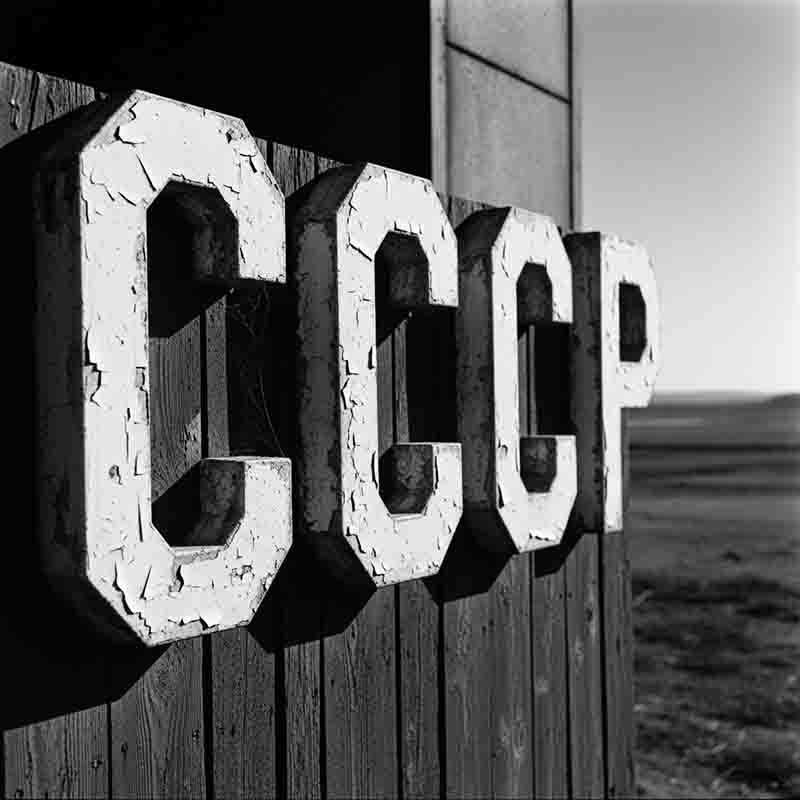
The abbreviation was widely used on official documents, currency, and state symbols of the Soviet Union.
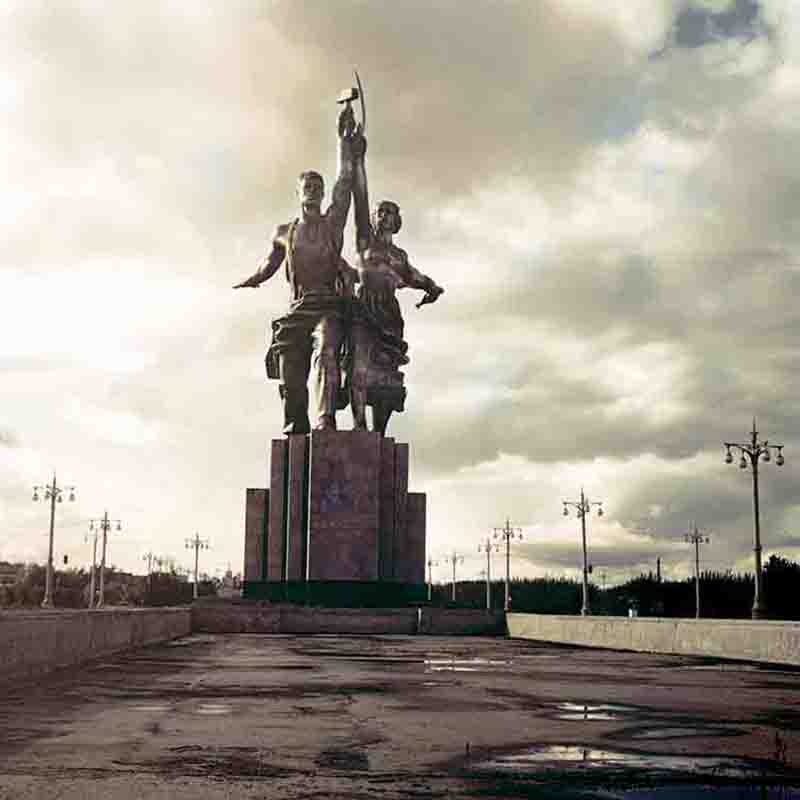
The iconic sculpture "Worker and Kolkhoz Woman", created by Vera Mukhina for the 1937 World's Fair in Paris.
About This Article
This article examines the Détente period of 1969-1979, the era of Cold War relaxation between the United States and the Soviet Union. Part of the Cold War series on soviet-union.com
Last Updated: February 14, 2026 | Reading Time: 14 minutes