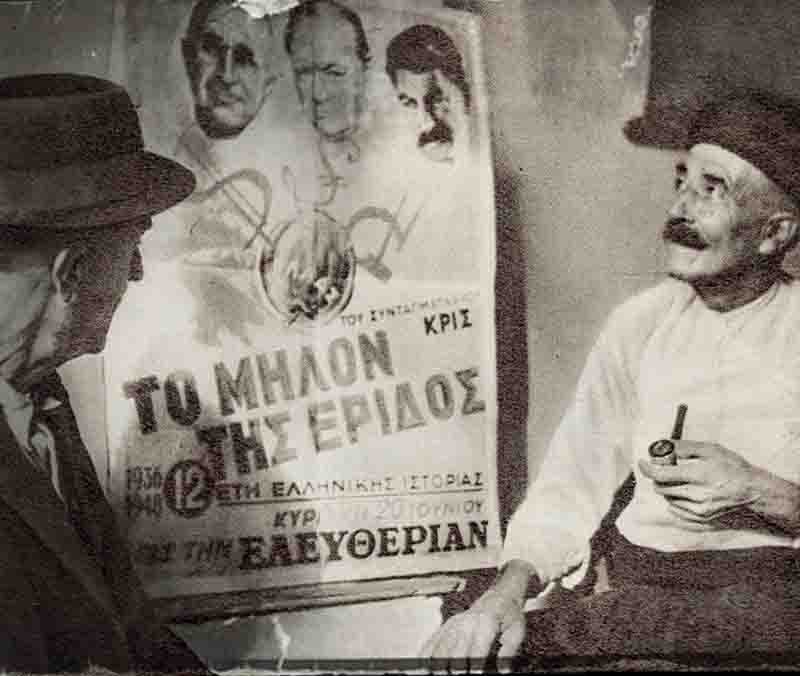
Yalta's Shadow: Roosevelt, Churchill, and Stalin's 1945 summit through the eyes of those living its consequences.
In February 1945, as Soviet armies advanced through Poland and Allied forces pressed into Germany from the west, the three most powerful men in the world gathered at a Crimean palace to shape the peace. Franklin D. Roosevelt, Winston Churchill, and Joseph Stalin, the "Big Three" of the Grand Alliance, convened at Yalta for what would be their final meeting.
The Yalta Conference (codenamed Argonaut) represented both the high point of wartime cooperation and the moment when postwar divisions became visible. The agreements reached at Yalta would determine the fate of Germany, the map of Eastern Europe, and the structure of the United Nations. Yet differing interpretations of these agreements would fuel the mistrust that blossomed into the Cold War.
Historical Significance
Yalta was the second and most consequential of the three wartime conferences among the Big Three (preceded by Tehran in 1943, followed by Potsdam in 1945). It occurred at a unique moment: Germany was nearly defeated, but Japan remained defiant; the atomic bomb was untested; and the postwar order remained unformed.
The Big Three
The Yalta Conference brought together three extraordinary leaders, each representing distinct national interests and ideological systems.
Franklin D. Roosevelt
U.S. President
Seeking Soviet participation in the United Nations and the war against Japan. Already gravely ill, Roosevelt would die just two months after Yalta.
Winston Churchill
British Prime Minister
Committed to preserving British influence and preventing Soviet domination of Eastern Europe. Increasingly concerned about Stalin's intentions.
Joseph Stalin
Soviet General Secretary
Demanding territorial security through friendly governments in Eastern Europe and massive reparations from Germany.
Roosevelt's Condition
The President's health cast a shadow over proceedings. Roosevelt, 63, suffered from advanced cardiovascular disease, hypertension, and probable congestive heart failure. He had lost 30 pounds in the previous year and appeared exhausted. Admiral William Leahy, his chief of staff, observed that "the President looked older and more tired than I had ever seen him."
This physical decline concerned Churchill and American officials. Some historians argue that Roosevelt's condition affected his performance, making him more accommodating to Stalin than he might otherwise have been. Others contend that his strategic vision—securing Soviet participation in the UN and Pacific War—remained clear.
Setting and Logistics
Why Yalta?
The choice of Yalta reflected both practical necessity and symbolic calculation. Stalin refused to travel far from Moscow while Soviet forces engaged in massive offensives. Roosevelt, despite his poor health, agreed to make the 6,000-mile journey rather than risk Soviet withdrawal from the Pacific War or the United Nations.
The Livadia Palace, built as a summer residence for Tsar Nicholas II in 1911, offered irony and convenience. This former symbol of imperial Russia now hosted communist and democratic leaders planning Europe's future. The palace had been damaged during the German occupation of Crimea (1941-1944) but was hastily restored for the conference.
Security and Secrecy
Security was extraordinary. Soviet forces established a 150-mile security zone around Yalta. Anti-aircraft batteries protected the airfields. The Black Sea Fleet patrolled offshore. American and British delegations traveled aboard warships—the USS Quincy and HMS Franconia—to the nearby port of Sevastopol, then by train to Yalta.
The 700-person American delegation included Secretary of State Edward Stettinius, Army Chief of Staff General George Marshall, and Fleet Admiral Ernest King. The British brought Foreign Secretary Anthony Eden and the Chiefs of Staff. Stalin traveled with Foreign Minister Vyacheslav Molotov and military commanders.
The Key Agreements
The Yalta Conference produced agreements across multiple domains, some concrete and immediate, others vague and contested.
Germany
• Unconditional surrender and occupation zones
• Denazification and demilitarization
• Reparations: $20 billion total, half to USSR
• Berlin divided despite location in Soviet zone
United Nations
• Soviet agreement to join the UN
• Great Power veto in Security Council
• 16 Soviet republics as members (reduced to 2)
• First meeting April 25, 1945, San Francisco
Poland
• Curzon Line as eastern border (Soviet gain)
• Compensation from German territory in west
• "Free and unfettered elections" promised
• Provisional government to include London Poles
Far East
• Soviet entry into war against Japan
• Within 3 months of Germany's defeat
• Southern Sakhalin and Kuril Islands
• Port Arthur and Dairen leases, Manchurian railways
The Declaration on Liberated Europe
Perhaps the most important—and ultimately most contested—agreement was the Declaration on Liberated Europe. The three powers pledged to:
"...jointly assist the people in any European liberated state or former Axis satellite state in Europe where in their judgment conditions require (a) to establish conditions of internal peace; (b) to carry out emergency measures for the relief of distressed peoples; (c) to form interim governmental authorities broadly representative of all democratic elements in the population and pledged to the earliest possible establishment through free elections of governments responsive to the will of the people."
The ambiguity of "broadly representative" and "free elections" would prove fatal. Roosevelt and Churchill understood these terms to mean genuine democracy; Stalin interpreted them as governments friendly to the Soviet Union, with communists holding dominant positions.
The Polish Question
Poland consumed more time at Yalta than any other issue. For Britain, it was the casus belli—Britain had gone to war in 1939 to defend Polish independence. For the Soviet Union, it was a matter of security—Poland had been the invasion route for German armies in 1914 and 1941.
Stalin's Position
Stalin was uncompromising on Poland's eastern border. The Curzon Line—roughly the 1919 demarcation proposed by British Foreign Secretary Lord Curzon—would become the Soviet-Polish frontier, giving the USSR territory inhabited by ethnic Ukrainians and Belarusians. This meant Poland lost 48% of its prewar territory.
"For the Russian people, the question of Poland is not only a question of honor but also a question of security. Throughout history, Poland has been the corridor through which the enemy has passed into Russia. Twice in the last thirty years, our enemies have passed through this corridor."
The London Poles vs. Lublin Poles
The composition of Poland's government proved equally contentious. The Polish government-in-exile, based in London since 1939, represented prewar Poland and maintained diplomatic relations with Western powers. The Lublin Committee, established by the Soviet Union in July 1944, consisted of Polish communists and sympathizers.
Stalin insisted that the Lublin Committee form the core of any provisional government. Roosevelt and Churchill demanded inclusion of democratic leaders from London and inside Poland. The compromise: the Lublin government would be "reorganized" to include "democratic leaders from Poland itself and from Poles abroad," with free elections promised "as soon as possible."
The Betrayal Controversy
Conservative critics later accused Roosevelt of "selling out" Poland at Yalta. This charge oversimplifies: Soviet forces already occupied Poland, giving Stalin de facto control. The Western powers lacked military leverage to impose democratic government. The real failure came later, when Stalin violated his promise of free elections.
Germany's Fate
The Big Three agreed on Germany's unconditional surrender, occupation, and transformation—but differed on details that would soon create friction.
Occupation Zones
The European Advisory Commission had already devised occupation zones in 1944. Yalta confirmed:
Soviet Zone: Eastern Germany, including Thuringia and Saxony
American Zone: Southern Germany, including Bavaria and Hesse
British Zone: Northern Germany, including the industrial Ruhr
French Zone: Added later from British and American territory
The critical anomaly: Berlin, located 110 miles inside the Soviet zone, would also be divided into four sectors. This geographic absurdity—an island of four-power control surrounded by Soviet territory—would become the Cold War's most dangerous flashpoint.
Reparations
Reparations nearly broke the conference. Stalin demanded $20 billion total, with half to the Soviet Union—reflecting the immense devastation Germany had inflicted. Roosevelt was sympathetic; Churchill opposed fixed sums, remembering how reparations had destabilized Germany after World War I.
The compromise: a Reparations Commission would meet in Moscow to work out details, using $20 billion as a "basis for discussion." In practice, the Soviets extracted reparations unilaterally from their zone, while the Western powers abandoned the concept for their sectors.
The Far East Secret Agreement
The most consequential secret agreement at Yalta concerned the Pacific War. Roosevelt desperately wanted Soviet participation against Japan, expecting fierce resistance and catastrophic American casualties during an invasion of the Japanese home islands.
Stalin's Price
In exchange for Soviet entry into the Pacific War within three months of Germany's defeat, Stalin demanded:
Preservation of Mongolian independence (Soviet satellite since 1921)
Restoration of southern Sakhalin Island (lost to Japan in 1905)
Acquisition of the Kuril Islands
Internationalization of Dairen (Dalian) as a free port, with Soviet preeminent interests
Lease of Port Arthur (Lüshun) as a Soviet naval base
Joint Soviet-Chinese operation of the Manchurian railways
Was This Necessary?
The atomic bomb's success, revealed five months later, made Soviet entry into the Pacific War strategically unnecessary. Critics argue Roosevelt gave away too much for something that became irrelevant. Defenders note that the bomb was untested in February 1945, and casualty projections for invading Japan reached 500,000 Americans.
Churchill was not consulted on the Far East agreement; Roosevelt and Stalin negotiated it privately. The British were informed only after the fact, underscuring Britain's declining great power status.
Daily Chronicle
Arrival and Opening
Roosevelt arrives from Malta aboard the USS Quincy. Churchill arrives from Athens. Stalin, already in Crimea, hosts an elaborate dinner. The first plenary session convenes at 5:00 PM in the Livadia Palace.
Germany and the United Nations
Discussion of Germany's dismemberment (Roosevelt opposes, Stalin supports). Agreement on occupation zones confirmed. Stalin accepts American proposals for UN voting procedures—the "Great Power unanimity" principle giving permanent Security Council members veto power.
Poland's Borders
Intensive discussion of Poland. Stalin insists on the Curzon Line. Churchill defends the London Poles. Roosevelt seeks compromise. Agreement that Poland will receive German territory in the west to compensate for eastern losses.
Polish Government
Deadlock over Poland's government composition. Stalin rejects London Poles; Roosevelt and Churchill reject exclusive Lublin Committee control. Foreign ministers negotiate compromise language.
Reparations and the Far East
Morning: heated discussion of German reparations. Afternoon: Roosevelt and Stalin meet privately to discuss Soviet entry into the Pacific War. Stalin states his conditions; Roosevelt largely accepts.
Declaration on Liberated Europe
American delegation presents draft Declaration on Liberated Europe, promising democratic governments and free elections. After Soviet modifications, all three powers accept. The wording remains deliberately vague.
Final Negotiations
Last-minute haggling over reparations figures and Polish government composition. Final compromises reached. Documents prepared for signature.
Signing and Departure
The Protocol of Proceedings signed at noon. Final communiqué issued. Roosevelt departs for Egypt; Churchill returns to London; Stalin returns to Moscow. The three leaders never meet again.
Aftermath and Controversy
Public reaction to Yalta was initially positive. The agreements seemed to promise continued great power cooperation and a democratic peace. Time magazine hailed "the spirit of Yalta." But disillusionment set in quickly as Stalin implemented his interpretation of the agreements.
The Soviet Interpretation
Stalin moved swiftly to consolidate Soviet control in Eastern Europe. The Lublin Committee, reorganized as the Provisional Government of National Unity, included only token non-communists. "Free elections" were promised but never held. By 1947, one-party communist regimes ruled Poland, Hungary, Romania, and Bulgaria.
From Moscow's perspective, Yalta recognized legitimate Soviet security interests. The Curzon Line reflected ethnic realities; friendly governments in neighboring states prevented encirclement by hostile powers. Western complaints about "Sovietization" violated the spirit of great power cooperation.
The American Debate
As Cold War tensions mounted, Yalta became politically controversial in the United States. Republicans accused Roosevelt of naivety or worse—Senator William Jenner called Yalta "the betrayal of America." The "loss" of China to communism in 1949 and the Korean War in 1950 intensified criticism.
"The Yalta Conference was not the death knell of freedom in Eastern Europe. That had been sounded when the Red Army crossed the Polish frontier in January 1944. Yalta was an attempt to salvage something from the reality of Soviet military power."
Historical Reassessment
Modern historians generally view Yalta with more nuance than either contemporary celebration or subsequent condemnation. The conference did not "give" Eastern Europe to Stalin; Soviet military occupation already accomplished that. Roosevelt secured his primary objectives—UN participation and Pacific War entry—at the cost of accepting Soviet dominance where American power could not reach.
The real failure was not Yalta itself but the inability to implement its democratic promises in the face of Soviet obstruction. The Potsdam Conference, just five months later, would reveal the cracks in the Grand Alliance more clearly.
12 Key Facts About Yalta
Code Name: The conference was codenamed "Argonaut" by the Americans, referencing the Greek myth of Jason's quest for the Golden Fleece.
Duration: The conference lasted exactly 7 days, with 8 plenary sessions and numerous bilateral meetings.
Distance Traveled: Roosevelt traveled over 6,000 miles each way—the longest journey ever made by an American president for a diplomatic meeting at that time.
Security: Soviet forces established a 150-mile security zone around Yalta, with 3,000 troops dedicated to conference protection.
Living Arrangements: Roosevelt stayed at the Livadia Palace; Churchill at the Vorontsov Villa (an elaborate Moorish-style mansion); Stalin at the Koreiz Palace.
Meals: Stalin hosted an elaborate dinner on February 4 featuring caviar, sturgeon, and Crimean wines. Churchill and Roosevelt hosted reciprocal dinners.
Photographs: The famous "Big Three" photographs were carefully staged. Stalin refused to sit for portraits he didn't approve.
Health Concerns: Roosevelt's personal physician, Admiral Ross McIntire, recorded the President's blood pressure at 260/150—dangerously high.
Secret Protocol: The Far East agreement was not included in the published communiqué; its existence was revealed only in 1947.
Final Meeting: Yalta was the last meeting of the Big Three. Roosevelt died April 12, 1945; Churchill lost the July 1945 election.
Polish Government: The promised "free and unfettered elections" in Poland were never held. A communist government was firmly in place by 1947.
German Reparations: The $20 billion figure was never implemented. The Soviets extracted an estimated $15 billion from their zone unilaterally.
Frequently Asked Questions
The Yalta Conference was a meeting of the three major Allied leaders—U.S. President Franklin D. Roosevelt, British Prime Minister Winston Churchill, and Soviet Premier Joseph Stalin—held February 4-11, 1945, at the Livadia Palace in Yalta, Crimea. It addressed the postwar reorganization of Germany and Europe.
Key agreements included: division of Germany into occupation zones; Soviet participation in the United Nations; Soviet entry into the war against Japan; establishment of a Polish provisional government with free elections promised; and the Declaration on Liberated Europe promising democratic governments.
The conference was held at the Livadia Palace in Yalta, Crimea (then part of the Russian Soviet Federative Socialist Republic, now disputed territory). The palace was built as a summer residence for Tsar Nicholas II in 1911 and had been damaged during the German occupation of Crimea.
This is a historical controversy. Roosevelt did not "give" Eastern Europe to Stalin—Soviet military occupation already controlled the region. He secured Soviet participation in the UN and Pacific War, which were his primary objectives. However, he accepted vague wording on Polish elections that Stalin later violated.
Roosevelt and Stalin secretly agreed that the Soviet Union would enter the Pacific War within 3 months of Germany's defeat, in exchange for territorial concessions including southern Sakhalin, the Kuril Islands, and privileges in Manchuria. This was not made public until 1947.
Yalta became controversial as the Cold War developed. Critics argued that Roosevelt was too trusting of Stalin and accepted Soviet domination of Eastern Europe. Defenders note that Soviet military power made Western influence in Eastern Europe limited, and that Roosevelt secured his main goals of UN participation and Soviet help against Japan.
The promise of "free and unfettered elections" in Poland and other Eastern European states was never fulfilled. By 1947, one-party communist governments controlled Poland, Hungary, Romania, and Bulgaria. This violation of Yalta's democratic commitments became a major source of Cold War tension.
Historians are divided. Yalta achieved short-term goals: Soviet UN participation, Pacific War entry, and apparent great power unity. But the vague wording on Eastern European democracy, combined with Stalin's subsequent violations, made Yalta a symbol of failed wartime cooperation and the beginning of Cold War recriminations.
Continue Reading
← Previous Origins of the Cold War
Next → The Truman Doctrine
On This Page
The Big Three
Franklin D. Roosevelt — U.S. President (1933-1945)
Winston Churchill — British Prime Minister (1940-1945)
Joseph Stalin — Soviet General Secretary (1924-1953)
Key Data
Dates: February 4-11, 1945
Location: Livadia Palace, Yalta, Crimea
Code Name: Argonaut
Plenary Sessions: 8
Outcome: Yalta Agreement
Related Articles
Download
Get the complete Yalta Conference documents and timeline.
Yalta Documents PDF (Avaiable 15.3.26)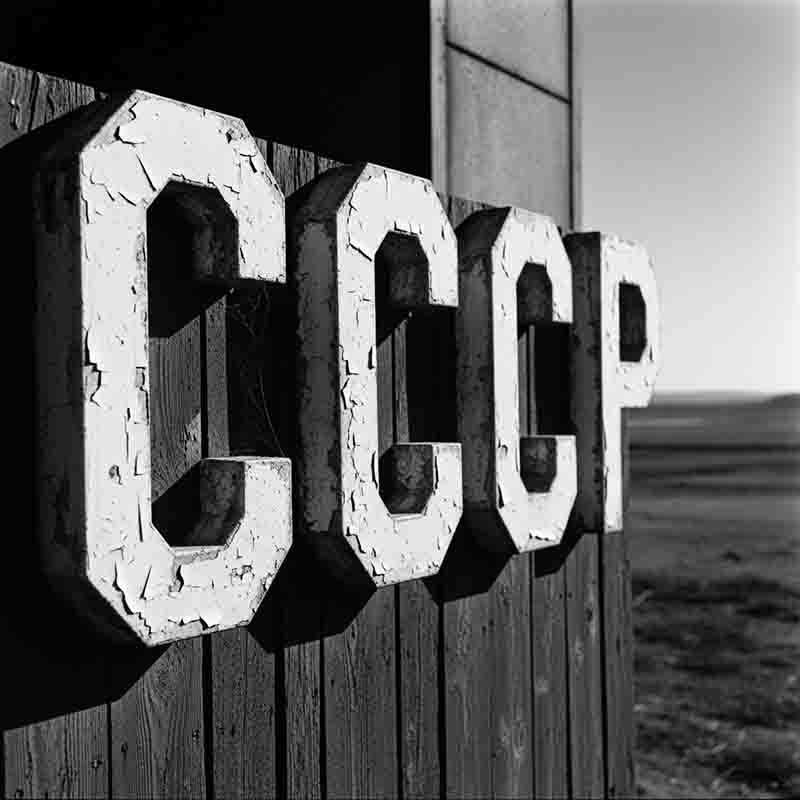
The abbreviation was widely used on official documents, currency, and state symbols of the Soviet Union.
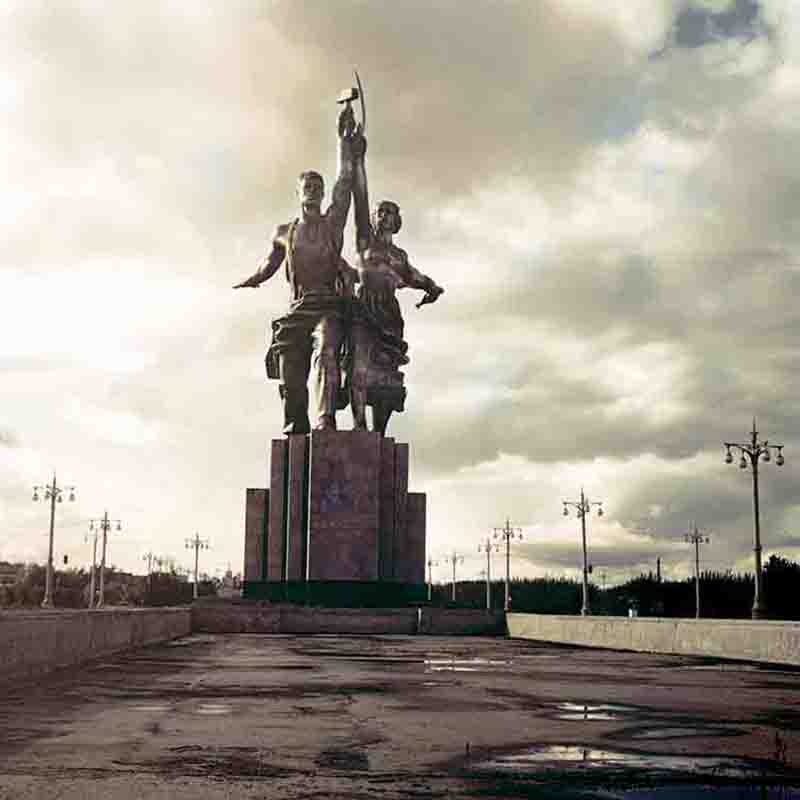
The iconic sculpture "Worker and Kolkhoz Woman", created by Vera Mukhina for the 1937 World's Fair in Paris.
About This Article
This article examines the Yalta Conference of February 1945, the pivotal meeting of Roosevelt, Churchill, and Stalin that shaped postwar Europe. Part of the Cold War series on soviet-union.com
Last Updated: February 8, 2025 | Reading Time: 12 minutes