The Berlin Blockade of 1948-1949 was the first major international crisis of the Cold War and a defining moment in the confrontation between the United States and the USSR. When Joseph Stalin blocked all land and water routes to West Berlin, the Western Allies responded not with force, but with an unprecedented logistical feat: supplying 2 million West Berliners entirely by air for nearly a year.
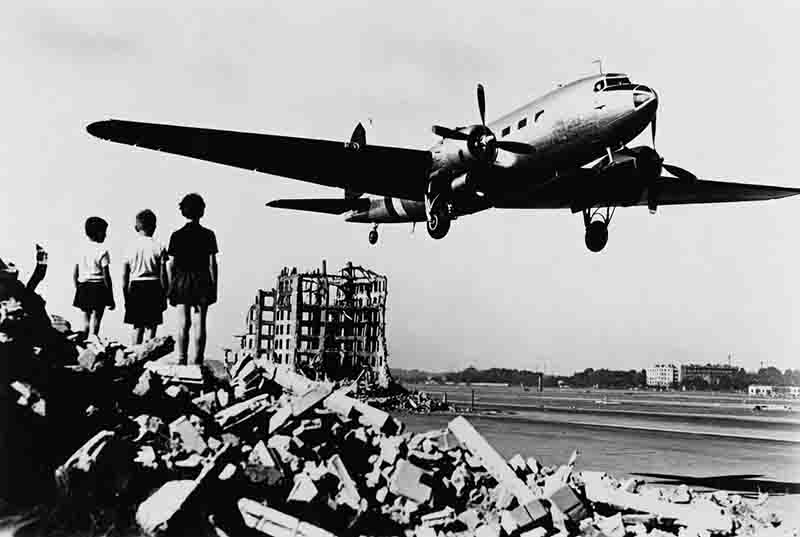
The blockade began on June 24, 1948, when Soviet forces cut off all road, rail, and canal access to the Western-occupied sectors of Berlin. Stalin aimed to force the Western powers to abandon their plans for a separate West German state and withdraw from the city isolated 110 miles inside the Soviet zone of occupation.
The Western response, codenamed Operation Vittles by the Americans and Operation Plainfare by the British, transformed a potential military confrontation into a humanitarian triumph. At its peak, an aircraft landed in West Berlin every 45 seconds around the clock, delivering everything from coal to candy.
The Berlin Airlift demonstrated Western technological superiority, logistical capability, and political will. It marked a turning point in the Cold War, confirming the division of Germany and Europe while establishing the precedent that the West would not retreat from Soviet pressure. When Stalin lifted the blockade on May 12, 1949, the Western Allies had achieved a significant psychological and strategic victory without firing a shot.
Key Concept: The Airlift as Strategy
The Berlin Airlift exemplified the "Cold War" concept itself: a confrontation resolved through non-military means. By choosing air supply over armed convoys, the West avoided direct military conflict while demonstrating resolve. The airlift proved that technological superiority and logistical innovation could defeat geopolitical pressure without resorting to war.
Origins: Divided Germany and the Road to Crisis
The roots of the Berlin Blockade lay in the postwar division of Germany and the incompatible visions of the victorious Allies. When World War II ended in May 1945, Germany was divided into four occupation zones controlled by the United States, Britain, France, and the Soviet Union. Berlin, located deep within the Soviet zone, was similarly divided into four sectors despite being 110 miles from the nearest Western-controlled territory.
Divergent Visions for Germany
From the outset, the Western powers and the Soviet Union had fundamentally different goals for Germany's future. The Soviet Union, having suffered devastating losses during the war, sought massive reparations and a weak, neutral Germany that could never again threaten Russian security. Stalin also hoped to extend Soviet influence throughout the country.
The United States and Britain, by contrast, viewed German economic recovery as essential for European stability. They feared that a destitute Germany would become fertile ground for communism. As tensions between the former allies escalated into the Cold War, Germany became the primary battlefield of ideological and geopolitical competition.
The London Program and Currency Reform
In early 1948, the Western powers took decisive steps toward creating a separate West German state. The London Program, announced in June, called for the establishment of a federal German government in the Western zones. This represented a direct challenge to Soviet hopes for a unified, neutral Germany under Soviet influence.
The immediate trigger for the blockade was currency reform. On June 20, 1948, the Western powers introduced the Deutsche Mark in their zones and in West Berlin. The new currency replaced the nearly worthless Reichsmark and was designed to stabilize the economy and facilitate the Marshall Plan's implementation. Stalin viewed this as economic warfare against the Soviet zone and a step toward permanent German division.
"The whole of Germany must be our field of action, or alternatively, we must give up Berlin."
The Blockade Begins (June 24, 1948)
On June 24, 1948, Soviet authorities abruptly halted all road, rail, and barge traffic into West Berlin. They claimed "technical difficulties" required the suspension of freight and passenger traffic, but the true purpose was clear: to force the Western powers to abandon West Berlin or accept Soviet terms for all of Germany.
The Strategic Situation
West Berlin's position was precarious. The city of 2 million people required approximately 12,000 tons of supplies daily to survive: 4,000 tons of food, 3,000 tons of coal for heating and electricity, and 5,000 tons of other essentials. Before the blockade, 75% of these supplies arrived by road and rail through the Soviet zone. The blockade threatened mass starvation and economic collapse within weeks.
The Western garrison of 15,000 troops was isolated and vulnerable. Soviet forces in the surrounding zone numbered 1.5 million men. Military options were limited: an armed convoy to break the blockade risked war; evacuation would be a humiliating defeat; surrender was unthinkable.
The Air Corridors
Crucially, the Soviets did not block the three air corridors into Berlin, established by agreement in 1945. These narrow 20-mile-wide corridors connected West Berlin to bases in the Western zones. General Lucius Clay, the American military governor, immediately proposed supplying the city by air. Many considered this impossible: the U.S. Air Force estimated it could deliver only 700 tons per day, far short of the 4,000 tons minimum requirement.
The Calculated Risk
Stalin likely did not believe the airlift could succeed. Soviet intelligence underestimated Western airlift capacity and overestimated the political pressure that would force Western withdrawal. The Soviet leader gambled that the West retreat rather than risk war or undertake an impossible logistical effort. The miscalculation proved costly.
Operation Vittles: The Airlift (June 1948 - May 1949)
The Berlin Airlift began on June 26, 1948, just two days after the blockade started. What began as an emergency measure evolved into one of the greatest logistical achievements in history, demonstrating American industrial capacity and organizational skill on an unprecedented scale.
Building the Airlift
General William Tunner, an airlift specialist who had flown "The Hump" over the Himalayas during World War II, took command in August 1948. He transformed a chaotic emergency operation into a precision machine. Under his direction, the airlift adopted assembly-line techniques: strict schedules, standardized procedures, and continuous operations regardless of weather.
The scale of operations was staggering:
Aircraft: C-47s, C-54s, and British Avro Yorks and Handley Page Hastings
Personnel: Over 5,000 pilots, crew members, and ground staff
Bases: Rhein-Main and Wiesbaden (American), Wunstorf and Fassberg (British)
Destinations: Tempelhof, Gatow, and Tegel airports in Berlin
The Numbers
By October 1948, the airlift exceeded its daily target of 4,000 tons. In April 1949, the peak month, 1,398 flights delivered 170,000 tons—an average of one landing every 62 seconds at Tempelhof Airport. Over the entire operation:
Total flights: 277,804
Total cargo: 2.3 million tons (1.5 million tons of coal, 600,000 tons of food)
Peak daily delivery: 12,941 tons (April 16, 1949)
Duration: 462 days
The Candy Bomber
Amidst the massive logistical operation, a small humanitarian gesture captured global imagination. Lieutenant Gail Halvorsen, an American pilot, noticed children watching planes from behind the fence at Tempelhof. He promised to drop candy and gum with handkerchief parachutes, wiggling his wings so they would recognize his plane.
"Operation Little Vittles" began in July 1948. Other pilots joined; American schoolchildren donated candy and handkerchiefs. By January 1949, over 250,000 parachutes had been dropped. Halvorsen became known as the "Candy Bomber" or "Uncle Wiggly Wings," and his gesture symbolized the humanitarian purpose behind the military operation.
“People of this world… look upon this city and see that you should not and cannot abandon this city and this people.”
The Winter Crisis (1948-1949)
The winter of 1948-1949 tested the airlift's limits and Berliners' endurance. As temperatures dropped, coal became the critical cargo. Without adequate fuel, power plants would shut down, water pumps would stop, and the population would freeze. The airlift had to deliver enough coal to heat 2 million people through a German winter while maintaining food supplies.
Weather and Logistics
December 1948 brought the worst weather in a century. Fog closed airports for days; temperatures plunged below zero. Aircraft iced up on the ground; engines failed in the cold. Yet the airlift continued, pilots flying blind through clouds, landing in zero visibility using Ground Controlled Approach radar.
General Tunner imposed ruthless efficiency. Aircraft were stripped of unnecessary equipment to increase payload. Maintenance crews worked 24-hour shifts. New runways were built; Tegel Airport was constructed in 90 days using 19,000 workers, creating a third destination to relieve pressure on Tempelhof and Gatow.
Berliners' Sacrifice
The people of West Berlin endured severe hardship. Ration cards provided only 1,500 calories per day—barely subsistence level. Apartments were unheated; water was rationed; electricity was available only a few hours daily. Yet morale held. In December 1948, 86% of West Berliners voted against surrender in municipal elections, defying Soviet intimidation.
Mayor Ernst Reuter became the symbol of Berlin resistance. His defiant speeches rallied the population: "You peoples of the world, look upon this city!" The Berliners' determination convinced Western leaders that the airlift's cost—ultimately $224 million—was justified.
Psychological Warfare
The blockade became a propaganda disaster for the Soviet Union. Stalin appeared as a tyrant starving women and children; the West appeared as saviors. The contrast between Soviet threats and Western generosity undermined communist prestige in Germany and throughout Europe, strengthening Western resolve and the Atlantic alliance.
The End of the Blockade (May 1949)
By spring 1949, the blockade had clearly failed. The airlift was delivering more supplies than had arrived by land before the crisis. West Berlin was not starving; it was thriving economically despite the siege. The Western powers showed no signs of withdrawing. Stalin faced a choice: escalate to war or admit defeat.
Stalin's Retreat
On May 12, 1949, Soviet authorities announced the lifting of the blockade. Land routes reopened at midnight; the first British convoy entered Berlin shortly after. The airlift continued until September to build stockpiles, but the crisis was over. Stalin had suffered a humiliating diplomatic defeat without achieving any of his objectives.
The Soviet leader miscalculated on multiple levels. He underestimated Western airlift capacity, overestimated Berliners' willingness to accept Soviet rule, and failed to anticipate the propaganda damage of appearing to starve civilians. The blockade convinced Western powers that Soviet intentions were aggressive, accelerating the formation of NATO and the integration of West Germany into the Western alliance.
Consequences
The blockade's end confirmed the division of Germany. In May 1949, the Federal Republic of Germany (West Germany) was established; in October, the German Democratic Republic (East Germany) followed. Berlin remained divided, the Western sectors becoming an island of capitalism within communist East Germany—a persistent irritant to Soviet ambitions and a symbol of Western commitment.
"We have won a battle, not the war. The blockade has failed, but the Soviet threat remains. We must remain vigilant."
Human Cost and Legacy
The Berlin Airlift was remarkably successful in minimizing casualties, but it was not without cost. The operation demonstrated both the potential and the limits of air power in humanitarian operations.
Fatalities
Seventy American and British personnel died in airlift-related accidents: 31 Americans and 39 British. Aircraft crashed in the fog, collided on the ground, or suffered mechanical failure. The worst single incident occurred on July 28, 1948, when a C-54 crashed into an apartment building, killing the three crew members and 11 Berliners on the ground.
German casualties were remarkably low given the scale of operations. The disciplined procedures and safety measures imposed by General Tunner kept ground accidents to a minimum. The Berliners' cooperation—children staying away from runways, adults following safety protocols—contributed to this success.
Strategic Legacy
The Berlin Airlift established several precedents that shaped the Cold War:
Non-military confrontation: The crisis was resolved without direct combat, establishing the Cold War pattern of proxy conflicts and indirect pressure.
Air power for logistics: The airlift demonstrated that aircraft could sustain large populations, influencing later humanitarian operations.
Western resolve: The successful defense of Berlin convinced allies that American commitments were credible, strengthening NATO.
German realignment: West Germans turned decisively toward the West, abandoning neutrality as a viable option.
The Airlift's Successor
The Berlin Airlift's success directly influenced the formation of NATO in April 1949. The crisis demonstrated that European security required American commitment and that Soviet aggression could be deterred by coordinated Western response. The airlift's commander, General Curtis LeMay, later became a key figure in building the Strategic Air Command, applying airlift lessons to nuclear deterrence.
Berlin Blockade Timeline
Currency Reform
Western powers introduce the Deutsche Mark in their zones and West Berlin, triggering Soviet response.
Blockade Begins
Soviet authorities halt all road, rail, and barge traffic into West Berlin, citing "technical difficulties."
Operation Vittles Begins
First American C-47s land at Tempelhof with supplies; the Berlin Airlift officially begins.
Worst Airlift Accident
A C-54 crashes into an apartment building, killing 3 crew members and 11 Berliners.
Tunner Takes Command
General William Tunner assumes command, transforming the airlift into a precision operation.
Winter Crisis
Worst weather in a century challenges operations; fog and cold test airlift limits.
Berlin Elections
West Berliners vote 86% against surrender, demonstrating popular resolve.
Easter Parade
Record day: 1,398 flights deliver 12,941 tons of cargo in 24 hours.
Blockade Lifted
Soviet authorities announce end of blockade; land routes reopen at midnight.
Airlift Ends
Operation Vittles officially concludes after 462 days of continuous operations.
12 Key Facts About the Berlin Blockade
2.3 Million Tons: The airlift delivered 2.3 million tons of cargo, including 1.5 million tons of coal and 600,000 tons of food.
Every 45 Seconds: At peak operations, an aircraft landed in West Berlin every 45 seconds around the clock.
462 Days: The airlift lasted 462 days, from June 26, 1948, to September 30, 1949.
277,000 Flights: Over 277,000 flights were conducted by American and British aircraft.
101 Fatalities: 70 American and British personnel died in accidents, plus 11 Berliners killed in the July 28, 1948 crash.
3 Air Corridors: The airlift operated through three narrow 20-mile-wide air corridors established in 1945.
2 Million People: The airlift sustained 2 million West Berliners completely by air for nearly a year.
12,000 Tons Daily: West Berlin required 12,000 tons of supplies daily; the airlift eventually exceeded this requirement.
$224 Million Cost: The total cost of the airlift was $224 million (approximately $2.8 billion in 2024 dollars).
Candy Bomber: Lieutenant Gail Halvorsen dropped over 250,000 candy parachutes to Berlin children.
Tegel Construction: Tegel Airport was built in just 90 days using 19,000 workers to create a third airfield.
Stalin's Defeat: The blockade ended without a single concession from the Western powers, marking a major Soviet diplomatic failure.
Frequently Asked Questions
Continue Reading
← Previous
Next →
On This Page
Key Figures
- Joseph Stalin — Soviet General Secretary
- Harry S. Truman — U.S. President
- General Lucius Clay — U.S. Military Governor
- General William Tunner — Airlift Commander
- Ernst Reuter — Mayor of West Berlin
- Gail Halvorsen — "Candy Bomber"
Related Articles
Download: Available 10.4.26
Get the complete Berlin Blockade analysis with primary source documents. (Available: April 26)
Berlin Blockade PDF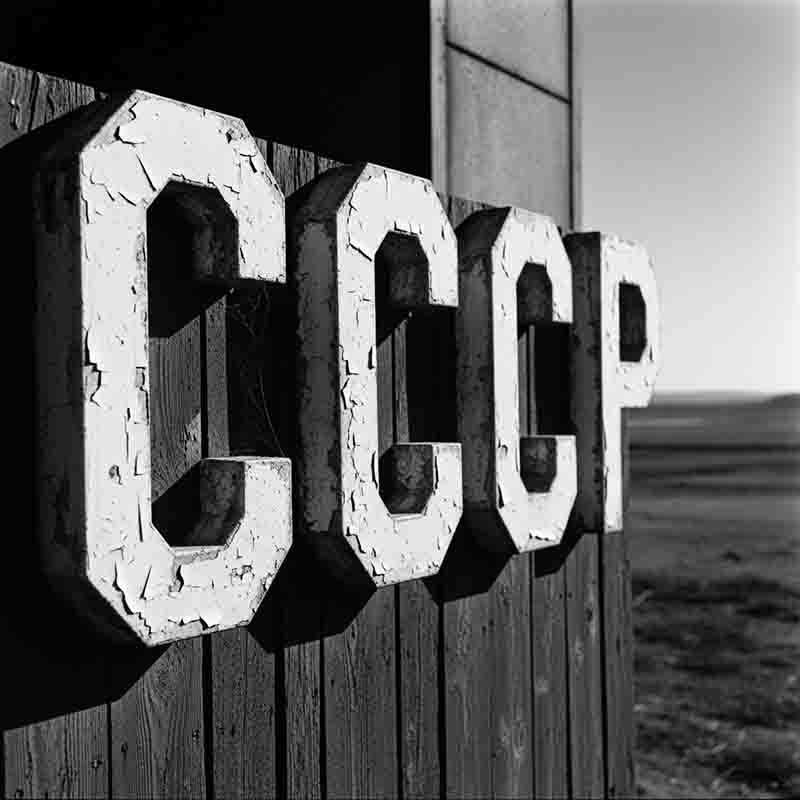
The abbreviation was widely used on official documents, currency, and state symbols of the Soviet Union.
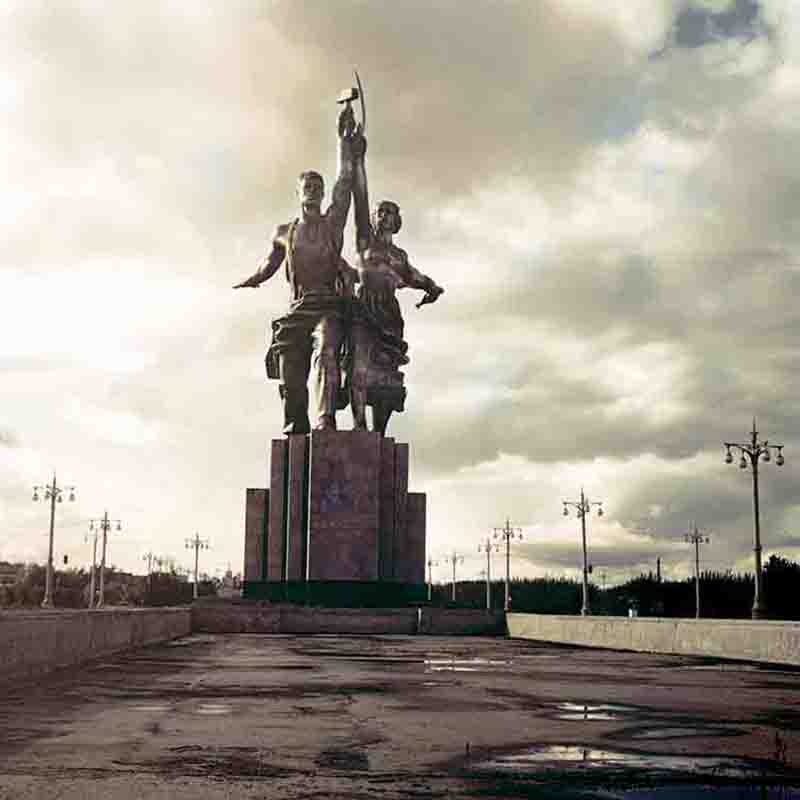
The iconic sculpture "Worker and Kolkhoz Woman", created by Vera Mukhina for the 1937 World's Fair in Paris.
About This Article
This article examines the Berlin Blockade of 1948-1949 and the airlift that defeated it. Part of the Cold War series on soviet-union.com.
Last Updated: February 9, 2026 | Reading Time: 15 minutes