The atomic bomb fundamentally transformed the Cold War, creating a bipolar nuclear standoff between the United States and the USSR. When the first atomic bomb detonated over Hiroshima on August 6, 1945, it marked not only the end of World War II but the beginning of a new era in international relations.
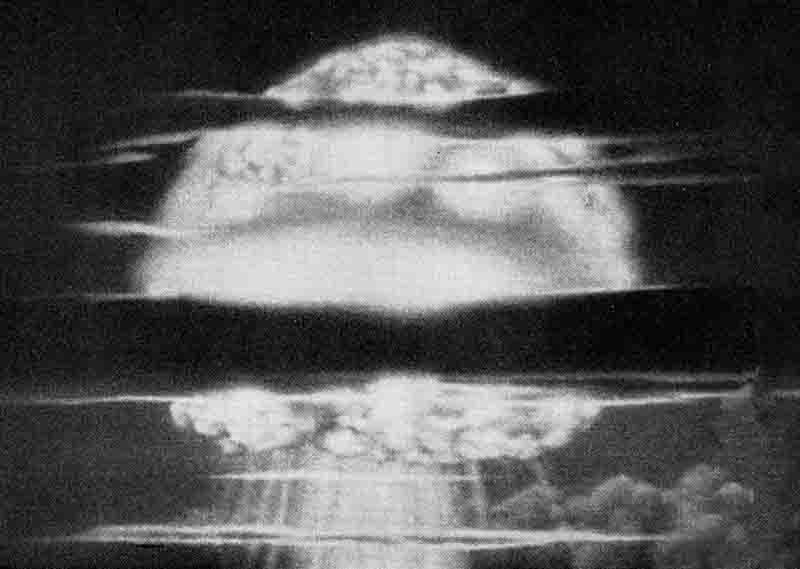
The end of mankind, drawn in the sky as a prophecy of its own demise: the atomic explosion. Demonic and at the same time magnificent, it symbolizes the uncanny ability of the human spirit to accomplish both the miraculous and the diabolical. - Peter Bock-Schroeder, 1954
The Soviet Union, though officially an ally, had already learned of the American atomic program through espionage. Stalin's reaction to Truman's casual mention of the "new weapon" at Potsdam was characteristically restrained, he already knew through Soviet Espionage.
The four-year American nuclear monopoly (1945-1949) shaped early Cold War diplomacy, but the Soviet RDS-1 test on August 29, 1949, fundamentally altered the balance of power. The subsequent hydrogen bomb race and the doctrine of Mutually Assured Destruction (MAD) created a terrifying but stable nuclear standoff.
Key Concept: Nuclear Revolution
The atomic bomb represented a revolution in warfare and international relations. For the first time in history, a single weapon could destroy an entire city. This created a "balance of terror" where both superpowers possessed the capability to destroy each other, fundamentally altering the nature of great power competition.
Hiroshima and Soviet Reaction
On August 6, 1945, the American B-29 bomber Enola Gay dropped the uranium bomb "Little Boy" on Hiroshima, killing approximately 80,000 people immediately and tens of thousands more from radiation effects. Three days later, "Fat Man" destroyed Nagasaki. These attacks forced Japan's surrender and demonstrated the awesome power of atomic weapons to the world.
Stalin at Potsdam
At the Potsdam Conference on July 24, 1945, President Harry Truman casually approached Stalin to inform him that the United States had "a new weapon of unusual destructive force." Stalin showed little visible reaction, he already knew about the atomic bomb through Soviet intelligence. According to Truman's account, Stalin simply replied that he hoped the U.S. would make "good use of it against the Japanese."
"I casually mentioned to Stalin that we had a new weapon of unusual destructive force. The Russian Premier showed no special interest. All he said was that he was glad to hear it and hoped we would make 'good use of it against the Japanese.'"
The Soviet Response
Behind the scenes, Stalin was deeply concerned. He immediately ordered the acceleration of the Soviet atomic program, which had been underway since 1942. The Soviet leader understood that the American nuclear monopoly represented a threat to Soviet security and a tool of diplomatic pressure. Within days of Hiroshima, Soviet scientists were working around the clock to develop their own bomb.
Soviet Espionage
Soviet intelligence had penetrated the Manhattan Project through spies including Klaus Fuchs, a German-born British physicist; Julius and Ethel Rosenberg; and Theodore Hall. This espionage provided crucial information about bomb design and production methods, accelerating the Soviet program by years.
The Soviet Bomb: RDS-1
On August 29, 1949, at 7:00 AM Moscow time, the Soviet Union successfully tested its first atomic bomb at the Semipalatinsk test site in Kazakhstan. Code-named RDS-1 (in Russian: Rossiya Delayet Sama—"Russia Does Itself") and nicknamed "First Lightning" (Pervaya Molniya), the device yielded approximately 22 kilotons—comparable to the American bombs used against Japan.
Breaking the Monopoly
The RDS-1 test ended the four-year American nuclear monopoly. American intelligence detected the test through atmospheric sampling, confirming that the Soviet Union had become the world's second nuclear power. The American public learned of the Soviet bomb on September 23, 1949, when President Truman made a terse announcement.
Soviet Program
- • Started: 1942
- • Accelerated: 1945
- • First test: August 29, 1949
- • Yield: ~22 kilotons
- • Location: Semipalatinsk
Key Scientists
- • Igor Kurchatov (chief)
- • Yulii Khariton
- • Andrei Sakharov
- • Lavrenty Beria (administrator)
- • Klaus Fuchs (spy)
Beria's Role
The Soviet atomic project was administered with ruthless efficiency by Lavrenty Beria, head of the secret police (NKVD/MVD). Beria oversaw both the scientific program and the vast network of Gulag labor camps that provided uranium mining and processing. The combination of brilliant scientists, espionage, forced labor, and absolute political priority enabled the Soviet Union to achieve the bomb years earlier than Western intelligence had predicted.
The Nuclear Arms Race
The Soviet atomic bomb test triggered an accelerating competition between the superpowers to develop ever more powerful nuclear weapons. This arms race would continue throughout the Cold War, with both sides accumulating tens of thousands of warheads.
The Hydrogen Bomb Race
The next phase of the arms race focused on thermonuclear weapons—the hydrogen bomb. The United States tested the first true H-bomb in November 1952, but the Soviet Union followed just nine months later with a more advanced design. Soviet physicist Andrei Sakharov developed the "Layer Cake" (Sloika) design, which was actually deployable, unlike the massive first American device.
"The arms race acquired its own momentum. Each side had to assume that the other was seeking decisive superiority, and each therefore had to keep developing new weapons systems."
Nuclear Proliferation
By the 1960s, both superpowers possessed thousands of nuclear warheads. The numbers continued to grow through the 1970s and 1980s, reaching a combined total of approximately 60,000-70,000 warheads at the peak of the Cold War. This massive arsenal was enough to destroy human civilization many times over.
Mutually Assured Destruction (MAD)
By the 1960s, both superpowers possessed enough nuclear weapons to destroy each other completely. This doctrine of Mutually Assured Destruction created a terrifying stability—neither side could risk nuclear war because the consequences would be catastrophic for both. Paradoxically, these weapons of mass destruction prevented direct superpower conflict.
The arms race extended beyond bombs to delivery systems—intercontinental ballistic missiles (ICBMs), submarine-launched ballistic missiles (SLBMs), and strategic bombers. Each technological advance by one side triggered a response from the other, creating an ever-escalating cycle of weapon development.
Atomic Diplomacy
The atomic bomb shaped Cold War diplomacy from the outset. During the brief period of American nuclear monopoly (1945-1949), Truman administration officials hoped the bomb might provide diplomatic leverage against the Soviet Union. However, this "atomic diplomacy" had limited practical effect.
The Baruch Plan
In 1946, the United States proposed the Baruch Plan for international control of atomic energy under the United Nations. The plan would have required the Soviet Union to halt its nuclear program and open its territory to inspection before receiving any atomic information. Stalin rejected this proposal, viewing it as an attempt to maintain American nuclear monopoly. The plan's failure marked the beginning of the nuclear arms race.
"The Baruch Plan was not a genuine offer to share atomic secrets but a propaganda device to place the onus for the arms race on the Soviet Union."
The Bomb and European Division
The atomic bomb intensified the division of Europe. The threat of Soviet conventional military superiority in Europe was balanced by American nuclear weapons, creating a precarious stability. NATO's strategy relied on nuclear deterrence to offset Soviet conventional advantages, while the Soviet Union sought to neutralize this advantage through its own nuclear buildup.
The Human Cost and Legacy
The atomic bombings of Hiroshima and Nagasaki killed approximately 200,000 people, mostly civilians. The survivors, known as hibakusha in Japanese, suffered from radiation-related illnesses for decades. The Soviet nuclear program also had devastating human costs, particularly for the Gulag prisoners forced to mine uranium in deadly conditions.
Nuclear Testing
Both superpowers conducted hundreds of nuclear tests, exposing their own citizens and military personnel to radiation. The Soviet Union's test site at Semipalatinsk in Kazakhstan was the scene of 456 nuclear tests between 1949 and 1989, with devastating health consequences for the local population. The American test site at the Nevada Test Site similarly exposed "downwinders" to radioactive fallout.
Health Consequences
The health effects of nuclear weapons extended far beyond the immediate blast zones. Radiation from testing caused elevated rates of cancer and birth defects among populations near test sites. The "downwinders" in Nevada and Utah, and the residents of Semipalatinsk, suffered generations of health problems from exposure to radioactive fallout.
The End of the Cold War
The nuclear arms race continued until the late 1980s, when Mikhail Gorbachev and Ronald Reagan began negotiating reductions. The Intermediate-Range Nuclear Forces (INF) Treaty of 1987 and the Strategic Arms Reduction Treaties (START) significantly reduced nuclear arsenals. However, both the United States and Russia still maintain thousands of nuclear weapons today.
Atomic Bomb Timeline: 1942-1991
Manhattan Project Begins
United States launches secret program to develop atomic weapons. Soviet intelligence begins penetrating the project.
Trinity Test
First atomic bomb successfully tested at Alamogordo, New Mexico. Truman receives news at Potsdam Conference.
Truman Informs Stalin
Truman casually mentions "new weapon" to Stalin at Potsdam. Soviet leader shows little reaction—he already knows through espionage.
Hiroshima
"Little Boy" uranium bomb dropped on Hiroshima, Japan. Approximately 80,000 killed immediately; tens of thousands more from radiation.
Nagasaki
"Fat Man" plutonium bomb dropped on Nagasaki. Japan announces surrender August 15.
Baruch Plan
U.S. proposes international atomic control under UN. Soviet Union rejects as attempt to maintain American monopoly.
Soviet RDS-1 Test
Soviet Union successfully tests first atomic bomb at Semipalatinsk, Kazakhstan. American nuclear monopoly ends.
First H-Bomb
United States tests first true hydrogen bomb (Ivy Mike). Device too large to be weaponized.
Soviet H-Bomb
Soviet Union tests deployable hydrogen bomb using Andrei Sakharov's "Layer Cake" design.
Cuban Missile Crisis
World comes closest to nuclear war during confrontation over Soviet missiles in Cuba.
INF Treaty
Reagan and Gorbachev sign Intermediate-Range Nuclear Forces Treaty, beginning nuclear reductions.
START I
Strategic Arms Reduction Treaty signed as Cold War ends. Both sides agree to significant nuclear cuts.
12 Key Facts About the Atomic Bomb and the Cold War
Hiroshima and Nagasaki: The only two atomic bombs ever used in warfare killed approximately 200,000 people, mostly civilians, in August 1945.
Soviet Espionage: Soviet spies including Klaus Fuchs penetrated the Manhattan Project, providing crucial information that accelerated the Soviet bomb program by years.
Stalin's Knowledge: Stalin already knew about the American atomic bomb when Truman mentioned it at Potsdam, having been informed by Soviet intelligence.
RDS-1 Test: The Soviet Union's first atomic bomb test on August 29, 1949, ended the four-year American nuclear monopoly.
Beria's Administration: Lavrenty Beria administered the Soviet atomic program using both brilliant scientists and Gulag forced labor.
Hydrogen Bomb Race: The Soviet Union tested its first deployable H-bomb just nine months after the American test, surprising Western intelligence.
MAD Doctrine: Mutually Assured Destruction—the understanding that nuclear war would destroy both sides—paradoxically prevented direct superpower conflict.
Peak Arsenal: At the height of the Cold War, the US and USSR together possessed approximately 60,000-70,000 nuclear warheads.
Semipalatinsk: The Soviet Union conducted 456 nuclear tests at this Kazakh site, with devastating health consequences for local populations.
Baruch Plan Failure: The 1946 American proposal for international atomic control failed because it required Soviet transparency before providing any atomic information.
Cuban Missile Crisis: The 1962 confrontation brought the world closer to nuclear war than at any other time in history.
Modern Arsenal: Today Russia maintains about 5,580 nuclear warheads and the United States about 5,044—still enough to destroy civilization.
— J. Robert Oppenheimer, quoting the Bhagavad Gita after the Trinity test
Frequently Asked Questions
Continue Reading
← Previous
Next →
On This Page
Key Figures
- Harry S. Truman — U.S. President
- Joseph Stalin — Soviet leader
- Igor Kurchatov — Soviet physicist
- Andrei Sakharov — H-bomb designer
- Lavrenty Beria — Soviet administrator
- Klaus Fuchs — Atomic spy
Key Events
- Aug 6, 1945: Hiroshima
- Aug 9, 1945: Nagasaki
- Aug 29, 1949: Soviet RDS-1 test
- Nov 1952: First H-bomb
- Aug 1953: Soviet H-bomb
Related Articles
Resources
Explore primary documents and historical analysis.
Stalin and the BombDownload: Available 10.3.26
Get the complete Iron Curtain analysis with primary source documents.
Iron Curtain PDF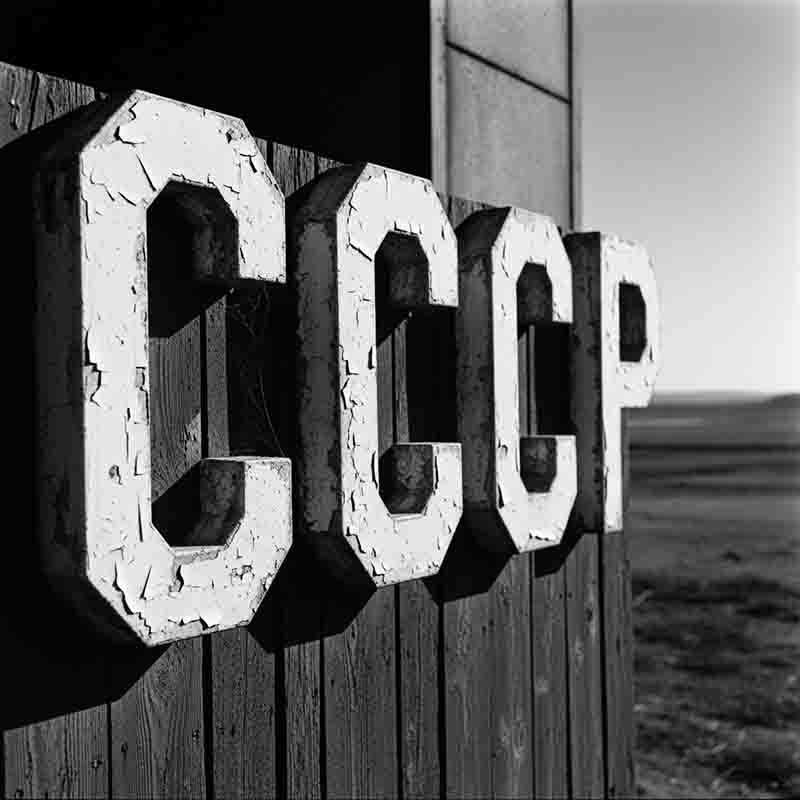
The abbreviation was widely used on official documents, currency, and state symbols of the Soviet Union.
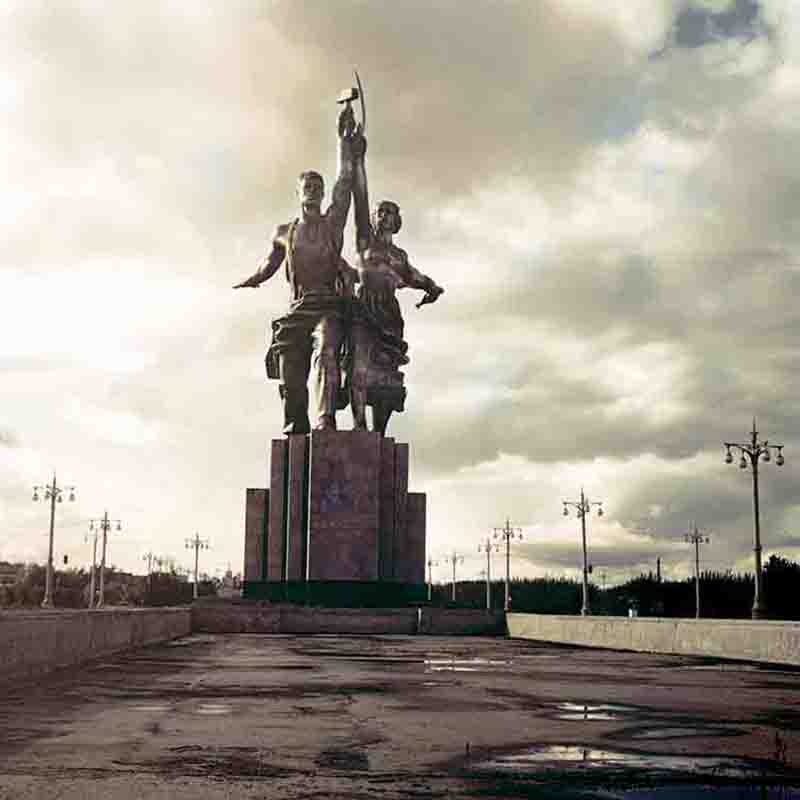
The iconic sculpture "Worker and Kolkhoz Woman", created by Vera Mukhina for the 1937 World's Fair in Paris.
About This Article
This article examines the Iron Curtain from Churchill's 1946 speech to its fall in 1989. Part of the Cold War series on soviet-union.com
Last Updated: February 16, 2026 | Reading Time: 15 minutes