The Truman Doctrine marked the official beginning of the United States' commitment to containing Soviet expansion. Delivered before a joint session of Congress on March 12, 1947, President Harry S. Truman's speech requested $400 million in military and economic assistance for Greece and Turkey, establishing a principle that would guide American foreign policy for the next four decades.
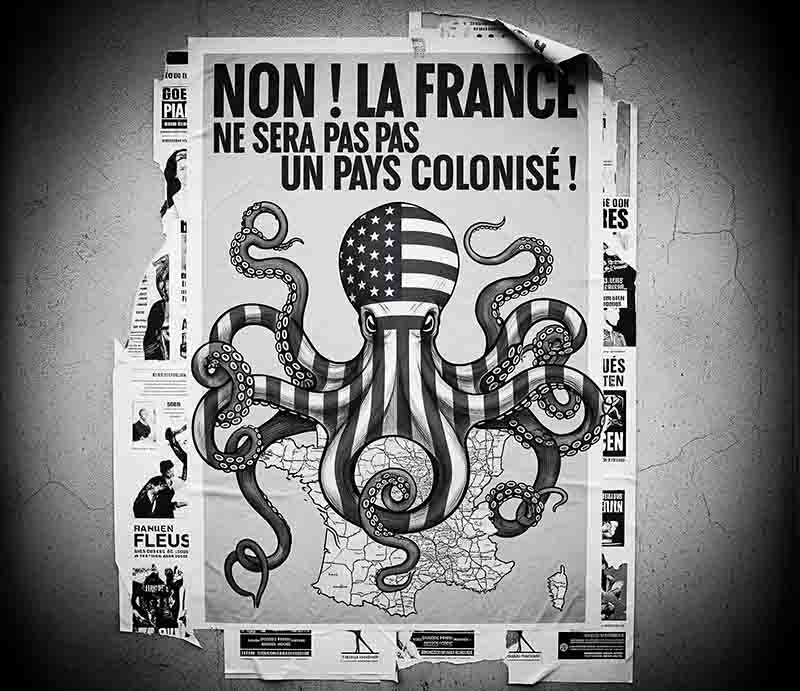
The doctrine represented a fundamental shift in American foreign policy. For the first time, the United States committed itself to intervening in distant conflicts not directly involving American territory, based on the principle that the security of free peoples everywhere was linked to American security.
More than a simple aid request, the Truman Doctrine articulated a global strategy of containment that would shape the Cold War from Greece to Korea, from Berlin to Vietnam.
The speech transformed George Kennan's theoretical containment strategy into concrete policy. It established the precedent that the United States would provide military and economic assistance to nations threatened by communist insurgency or Soviet pressure, creating the framework for the Marshall Plan, NATO, and decades of American Cold War diplomacy.
Key Concept: The Domino Theory
Undersecretary of State Dean Acheson articulated what would become known as the "domino theory" in congressional briefings before Truman's speech. He argued that if Greece and Turkey fell to communism, the contagion would spread to Iran, India, and throughout the Eastern Mediterranean, endangering the entire free world.
The Crisis: Britain's Withdrawal (February 1947)
The immediate trigger for the Truman Doctrine came not from Washington or Moscow, but from London. On February 21, 1947, the British Embassy informed the U.S. State Department that His Majesty's Government could no longer provide financial and military aid to Greece and Turkey. The British economy, devastated by six years of total war, could no longer sustain its global commitments.
The Greek Civil War
Since 1944, Greece had been engulfed in civil conflict between the Western-backed government and communist-led insurgents. The National Liberation Front (EAM), supported by the communist National People's Liberation Army (ELAS), sought to overthrow the Greek monarchy and establish a socialist state. British forces had maintained the government in power since 1944, but the insurgency persisted, fueled by economic desperation and Soviet-bloc support from neighboring Albania, Yugoslavia, and Bulgaria.
By early 1947, the situation had deteriorated dramatically. The Greek government faced collapse without external support. American intelligence estimated that communist forces could seize control within months if British aid ceased. The strategic implications were stark: Soviet influence would extend to the Mediterranean, threatening the Suez Canal and Middle Eastern oil supplies.
Turkey Under Pressure
Turkey faced a different but equally serious threat. The Soviet Union had demanded joint control of the Dardanelles Straits, the strategic waterway connecting the Black Sea to the Mediterranean. Turkish sovereignty was compromised, and Soviet pressure threatened to bring this crucial NATO ally into the Soviet sphere.
"The British are finished in the Mediterranean. If we don't take over, the Russians will."
The Scissors Crisis
The simultaneous expansion of Soviet power and contraction of British influence created what policymakers called a "scissors crisis." As one empire withdrew, another advanced. The vacuum left by British retrenchment threatened to be filled by Soviet expansion unless the United States acted decisively.
President Truman faced a momentous decision. Isolationist sentiment remained strong in Congress and the American public. The 1946 midterm elections had given Republicans control of both houses for the first time since 1930. Yet Truman concluded that inaction would invite Soviet domination of the Eastern Mediterranean, endangering American strategic interests and global stability.
The Speech: "Supporting Free Peoples" (March 12, 1947)
On March 12, 1947, President Truman addressed a joint session of Congress to request emergency assistance for Greece and Turkey. The speech, drafted over eight revisions with input from Secretary of State George Marshall and Undersecretary Dean Acheson, framed the request in sweeping ideological terms that transcended the immediate crisis.
The Two Ways of Life
Truman articulated the Cold War as a struggle between two incompatible systems:
"At the present moment in world history nearly every nation must choose between alternative ways of life. The choice is too often not a free one. One way of life is based upon the will of the majority, and is distinguished by free institutions, representative government, free elections, guarantees of individual liberty, freedom of speech and religion, and freedom from political oppression. The second way of life is based upon the will of a minority forcibly imposed upon the majority. It relies upon terror and oppression, a controlled press and radio, fixed elections, and the suppression of personal freedoms."
The Doctrine Defined
The core of the Truman Doctrine was contained in two sentences that would define American foreign policy for a generation:
"I believe that it must be the policy of the United States to support free peoples who are resisting attempted subjugation by armed minorities or by outside pressures. I believe that we must assist free peoples to work out their own destinies in their own way."
The Request
Truman requested $400 million in assistance, divided between military and economic aid:
$300 million for Greece: Military equipment, training, and economic stabilization to defeat the communist insurgency and rebuild the shattered economy.
$100 million for Turkey: Military modernization to resist Soviet pressure and maintain territorial integrity.
Advisory personnel: American civilian and military experts to assist in reconstruction and supervise aid distribution.
Training programs: Instruction for Greek and Turkish military and civilian personnel.
Presidential Rhetoric
Truman deliberately strengthened the language throughout the drafting process. Where early drafts used "should," Truman insisted on "must." He wanted no ambiguity about American commitment. As he later wrote in his memoirs: "I wanted no hedging in this speech. This was America's answer to the surge of expansion of Communist tyranny."
Congressional Debate and Passage (March-May 1947)
Truman's request faced significant opposition in Congress. Republican majorities in both houses, elected on platforms of reduced government spending and domestic priorities, were skeptical of massive foreign aid commitments. Isolationist voices warned against entangling alliances and distant conflicts. Yet the administration mounted a persuasive campaign that ultimately secured bipartisan support.
Selling the Doctrine
Senator Arthur Vandenberg, the Republican chairman of the Senate Foreign Relations Committee, provided crucial support. A former isolationist who had converted to internationalism during World War II, Vandenberg advised Truman: "Mr. President, the only way you are going to get what you want is to make a speech and scare the hell out of the country." Truman's March 12 address followed this counsel, framing the stakes in existential terms.
Dean Acheson's briefing to congressional leaders proved decisive. Invoking the domino theory, he warned that the fall of Greece and Turkey would open the entire Middle East and South Asia to Soviet influence. The comparison to Rome and Carthage, describing an irreconcilable conflict between two great powers, convinced skeptical legislators that inaction was more dangerous than intervention.
Legislative Victory
After weeks of debate, Congress approved the Truman Doctrine:
April 22, 1947: Senate passes aid bill by voice vote
May 9, 1947: House approves measure 287-107
May 22, 1947: Truman signs legislation into law
The Republican Congress's endorsement established the bipartisan foundation of Cold War foreign policy. For the next four decades, containment would command support across party lines, from Truman and Kennedy to Eisenhower and Nixon.
"The sanction of aid to Greece and Turkey by a Republican Congress indicated the beginning of a long and enduring bipartisan Cold War foreign policy."
Implementation and Impact (1947-1950)
The Truman Doctrine's implementation demonstrated both the possibilities and limitations of American power. In Greece, U.S. aid proved decisive. In Turkey, deterrence succeeded. But the doctrine's global implications extended far beyond these initial commitments.
Victory in Greece
American assistance transformed the Greek civil war. Military aid included modern weapons, aircraft, and naval vessels. Economic stabilization restored the currency and rebuilt infrastructure. American military advisors improved Greek army tactics and logistics.
By 1949, the communist insurgency was defeated. The Greek government, supported by American aid, established control throughout the country. The victory validated containment theory: determined Western support could prevent communist takeovers without direct American military intervention.
Deterrence in Turkey
In Turkey, American aid strengthened military capabilities and signaled commitment. Soviet pressure on the Dardanelles eased. Turkey remained firmly in the Western camp, eventually joining NATO in 1952. The Truman Doctrine's deterrent effect prevented crisis rather than resolving one.
Global Expansion
The Truman Doctrine established precedents that extended worldwide:
Marshall Plan (1948): Economic aid to rebuild Western Europe
Berlin Airlift (1948-1949): Defiance of Soviet blockade
NATO (1949): Military alliance for collective defense
Korean War (1950-1953): Military intervention against communist aggression
Each application expanded the doctrine's scope. What began as aid to two specific nations evolved into a global system of alliances, military bases, and economic relationships designed to contain Soviet influence.
Economic vs. Military Containment
The Truman Doctrine combined both approaches. Greece received primarily military aid to defeat insurgency. Turkey received military assistance for deterrence. The subsequent Marshall Plan emphasized economic reconstruction. This dual strategy—military strength plus economic prosperity—became the template for American Cold War policy.
Containment: From Theory to Strategy
The Truman Doctrine operationalized the containment strategy that George F. Kennan had articulated in his Long Telegram of February 1946. But the doctrine's military emphasis differed from Kennan's original vision, creating tensions that would persist throughout the Cold War.
Kennan's Original Vision
Kennan had advocated "patient but firm and vigilant containment" through political and economic means. He believed Soviet expansionism could be frustrated without general war, allowing the Soviet system's internal contradictions to produce gradual mellowing or eventual collapse. Military force was to be used sparingly, only at critical points.
Militarization of Containment
The Truman Doctrine and subsequent NSC-68 (1950) shifted containment toward military buildup. Paul Nitze, Kennan's successor as director of the Policy Planning Staff, interpreted containment as requiring overwhelming military force capable of responding to Soviet aggression anywhere. This militarized version guided American policy through the Korean War and beyond.
Kennan became an increasingly vocal critic of his own doctrine's application. He opposed the Korean War's expansion across the 38th parallel, opposed the arms race, and particularly opposed the Vietnam War. He had envisioned containment as primarily political and economic; its military application, he argued, distorted American priorities and provoked Soviet responses.
"The main element of any United States policy toward the Soviet Union must be that of a long-term, patient but firm and vigilant containment of Russian expansive tendencies."
Criticism and Controversy
The Truman Doctrine faced criticism from multiple directions. Some argued it was too aggressive; others that it was not aggressive enough. Some questioned its moral foundations; others its practical wisdom. These debates would recur throughout the Cold War.
Progressive Opposition
Former Vice President Henry Wallace, now leading the Progressive Party, condemned the Truman Doctrine as imperialist aggression. In a March 1947 radio address, Wallace argued that American interference in Greece supported a reactionary monarchy against legitimate popular forces. He warned that the doctrine would lead to global conflict and domestic repression.
Realist Critiques
Columnist Walter Lippmann, in his 1947 book The Cold War, attacked containment as strategically unsound. Lippmann argued that committing to resist communism everywhere would overextend American resources and force reliance on undemocratic allies. He advocated instead negotiated spheres of influence with the Soviet Union.
Conservative Critiques
Conversely, conservative Republicans led by Senator Robert Taft argued that the Truman Doctrine committed the United States to endless foreign entanglements. Taft supported aid to Greece and Turkey as emergency measures but opposed the universal principles Truman articulated. He feared permanent American interventionism.
More aggressive critics, including John Foster Dulles, would later argue that containment was too defensive. Dulles advocated "rollback"—active efforts to liberate Eastern Europe from Soviet control—rather than merely containing further expansion.
Legacy: Four Decades of Global Engagement
The Truman Doctrine's legacy extends across the entire Cold War and into the post-Cold War era. It established patterns of American global engagement that persist today, for better and worse.
Successes
The doctrine achieved its immediate objectives. Greece and Turkey remained in the Western camp. Western Europe recovered economically and avoided communist takeovers. The Soviet Union was contained without general war between the superpowers. When the Cold War ended in 1989, it ended with Soviet collapse rather than nuclear catastrophe.
Costs and Consequences
But the Truman Doctrine also established precedents with problematic consequences. The commitment to resist communism everywhere led to interventions in countries of marginal strategic importance. Support for anti-communist regimes regardless of their democratic credentials allied the United States with dictators and human rights abusers. The Korean and Vietnam Wars demonstrated the costs of global containment.
Enduring Framework
Despite these controversies, the Truman Doctrine provided a coherent framework for American foreign policy through four decades of perilous confrontation. It balanced commitment with restraint, avoiding both isolationism and preventive war. It maintained bipartisan support through nine presidential administrations. And it ultimately succeeded in its core objective: containing Soviet expansion until the Soviet system collapsed from its own contradictions, exactly as Kennan had predicted.
"The seeds of totalitarian regimes are nurtured by misery and want. They spread and grow in the evil soil of poverty and strife. They reach their full growth when the hope of a people for a better life has died. We must keep that hope alive."
Truman Doctrine Timeline
British Notice of Withdrawal
The British Embassy informs the State Department that Britain can no longer aid Greece and Turkey.
Acheson's Briefing
Undersecretary Dean Acheson presents the domino theory to congressional leaders, warning of Soviet expansion.
Truman Doctrine Speech
President Truman addresses Congress, requesting $400 million for Greece and Turkey and announcing the doctrine of supporting free peoples.
Senate Approval
The Senate passes the aid bill by voice vote, with bipartisan support.
House Approval
The House of Representatives approves the measure 287-107.
Truman Signs Legislation
President Truman signs the Truman Doctrine into law, authorizing immediate aid shipments.
Kennan's X Article
George Kennan publishes "The Sources of Soviet Conduct" in Foreign Affairs, elaborating containment theory.
Marshall Plan Announced
Secretary of State George Marshall proposes economic aid for European recovery at Harvard University.
Greek Civil War Ends
Communist insurgents are defeated in Greece, validating the Truman Doctrine's military assistance.
Turkey Joins NATO
Turkey becomes a full member of NATO, securing its position in the Western alliance.
12 Key Facts About the Truman Doctrine
$400 Million Request: Truman requested $300 million for Greece and $100 million for Turkey, equivalent to approximately $5.4 billion in 2024 dollars.
Eight Drafts: The speech underwent eight revisions, with Truman personally strengthening the language to eliminate hedging.
Bipartisan Support: Despite Republican control of Congress, the measure passed with votes from both parties, establishing Cold War bipartisanship.
First Peacetime Commitment: This was the first time the United States committed to military aid during peacetime to nations not directly threatening American territory.
British Trigger: The doctrine was triggered by British financial collapse, not direct Soviet aggression, illustrating the interconnectedness of Western economies.
Domino Theory Origin: Dean Acheson's briefing to Congress first articulated what would become known as the domino theory.
Greek Victory: By 1949, American aid had helped defeat the communist insurgency in Greece, the doctrine's first major success.
Turkish Deterrence: In Turkey, the doctrine prevented crisis through deterrence rather than resolving active conflict.
Kennan's Concerns: George Kennan, architect of containment, later criticized the doctrine's militarization and global scope.
Wallace's Opposition: Former Vice President Henry Wallace condemned the doctrine as imperialist and warned it would lead to global conflict.
Global Precedent: The doctrine established the precedent for American intervention in Korea, Vietnam, and other Cold War conflicts.
40-Year Policy: The Truman Doctrine guided American foreign policy from 1947 until the Soviet collapse in 1989.
Frequently Asked Questions
Continue Reading
← Previous
Next →
On This Page
Key Figures
- Harry S. Truman — U.S. President (1945-1953)
- George C. Marshall — Secretary of State
- Dean Acheson — Undersecretary of State
- George F. Kennan — Architect of containment
- Arthur Vandenberg — Senator, Foreign Relations Committee
- Henry Wallace — Progressive Party critic
Related Articles
Download: Available 10.2.26
Get the complete Truman Doctrine analysis with primary source documents.
Truman Doctrine PDF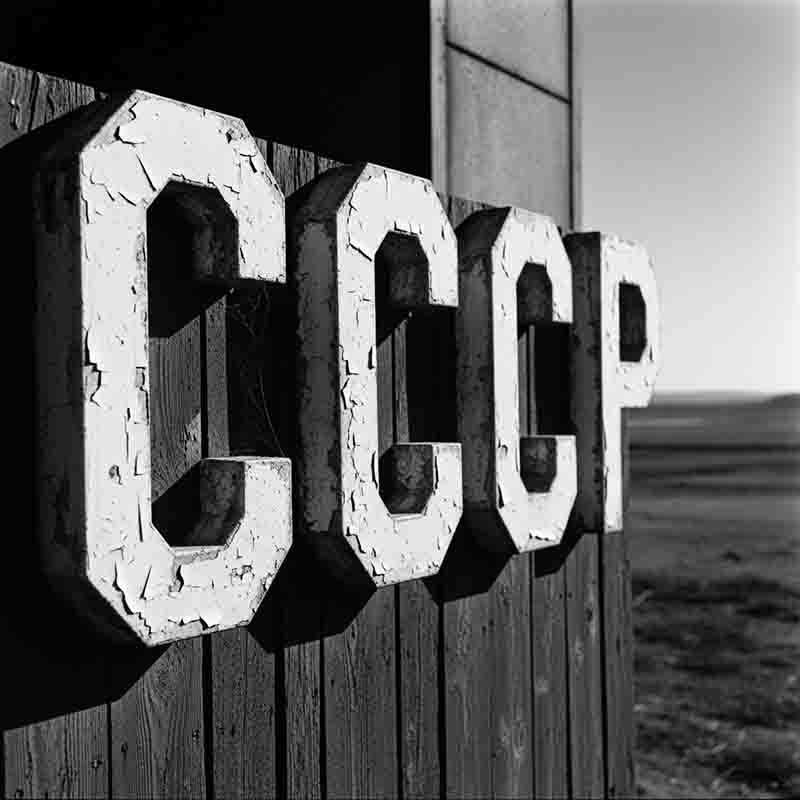
The abbreviation was widely used on official documents, currency, and state symbols of the Soviet Union.
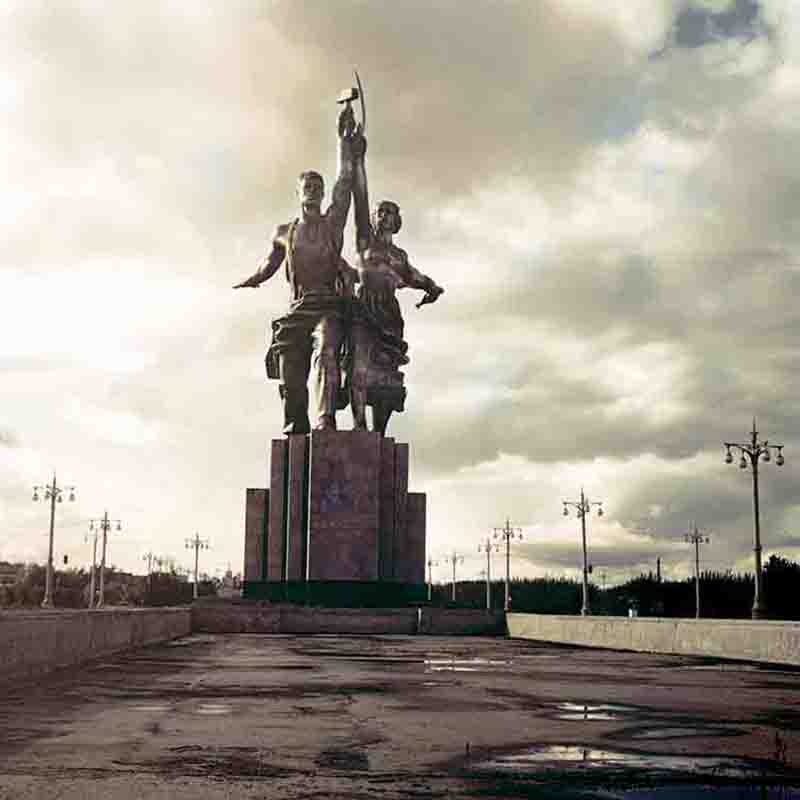
The iconic sculpture "Worker and Kolkhoz Woman", created by Vera Mukhina for the 1937 World's Fair in Paris.
About This Article
This article examines the Truman Doctrine of March 12, 1947, and its role in establishing American Cold War policy. Part of the Cold War series on soviet-union.com.
Last Updated: February 9, 2026 | Reading Time: 15 minutes