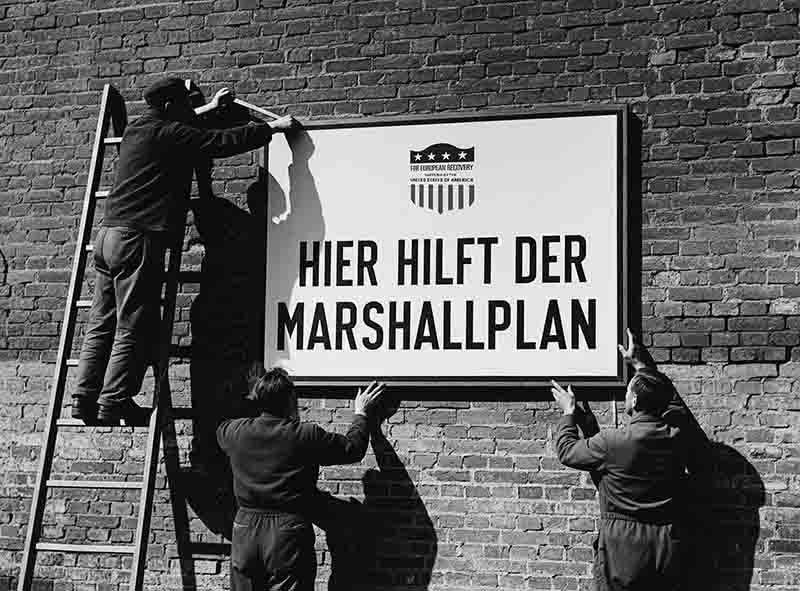
Officially known as the European Recovery Program, the Marshall Plan provided over $13 billion in economic assistance to help rebuild Western European economies after the devastation of World War II.
On June 5, 1947, at Harvard University's commencement exercises, Secretary of State George C. Marshall offered a modest proposal that would transform Europe. In a speech of barely 1,500 words, he outlined a program of American economic assistance for European recovery, what would become the European Recovery Program, universally known as the Marshall Plan.
The proposal was both humanitarian and hard-headed. It offered aid to all European nations, including the Soviet Union, but required economic cooperation and openness to American influence. When Stalin rejected these conditions and forced his Eastern European satellites to refuse participation, the Marshall Plan became the economic instrument of Europe's division, and one of the most successful foreign aid programs in history.
Key Concept: Economic Containment
The Marshall Plan represented "economic containment", strengthening Western European societies against communist appeal through prosperity rather than military force. This complemented the "military containment" of the Truman Doctrine, creating a comprehensive strategy to resist Soviet expansion.
The Harvard Speech: A Modest Proposal
George Marshall's speech was deliberately understated. He avoided anti-Soviet rhetoric, made no specific funding commitment, and invited all European nations, including the Soviet Union, to participate. This tactical ambiguity was essential: an explicitly anti-communist program would have divided Europe immediately and made congressional approval impossible.
Marshall's Words
"Our policy is directed not against any country or doctrine but against hunger, poverty, desperation, and chaos. Its purpose should be the revival of a working economy in the world so as to permit the emergence of political and social conditions in which free institutions can exist."
Marshall emphasized that the initiative must come from Europe: "The program should be a joint one, agreed to by a number, if not all, European nations." This requirement for European cooperation would prove decisive in shaping the program's institutional impact.
The Context
The winter of 1946-1947 had been catastrophic for Europe. The harshest winter in decades froze coal supplies, stopped factories, and left millions hungry. In Britain, bread rationing was introduced for the first time, even during the war, bread had not been rationed. In Germany, the average caloric intake fell below 1,500 per day. In France and Italy, communist parties, capitalizing on economic misery, were winning 20-30% of the vote.
The Truman Doctrine, announced in March 1947, had addressed the immediate crisis in Greece and Turkey through military aid. Marshall and his advisors—particularly Under Secretary of State Will Clayton and Director of the Policy Planning Staff George Kennan, recognized that piecemeal crisis management was insufficient. Europe needed comprehensive reconstruction.
The Soviet Response: Molotov in Paris
Foreign Minister Vyacheslav Molotov initially showed interest in the Marshall Plan. He brought an 89 person delegation to the Paris conference in June 1947, including economic experts who genuinely wanted to assess American aid possibilities. For a brief moment, it seemed the Marshall Plan might include all of Europe.
Stalin's Reversal
Stalin's calculations changed as the implications became clear. American aid would require:
Detailed disclosure of economic data and production figures
Integration with Western European markets and currencies
American oversight of how aid was spent
Reduction of trade barriers and economic coordination
For a totalitarian regime that controlled information absolutely and maintained economic autarky, these conditions were unacceptable. Stalin concluded that American aid was a Trojan horse for capitalist penetration and political influence.
"The Plan is an attempt to split Europe into two camps and, with the help of Britain and France, to complete the formation of a bloc of several European countries hostile to the interests of the democratic countries of Eastern Europe and, above all, the Soviet Union."
The Walkout
On July 2, 1947, Molotov walked out of the Paris negotiations, denouncing the Marshall Plan as an American scheme to dominate Europe. More significantly, Stalin ordered the Eastern European satellites—Poland, Czechoslovakia, Hungary, Romania, Bulgaria, and initially even Yugoslavia—to reject participation.
The Czechoslovak crisis revealed Stalin's determination. Czech leaders, including non-communist Foreign Minister Jan Masaryk, wanted to participate in the Marshall Plan. Stalin summoned Czech leaders to Moscow and threatened them directly. Masaryk later lamented: "I went to Moscow as the Foreign Minister of an independent sovereign state. I returned as a lackey of the Soviet Government."
The Program: Structure and Implementation
The Economic Cooperation Act, signed by President Truman on April 3, 1948, established the institutional framework for the Marshall Plan. The Economic Cooperation Administration (ECA), headed by businessman Paul Hoffman, administered the program.
Participating Countries
Sixteen Western European nations formed the Organisation for European Economic Co-operation (OEEC) to coordinate their responses:
Austria
Belgium
Denmark
France
Greece
Iceland
Ireland
Italy
Luxembourg
Netherlands
Norway
Portugal
Sweden
Switzerland
Turkey
United Kingdom
West Germany participated after 1949 as part of the Trizone/Trizonia, then as the Federal Republic.
How the Money Flowed
The Marshall Plan operated through several mechanisms:
Direct grants: Approximately 90% of aid was non-repayable
Conditional aid: Recipient nations had to match dollars with local currency (counterpart funds)
Commodity imports: Aid primarily took the form of American food, fuel, and machinery
Technical assistance: American experts advised on production methods and management
Counterpart Funds
A unique feature: when a European government received $100 million in American goods, it had to deposit an equivalent amount of local currency in a special account. These "counterpart funds" could be used for approved investment projects, with joint American-European oversight. This mechanism ensured aid stimulated rather than replaced local economic activity.
Aid Distribution: Who Got What
The distribution of Marshall Plan aid reflected strategic priorities as well as economic need. Britain, France, and West Germany received the largest shares, but smaller countries often received more per capita.
| Country | Total Aid (millions) | Per Capita | % of GDP |
|---|---|---|---|
| United Kingdom | $3,297 | $69 | 3% |
| France | $2,706 | $64 | 4% |
| West Germany | $1,507 | $33 | 3% |
| Italy | $1,508 | $32 | 4% |
| Netherlands | $1,127 | $108 | 6% |
| Belgium/Luxembourg | $777 | $87 | 4% |
| Total | $13,326 | $52 avg | ~4% avg |
Source: Economic Cooperation Administration, Final Report, 1952
Economic Impact: The European Miracle
The Marshall Plan's economic results exceeded expectations. Between 1948 and 1952, Western European industrial production increased by 35%—25% above pre-war levels. Agricultural production reached pre-war levels by 1949. Inflation was controlled, currencies stabilized, and international trade revived.
Beyond the Dollars
Historians debate how much of this recovery stemmed from Marshall Plan aid versus other factors:
Immediate impact: Aid relieved balance-of-payments crises, allowing essential imports
Psychological boost: American commitment restored business confidence and encouraged investment
Institutional reform: Requirements for economic coordination forced modernization
Cold War stimulus: Rearmament after 1950 further stimulated production
"The Marshall Plan was not the major factor in Europe's recovery. It was the psychological factor that was important. It gave European nations confidence that the United States was not going to retreat into isolationism again."
The Productivity Gap
American technical assistance programs brought European managers and workers to the United States to study American production methods. The gap between American and European productivity, vast in 1945, began to narrow. European industry adopted mass production techniques, scientific management, and quality control systems.
Political Impact: Dividing Europe
If the Marshall Plan's economic effects were significant, its political consequences were transformative. The program institutionalized Europe's division and created the institutional framework for Western cooperation.
The OEEC and European Integration
The Organisation for European Economic Co-operation (predecessor to today's OECD and EU) required unprecedented coordination among European governments. Countries had to agree on production targets, trade liberalization, and currency policies. This cooperation laid groundwork for the European Coal and Steel Community (1951) and the European Economic Community (1957).
Marshall himself had envisioned European economic integration. In his Harvard speech, he emphasized that "the program should be a joint one, agreed to by a number, if not all, European nations." The requirement for European cooperation pushed nations toward the supranational institutions that would become the European Union.
Stalin's Response: The Cominform
The Soviet response to the Marshall Plan was swift and harsh. In September 1947, Stalin established the Cominform (Communist Information Bureau) to coordinate international communist parties. Meeting in Szklarska Poręba, Poland, Andrei Zhdanov delivered the "two camps" speech, dividing the world into an "imperialist" American-led camp and a "democratic" Soviet-led camp.
The Cominform enforced ideological orthodoxy. Deviation from Moscow's line, such as Tito's independent course in Yugoslavia, brought expulsion and condemnation. Eastern European parties purged "national communists" who might have sought independent paths.
The End of the Plan
The Marshall Plan officially ended on December 31, 1951, six months ahead of schedule. The Mutual Security Act of 1951 shifted American aid from economic to military purposes as the Korean War intensified Cold War tensions. The ECA was replaced by the Mutual Security Agency.
By 1952, Western Europe had achieved the program's goals: industrial production exceeded pre-war levels by 35%, the dollar shortage was overcome, and the immediate communist threat had receded. The OEEC continued as a coordinating body, eventually becoming the Organisation for Economic Co-operation and Development (OECD) in 1961.
Assessment
The Marshall Plan's success is measured not only in economic statistics but in political outcomes:
Communist containment: No Western European country fell to communism; communist parties declined after 1948
European integration: Created institutional habits of cooperation that led to the Common Market and EU
Atlantic alliance: Cemented the transatlantic relationship that became NATO
American markets: Created prosperous trading partners for American exports
Legacy and Lessons
The Marshall Plan became the model for subsequent American aid programs and the benchmark against which they are measured. Its lessons, real and perceived, have shaped development economics and foreign policy for decades.
The "Marshall Plan" as Metaphor
Politicians and pundits regularly invoke the "Marshall Plan for X"—for the developing world, for the environment, for inner cities, for the former Soviet Union. These analogies often ignore the unique conditions that made the original succeed:
Recipients were industrialized nations with skilled workforces and functioning institutions
The aid represented a small percentage of recipient GDP, enough to bridge gaps, not fund everything
Cold War urgency concentrated American attention and sustained congressional support
European governments were committed to market economies and willing to accept American conditions
Comparison with Soviet Economic Policy
The contrast between Marshall Plan aid and Soviet exploitation of Eastern Europe could not be sharper. While the United States pumped capital into Western Europe, the Soviet Union extracted reparations, dismantled factories, and imposed autarkic economic policies on its satellites. By 1950, the economic gap between East and West was already visible, and widening.
The Great Divergence
The Marshall Plan accelerated a divergence that would define the Cold War: prosperous, democratic, integrated Western Europe versus impoverished, authoritarian, isolated Eastern Europe. This economic gap, visible to any observer who crossed the Iron Curtain—ultimately undermined communist legitimacy and contributed to the Soviet bloc's collapse.
12 Key Facts About the Marshall Plan
Name: Officially the European Recovery Program (ERP), it was universally called the Marshall Plan after its architect, Secretary of State George C. Marshall.
Duration: The program operated from April 1948 to December 1951—three and a half years, ending six months ahead of schedule.
Cost: $13.3 billion total, equivalent to approximately $150 billion in 2024 dollars, or about 5% of U.S. GDP at the time.
Grants vs. Loans: Approximately 90% of aid was in the form of grants; only 10% required repayment.
Soviet Rejection: Stalin initially showed interest but rejected the plan when he realized it required economic transparency and Western integration.
Czech Crisis: Czechoslovakia's non-communist leaders wanted to participate; Stalin summoned them to Moscow and forbade it.
German Exception: West Germany received aid despite having been the enemy just three years earlier—a remarkable act of reconciliation.
Counterpart Funds: The unique requirement that recipients match dollar aid with local currency deposits ensured aid stimulated rather than replaced local investment.
OEEC: The Organisation for European Economic Co-operation, created to coordinate Marshall Plan aid, became the predecessor to the OECD and EU.
Productivity Missions: Over 6,000 European managers and workers visited American factories to learn modern production techniques.
Political Impact: Communist parties in France and Italy, which had been gaining strength, saw their support decline after 1948 as economic conditions improved.
Legacy: The Marshall Plan became the benchmark for foreign aid programs, though few have replicated its unique combination of resources, recipient capacity, and strategic urgency.
Frequently Asked Questions
Continue Reading
On This Page
Key Figures
- George C. Marshall — Secretary of State, plan architect
- Will Clayton — Under Secretary of State
- George Kennan — Policy Planning Staff
- Paul Hoffman — ECA Administrator
- Vyacheslav Molotov — Soviet Foreign Minister
- Jan Masaryk — Czech Foreign Minister
Key Data
- Announced: June 5, 1947
- Enacted: April 3, 1948
- Ended: December 31, 1951
- Total Aid: $13.3 billion
- Countries: 16
- Grants: ~90%
Related Articles
Download
Get the complete Marshall Plan data and primary sources.
Marshall Plan Documents PDF | Available 10.02.26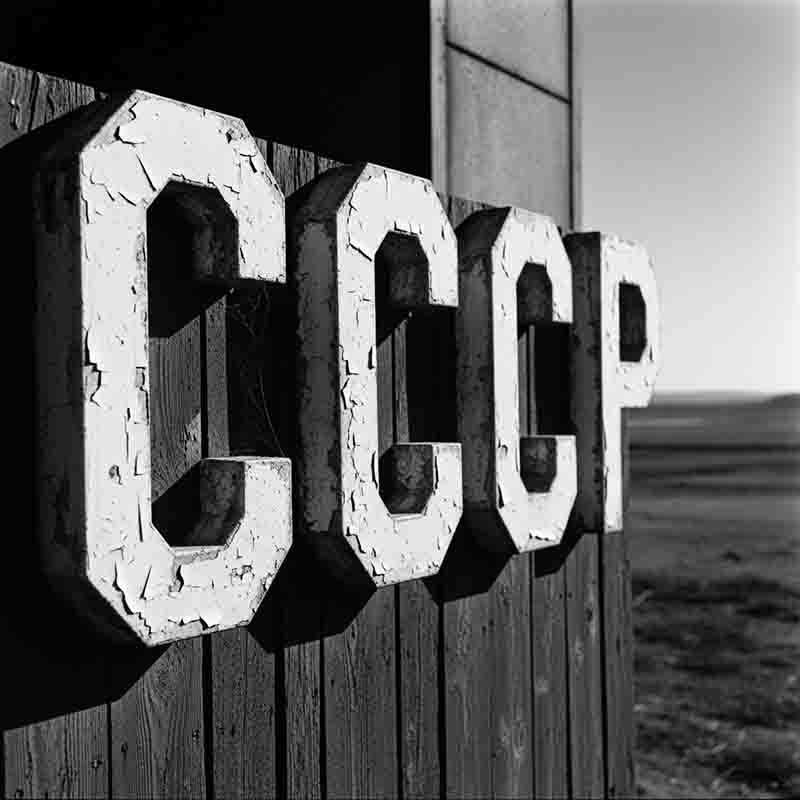
The abbreviation was widely used on official documents, currency, and state symbols of the Soviet Union.
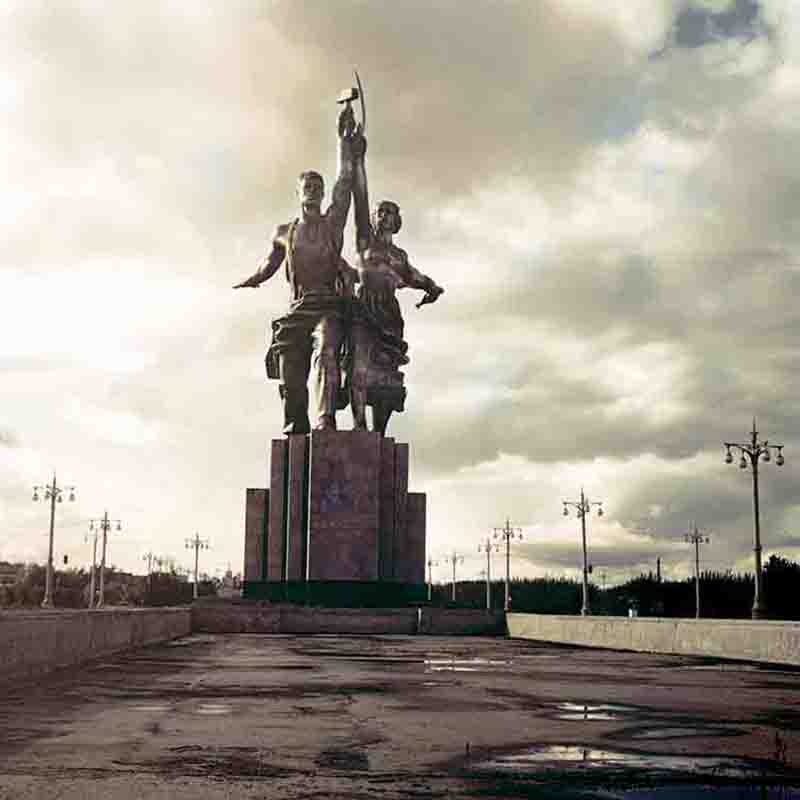
The iconic sculpture "Worker and Kolkhoz Woman", created by Vera Mukhina for the 1937 World's Fair in Paris.
About This Article
This article examines the Marshall Plan (1948-1952), the American initiative that rebuilt Western Europe and became a cornerstone of Cold War economic policy. Part of the Cold War series on soviet-union.com.
Last Updated: February 8, 2026 | Reading Time: 14 minutes