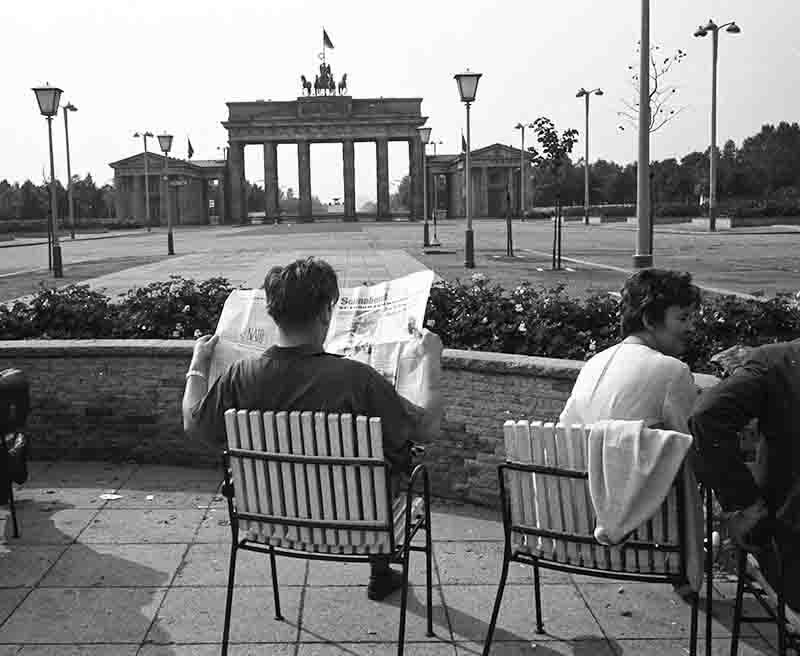
Taken during the era of the Iron Curtain, the image by Peter Bock-Schroeder (1913-2002) captures a stark contrast: the mundane, peaceful act of reading against the backdrop of one of the 20th century’s most significant symbols of geopolitical tension and Cold War division.
The Iron Curtain was both a metaphor and a physical reality that defined the Cold War division of Europe. First articulated by Winston Churchill in his "Sinews of Peace" address on March 5, 1946, the term described the ideological and political barrier that separated Soviet-controlled Eastern Europe from the West.
Within years, this metaphor became concrete: electrified fences, walls, minefields, and armed guards transformed a rhetorical device into a deadly reality that divided families, nations, and the world for nearly half a century.
Churchill's speech at Westminster College in Fulton, Missouri, delivered in the presence of President Harry S. Truman, marked a watershed moment. The former British Prime Minister declared that "from Stettin in the Baltic to Trieste in the Adriatic, an iron curtain has descended across the continent," warning the Western world of Soviet expansionism and the threat of communist tyranny.
Stretching approximately 4,350 miles from the Arctic Circle to the Mediterranean, the Iron Curtain represented the most significant geopolitical division in modern history. It separated not merely territories but ways of life: capitalism from communism, democracy from one-party rule, freedom of movement from totalitarian control.
The Iron Curtain's existence shaped global politics for four decades. It was the battle line of the Cold War, the frontier where NATO and Warsaw Pact forces faced each other across minefields and barbed wire, where espionage flourished, and where the threat of nuclear annihilation hung heaviest. Its fall in 1989 marked not merely the end of a barrier but the collapse of an entire geopolitical system.
"Should the German people lay down their arms, the Soviets… would occupy all eastern and south-eastern Europe, together with the greater part of the [German] Reich. All over this territory, which would be of an enormous extent, an iron curtain would at once descend."
Key Concept: From Metaphor to Reality
Churchill's "Iron Curtain" was originally a rhetorical metaphor borrowed from Nazi propaganda minister Joseph Goebbels, who had used the term to describe Soviet-controlled territory. Churchill repurposed it to warn the West. Within years, the metaphor became physical reality as the Soviet Union constructed an elaborate system of barriers to prevent Eastern Bloc citizens from escaping to the West.
The Speech: "Sinews of Peace" (March 5, 1946)
On March 5, 1946, Winston Churchill delivered his famous address at Westminster College in Fulton, Missouri. The speech, officially titled "Sinews of Peace," would enter history as the "Iron Curtain Speech." President Harry S. Truman accompanied Churchill on the journey from Washington, lending presidential authority to the former Prime Minister's warning.
The Historic Phrase
The speech's most enduring passage described the division of Europe in stark terms:
"From Stettin in the Baltic to Trieste in the Adriatic, an iron curtain has descended across the continent. Behind that line lie all the capitals of the ancient states of Central and Eastern Europe. Warsaw, Berlin, Prague, Vienna, Budapest, Belgrade, Bucharest and Sofia, all these famous cities and the populations around them lie in what I must call the Soviet sphere, and all are subject in one form or another, not only to Soviet influence but to a very high and, in many cases, increasing measure of control from Moscow."
Churchill's Warning
Churchill went beyond description to prescription. He called for an "fraternal association of the English-speaking peoples," a military alliance between the United States, Britain, and the Commonwealth to resist Soviet expansion. This was the intellectual foundation of what would become NATO.
He warned that communist parties and "fifth columns" operated throughout Europe and the world, "in complete unity and absolute obedience to the directions they receive from the Communist centre." He declared that these constituted "a growing challenge and peril to Christian civilisation."
Reception and Controversy
The speech provoked immediate controversy. Former Vice President Henry Wallace condemned it as a call to war. The New York Times initially criticized its confrontational tone. British Prime Minister Clement Attlee, Churchill's Labour successor, distanced himself from the remarks. Many Americans, weary of war, resisted the idea of new international commitments.
Yet the "Iron Curtain" metaphor captured the public imagination and entered permanent usage. What Churchill described—a division of Europe into spheres of influence—was already reality. His speech gave that reality a name and a framework for understanding.
Origins: Creating the Eastern Bloc (1944-1948)
The Iron Curtain did not appear overnight. It was constructed through a series of Soviet actions between 1944 and 1948, as Stalin established control over Eastern European territories occupied by the Red Army during World War II.
The Percentages Agreement
As early as October 1944, Churchill and Stalin had negotiated the "Percentages Agreement," dividing influence in the Balkans. Romania would be 90% Soviet; Greece 90% British; Yugoslavia and Hungary 50-50; Bulgaria 75% Soviet. This cynical realpolitik acknowledged Soviet dominance in Eastern Europe while preserving Western interests in the Mediterranean.
Sovietization of Eastern Europe
Between 1945 and 1948, the Soviet Union systematically transformed Eastern European states into communist satellites:
Poland (1947): The communist-dominated government rigged elections and eliminated opposition.
Hungary (1947): The Smallholders' Party was forced out of government; communists seized full control.
Romania (1947): King Michael was forced to abdicate; the People's Republic was proclaimed.
Bulgaria (1946): A referendum abolished the monarchy; the communist Fatherland Front took power.
Czechoslovakia (1948): The last democratic government in Eastern Europe fell in a communist coup.
East Germany (1949): The German Democratic Republic was established as a Soviet satellite.
The Soviet Security Imperative
From Moscow's perspective, these actions were defensive. The Soviet Union had suffered devastating losses in World War II—27 million dead—and sought a buffer zone of friendly states to prevent future invasion. Stalin was determined that never again would hostile powers use Eastern Europe as a pathway to attack Russia.
Soviet Perspective
Soviet leaders viewed the Iron Curtain as protection, not oppression. They had experienced two catastrophic invasions from the West in thirty years. The buffer zone of Eastern European states, however undemocratic, provided strategic depth against potential NATO aggression. This security concern, combined with ideological commitment to spreading communism, drove Soviet policy.
The Physical Curtain: Walls, Fences, and Death Strips
The Iron Curtain was not merely rhetorical. Beginning in the late 1940s and intensifying through the 1950s and 1960s, the Soviet Union and its Eastern European satellites constructed elaborate physical barriers to prevent their citizens from escaping to the West.
The Border System
The physical Iron Curtain consisted of multiple layers of security:
Border walls and fences: Concrete walls, barbed wire, and electrified fencing marked the boundary.
Minefields: Dense minefields created deadly obstacles for would-be escapees.
Watchtowers: Guard towers equipped with searchlights and machine guns stood at regular intervals.
Death strips: Cleared areas between fences provided no cover for escape attempts.
Guard dogs: Patrols with attack dogs roamed the border zones.
Shoot-to-kill orders: Border guards had orders to shoot anyone attempting to cross.
The Berlin Wall
The most famous section of the Iron Curtain was the Berlin Wall, constructed overnight on August 13, 1961. The wall divided Berlin into East and West, separating families and communities that had lived together for centuries. It became the iconic symbol of Cold War division.
The wall evolved from a simple barbed wire barrier into a complex system of concrete walls (up to 15 feet high), watchtowers, anti-vehicle trenches, and sophisticated detection systems. The "death strip" between the inner and outer walls offered no cover for escapees and clear fields of fire for guards.
The Length and Scope
The Iron Curtain stretched approximately 4,350 miles from the Arctic Circle to the Mediterranean. It separated:
East Germany from West Germany
Czechoslovakia from Austria and West Germany
Hungary from Austria
Romania from Yugoslavia
Bulgaria from Greece and Yugoslavia
The Soviet Union from Finland, Norway, and Turkey
"The Iron Curtain was not just a border. It was a system of control designed to keep people in, not to keep others out."
Life Behind the Iron Curtain
The Iron Curtain created two distinct worlds. While Western Europe experienced the "economic miracle" of the 1950s and 1960s, growing prosperity, and democratic stability, Eastern Europe lived under communist rule with planned economies, political repression, and limited personal freedoms.
Economic Conditions
Communist economies emphasized heavy industry and collective agriculture. Consumer goods were scarce; queues for basic necessities were common. The black market flourished. While the Soviet Union achieved impressive industrial growth in the 1950s, by the 1970s and 1980s, the Eastern Bloc economies stagnated, falling ever further behind the West.
Political Control
Each Eastern Bloc country was ruled by a communist party that maintained power through:
Secret police: The Stasi in East Germany, the Securitate in Romania, and similar organizations monitored citizens and suppressed dissent.
Censorship: All media was state-controlled; Western publications were banned.
Travel restrictions: Citizens could not travel to the West; those who tried to leave illegally faced imprisonment.
Education control: Schools and universities taught Marxist-Leninist ideology.
Religious suppression: Churches were persecuted or co-opted by the state.
Cultural Isolation
The Iron Curtain created cultural as well as physical separation. Western music, films, and literature were restricted or banned. Jazz and rock and roll became symbols of resistance. Eastern Bloc citizens developed ingenious methods to access Western media: smuggling records, watching West German television (where available), and sharing forbidden books.
The Gap Widens
By the 1980s, the economic and technological gap between East and West had become a chasm. While Western Europeans enjoyed color television, personal automobiles, and foreign travel, Eastern Bloc citizens faced shortages of meat, toilet paper, and basic consumer goods. This disparity undermined communist legitimacy and fueled popular discontent.
Escape Attempts and Human Cost
Despite the deadly border fortifications, thousands of Eastern Bloc citizens attempted to escape to the West. Their stories illustrate both the desperation of life under communism and the brutality of the regimes that sought to keep them captive.
The Human Toll
Exact numbers of those killed attempting to cross the Iron Curtain remain unknown, but estimates suggest:
Berlin Wall: At least 140 confirmed deaths between 1961 and 1989
Inner German border: Approximately 1,000 deaths
Total Iron Curtain: Estimates range from 3,000 to 10,000 deaths
Methods of Escape
Escapees employed extraordinary ingenuity:
Tunneling: Hundreds of tunnels were dug under the Berlin Wall and other borders
Hot air balloons: Several families escaped East Germany by homemade balloon
Ultralight aircraft: Some flew over the border in small aircraft
Swimming: The Baltic Sea route claimed many lives but saw some successes
Hidden in vehicles: Smuggled in car trunks or secret compartments
Defecting diplomats: Some escaped through embassies
Famous Escapes
Peter Fechter's death on August 17, 1962, became an international symbol of communist brutality. The 18-year-old East German was shot by border guards while attempting to climb the Berlin Wall and left to bleed to death in the death strip, as Western onlookers watched helplessly.
Conversely, the successful escapes of thousands demonstrated that the Iron Curtain was not impenetrable. Each successful escape was a propaganda victory for the West and a humiliation for the communist regimes.
The Fall of the Iron Curtain (1989)
The Iron Curtain fell as suddenly as it had risen. In 1989, a wave of popular uprisings swept across Eastern Europe, toppling communist regimes and dismantling the barriers that had divided the continent for 45 years.
The Chain Reaction
The process began in Poland, where the Solidarity movement won elections in June 1989. Hungary followed, opening its border with Austria in May 1989 and allowing East German refugees to escape to the West. This created a crisis that destabilized East Germany.
The fall of the Berlin Wall on November 9, 1989, was the iconic moment. An East German official's mistaken announcement that border crossings would open "immediately" led thousands to gather at the Wall. Overwhelmed guards opened the gates, and East and West Berliners celebrated together, dismantling the wall with hammers and bare hands.
The End of Division
Within months, communist regimes fell across Eastern Europe:
October 1989: Erich Honecker resigns in East Germany
November 1989: Velvet Revolution in Czechoslovakia
December 1989: Romanian dictator Nicolae Ceaușescu overthrown and executed
October 1990: German reunification
December 1991: Soviet Union dissolves
The First Crack
On June 27, 1989, Hungarian Foreign Minister Gyula Horn and Austrian Foreign Minister Alois Mock symbolically cut the barbed wire fence on their border—the first official breach in the Iron Curtain. This gesture, captured by international media, signaled that the division of Europe was ending.
"We could only solve our problems by cooperating with other countries. It would have been paradoxical not to cooperate. And therefore we needed to put an end to the Iron Curtain, to change the nature of international relations, to rid them of ideological confrontation, and particularly to end the arms race."
Gorbachev's Role
Soviet leader Mikhail Gorbachev's policies of glasnost (openness) and perestroika (restructuring) were essential to the Iron Curtain's fall. When he made clear that Soviet tanks would not crush popular uprisings as they had in Hungary (1956) and Czechoslovakia (1968), communist regimes lost their ultimate guarantee of power. Gorbachev's refusal to use force was both a moral choice and a recognition that the Soviet Union could no longer afford empire.
Legacy: A Divided Memory
The Iron Curtain's legacy continues to shape Europe today. The division it created persisted not merely in physical infrastructure but in economic development, political culture, and social attitudes that outlasted the barrier itself.
Economic Divergence
Three decades after the Iron Curtain's fall, economic differences between East and West persist. Western Germany remains more prosperous than the East. Eastern European countries have made remarkable progress but still lag behind Western European income levels. The infrastructure gap—highways, railways, digital networks—continues to be addressed.
Political Culture
The Iron Curtain created distinct political cultures. Eastern European countries that experienced Soviet occupation generally show greater skepticism toward Russia and stronger support for NATO and the European Union. Western European countries, without direct experience of Soviet domination, sometimes view Russia differently.
Memory and Memorials
The physical Iron Curtain has largely disappeared, but sections remain as memorials. The Berlin Wall Memorial, the Point Alpha museum in Germany, and the Iron Curtain Trail (a cycling route following the former border) preserve the memory of division. Museums and documentation centers ensure that the human cost—those killed attempting to escape, the lives disrupted by separation—is not forgotten.
The Iron Curtain serves as a reminder of both the dangers of totalitarianism and the possibility of peaceful change. Its fall demonstrated that even seemingly permanent systems of control can collapse when people demand freedom and when leaders refuse to use violence to maintain power.
Iron Curtain Timeline
Soviet Occupation
Red Army occupies Eastern European territories; Stalin establishes sphere of influence.
Iron Curtain Speech
Winston Churchill delivers "Sinews of Peace" address at Westminster College, Fulton, Missouri.
Communist Takeovers
Soviet-backed communists seize power in Poland, Hungary, Romania, Bulgaria, and Czechoslovakia.
Two German States
West Germany (FRG) and East Germany (GDR) established as separate states.
Berlin Wall Built
East Germany constructs wall dividing Berlin; becomes iconic symbol of division.
Prague Spring
Soviet invasion of Czechoslovakia crushes reform movement; confirms Iron Curtain rigidity.
First Crack
Hungarian and Austrian foreign ministers cut barbed wire fence, opening border.
Berlin Wall Falls
East German authorities open Berlin Wall; thousands celebrate reunification of city.
German Reunification
East and West Germany formally reunite; end of postwar division.
Soviet Union Dissolves
USSR officially ceases to exist; Cold War and Iron Curtain era definitively ends.
12 Key Facts About the Iron Curtain
4,350 Miles: The Iron Curtain stretched approximately 4,350 miles from the Arctic Circle to the Mediterranean.
45 Years: The division lasted from 1945 to 1989, nearly half a century.
Churchill's Borrowing: Churchill borrowed the term from Nazi propaganda minister Joseph Goebbels, who first used it to describe Soviet-controlled territory.
140+ Deaths: At least 140 people were confirmed killed attempting to cross the Berlin Wall; total Iron Curtain deaths estimated at 3,000-10,000.
Truman's Presence: President Harry S. Truman accompanied Churchill to Fulton, Missouri, lending presidential authority to the speech.
Buffer Zone: The Soviet Union viewed Eastern Europe as a necessary buffer against future Western invasion after losing 27 million people in WWII.
Electrified Fences: Much of the border was protected by electrified fencing, minefields, and shoot-to-kill orders.
First Escape: The first person to escape across the Berlin Wall was 19-year-old East German border guard Conrad Schumann, who jumped the barbed wire on August 15, 1961.
Checkpoint Charlie: The most famous crossing point between East and West Berlin, site of several tense Cold War confrontations.
Velvet Revolution: Czechoslovakia's 1989 revolution against communist rule was so named because it occurred without violence.
Peaceful Revolution: East Germany's revolution was also largely non-violent, unlike Romania's violent overthrow of Ceaușescu.
Economic Gap: By 1989, West German GDP per capita was approximately four times that of East Germany.
Frequently Asked Questions
Continue Reading
← Previous
Next →
On This Page
Key Figures
- Winston Churchill — Former British Prime Minister
- Joseph Stalin — Soviet General Secretary
- Harry S. Truman — U.S. President
- Walter Ulbricht — East German leader
- Mikhail Gorbachev — Soviet reformer
- Erich Honecker — East German leader (1971-1989)
Related Articles
Download: Available 10.2.26
Get the complete Iron Curtain analysis with primary source documents.
Iron Curtain PDF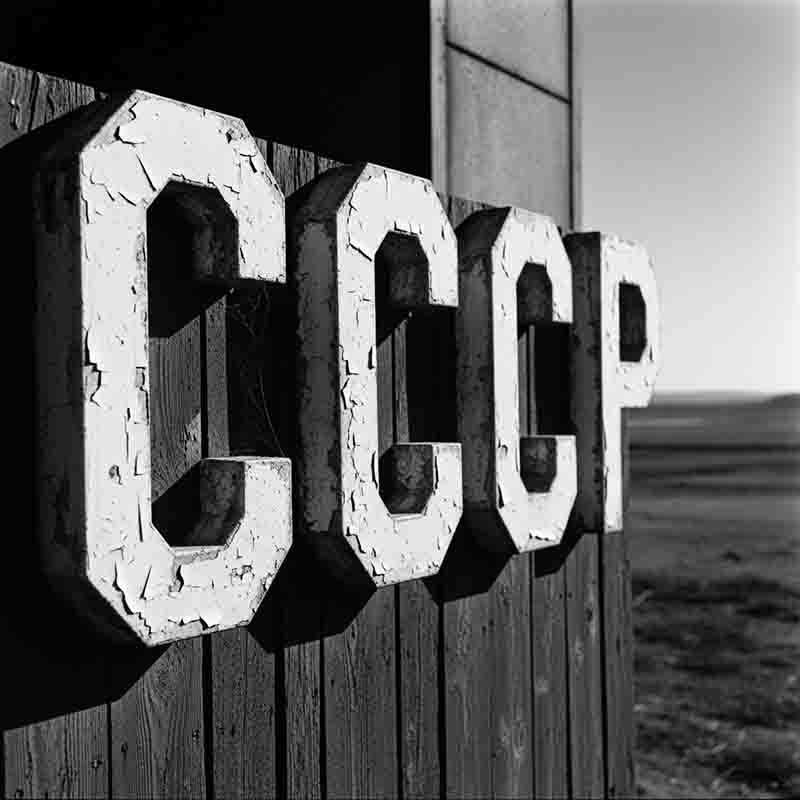
The abbreviation was widely used on official documents, currency, and state symbols of the Soviet Union.
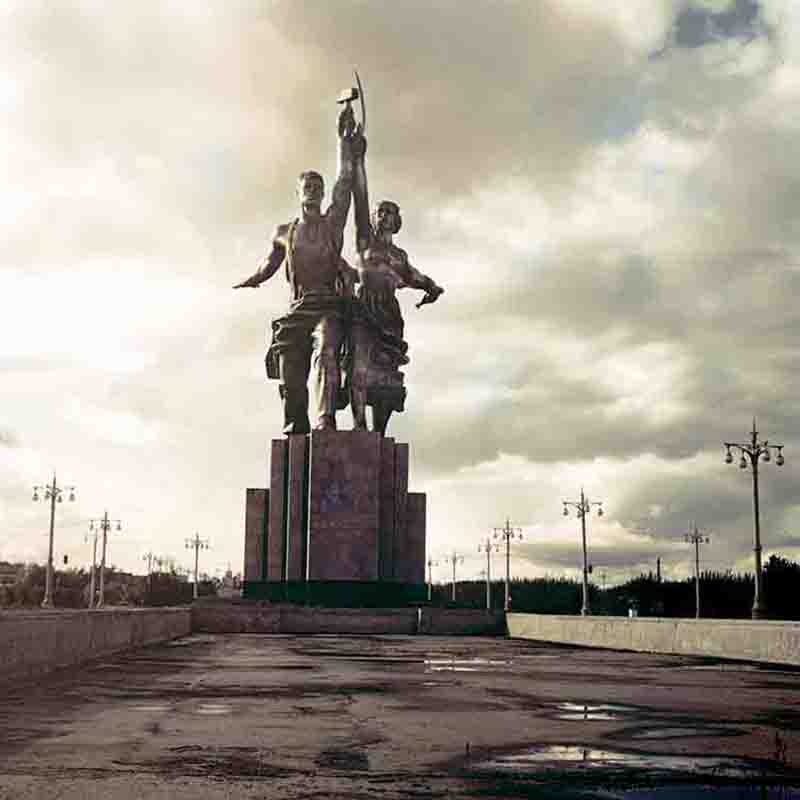
The iconic sculpture "Worker and Kolkhoz Woman", created by Vera Mukhina for the 1937 World's Fair in Paris.
About This Article
This article examines the Iron Curtain from Churchill's 1946 speech to its fall in 1989. Part of the Cold War series on soviet-union.com
Last Updated: February 9, 2026 | Reading Time: 15 minutes