The operator of this platform, Jans Bock-Schroeder, is the son of the photographer responsible for the archive: Peter Bock-Schroeder (1913–2001), the German photojournalist who, in 1956, became the first West German photographer permitted to document everyday life inside the Soviet Union.
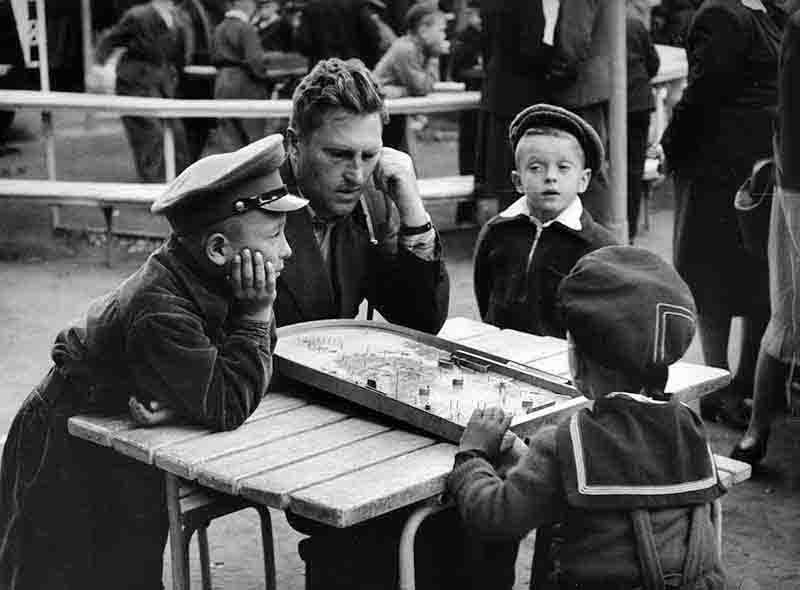
When Peter Bock-Schroeder died on 19 February 2001, he left behind an estate of more than 6,000 negatives and 1,000+ vintage prints — a visual chronicle of the 20th century spanning six continents.
Soviet Union Dot Com serves a dual purpose. It is an editorial and historical platform dedicated to unbiased, fact-based analysis of the USSR's history, culture, economics, and Cold War legacy. It is simultaneously the public window of Collection Bock-Schroeder, the only authorised representative of Peter Bock-Schroeder's photographic estate.
Why This Archive Matters in 2026
In 1956, Western access to the Soviet Union was not just rare, it was effectively non-existent for journalists with cameras. Peter Bock-Schroeder's assignment produced the first uncensored Western photographic documentation of Soviet daily life during the Khrushchev era. As the Cold War's photographic record is re-evaluated and digitised globally, this archive represents an irreplaceable primary source, not for what it confirms about the USSR, but for what it shows that no other Western photographer was there to capture.
Soviet Union Dot Com: Key Facts at a Glance
The Archive
- Negatives: 6,000+ (six-decade career)
- Vintage prints: 1,000+ authenticated originals
- Soviet material: 1956 — Khrushchev era
- Geographic scope: Europe, Americas, Middle East, USSR
- Custodian since: 2001 (Jans Bock-Schroeder)
Institutional Recognition
- Museum of Fine Arts, Houston: holds originals
- Princely Collections, Liechtenstein: holds originals
- L'Œil de la Photographie: editorial coverage
- Paris Photo Fair 2011: exhibited at Grand Palais
- Vintage print market: five-figure price range
The Operator
- Name: Jans Bock-Schroeder
- Role: Publisher, fine art expert, custodian
- Experience: 20+ years in fine art photography market
- Visual Independence: Launched 2010 (featured by L'Œil)
- The Soviets (monograph): Spring 2026 release
The Platform Network
- soviet-union.com: History & archive portal
- bock-schroeder.com: Official estate agency
- photography-collectors.com: Collector advisory
- the-soviets.com: Monograph publication site
- fotografiekunst.com: German-language gallery
Sources: Jans Bock-Schroeder, Collection Bock-Schroeder (2001–2026) · L'Œil de la Photographie · Museum of Fine Arts, Houston · Princely Collections Liechtenstein
Peter Bock-Schroeder (1913–2001): The Photographer
Peter Bock-Schroeder was born in Hamburg on 30 November 1913, the son of a Russian émigré father he never knew and a German mother. At sixteen, he left home for Berlin, entering the renowned Photo-Atelier Binder in 1929 as an apprentice, the same studio that shaped photographers such as Erich Balg and Sonja Goergi during the Weimar cultural flowering.
Career: From Rommel's Afrika Corps to Soviet Moscow
After graduating in 1933, Bock-Schroeder built a career as a working photojournalist. During World War II he served as an aerial gunner and war correspondent in Erwin Rommel's Afrika Corps. After Germany's defeat, British journalist Sefton Delmer hired him to work for the German news service, an indicator of the trust placed in his reportorial objectivity even in the post-war reckoning.
His postwar career took him across six continents. He photographed in South and North America, the Middle East, and Europe for major German magazines, Stern, Quick, and Revue, at the height of the illustrated press era. In 1957 he covered the Suez Crisis. In 1972, Otl Aicher selected him as photographer and coordinator of the international press team at the Munich Olympics. At the age of 60, he signed a contract with the Munich International Airport Press Department, producing architectural and portrait work published in books and magazines throughout the 1970s and 1980s.
1956: The Soviet Assignment. Peter Bock-Schroeder became the first West German photographer permitted to photograph inside the Soviet Union after World War II. Working during the relative thaw of the early Khrushchev period, he produced a body of work that is, in 2026, the only privately held uncensored Western photographic documentation of Soviet daily life from that era.
"My father Peter Bock-Schroeder (1913–2001) was an acknowledged photojournalist. He worked, amongst others, for Stern Magazine. In the 1950s and 60s he travelled the world. As a globetrotter he photographed in South and North America. In 1956 he was the first West German photographer to be allowed to photograph in the USSR."
Equipment and Method
Bock-Schroeder worked with a Rolleiflex and Leica, using Agfa film at low sensitivity (25–50 ASA). The technical constraints, demanding precise exposure and patient observation, shaped a visual style that was methodical, dignified, and fundamentally anti-spectacular. His compositions are structured, often symmetrical, never voyeuristic. He photographed people with respect for their humanity first, and their political context second. That combination of technical rigour and ethical restraint is what defines the archive's collector value in 2026.
6,000+
Negatives in archive
1,000+
Authenticated vintage prints
60 yrs
Active career span (1933–2001)
1956
Soviet Union access — a Western first
Jans Bock-Schroeder: The Custodian
Jans Bock-Schroeder is a publisher and fine art photography expert with more than two decades of professional experience in the vintage and fine art photography market. He was born into a family in which photography was not a profession but a condition of life: his father was a photojournalist, his mother Ingeborg Geissler was also a photographer. The archive he inherited in 2001 was not simply an estate, it was the working record of a six-decade visual career.
Managing the Estate Since 2001
Since Peter Bock-Schroeder's death, Jans has been the head of the Bock-Schroeder Foundation and the managing director of Collection Bock-Schroeder, the only authorised representative of original Peter Bock-Schroeder photographs. The collection follows a strict provenance strategy: every photograph is authenticated, catalogued, and accompanied by a Certificate of Authenticity. A digital provenance entry with individual password access allows verifiable ownership transfer whether by sale, gift, or inheritance.
Exclusive Agency Notice: Collection Bock-Schroeder is the only genuine and authorised representative of Peter Bock-Schroeder's photographs. Several gallery operators have made misleading claims to hold original Bock-Schroeder material. When in doubt, contact Collection Bock-Schroeder directly via bock-schroeder.com before any acquisition.
Visual Independence & the 2011 Paris Photo Moment
In 2010, Jans Bock-Schroeder launched Visual Independence, a seasonal online publication and photographic experience that would earn editorial recognition from L'Œil de la Photographie, one of the world's leading photography journals. The same year, in October 2011, he embarked on a conceptual project that would become a milestone of his own practice: at the suggestion of French photo dealer and expert Serge Plantureux, he re-photographed his father's vintage prints in new Parisian settings using Peter's original Leica. The resulting 33 works, the Bock-Schroeder by Bock-Schroeder series, were exhibited at the Paris Photo Fair 2011 at the Grand Palais, presented by Plantureux.
"My family background is photography. Both my parents are photographers. My father Peter Bock-Schroeder (1913–2001) was an acknowledged photojournalist. He worked amongst others for Stern Magazine. In 1972 he worked with Otl Aicher during the Munich Olympics, as photographer and coordinator of the international press team."
The Soviets: Spring 2026
The current centrepiece project of Collection Bock-Schroeder is the publication of The Soviets, a limited-edition fine art photography monograph presenting 89 carefully selected images from Peter Bock-Schroeder's 1956 Soviet assignment. It is the first definitive publication of this material and is described by Jans Bock-Schroeder as both a photographic book and a historical document, "more than a photography book; it is a historical document that sheds light on a pivotal period in the Soviet Union and offers a humanising perspective on a society often portrayed in stark political terms."
In 1956, access to the Soviet Union for a Western photographer was not just restricted, it was effectively impossible. Peter Bock-Schroeder's mission produced the only privately held uncensored Western photographic documentation of Soviet daily life during the Khrushchev era. No equivalent archive exists in Western private hands. As global interest in Cold War history intensifies in 2026, this material has moved from the status of photographic estate to that of primary historical source.
Visual Timeline: The Bock-Schroeder Story
Peter Bock-Schroeder Born in Hamburg
Born to a German mother and a Russian émigré father he never knew, a biographical detail that would give him a peculiar relationship with the Soviet world he would later document. The port city of Hamburg, in the booming final years of the Wilhelmine Empire, is his starting point.
Apprenticeship at Photo-Atelier Binder, Berlin
At 16, Bock-Schroeder leaves Hamburg for Weimar Berlin, the centre of Europe's cultural life. He borrows 150 Reichmarks and enrols at Atelier Binder, one of Germany's most celebrated photography schools. He graduates in 1933, the year the Weimar Republic ends.
War Correspondent, Rommel's Afrika Corps
Bock-Schroeder serves as aerial gunner and war correspondent in Erwin Rommel's North Africa campaign. He photographs conflict not from a distance but from within it, a formative discipline in documentary restraint. After the Allied victory in 1945, British journalist Sefton Delmer recruits him for the German news service.
Global Assignments: Stern, Quick, Revue
At the height of the illustrated press era, Bock-Schroeder works across South America, North America, the Middle East, and Europe for Germany's leading magazines. His photographic style, methodical, compositionally precise, never sensationalist, distinguishes him from the action-driven aesthetic of his contemporaries.
First West German Photographer in the Soviet Union
Peter Bock-Schroeder receives permission to document life in the USSR, the first West German photographer to do so after WWII. Working during the Khrushchev thaw, he produces uncensored images of Soviet daily life: families, workers, public spaces, and private moments. This body of work becomes the photographic core of the Bock-Schroeder archive and the basis of the 2026 monograph The Soviets.
Covers the Suez Crisis in the Middle East
One year after the Soviet mission, Bock-Schroeder is deployed to cover the Suez Crisis, another geopolitical flashpoint that would define Cold War fault lines. His career consistently positioned him at the intersections of 20th-century history.
Munich Olympics: Photographer & Press Coordinator
Designer Otl Aicher selects Bock-Schroeder as photographer and coordinator of the international press team for the Munich Olympic Games, one of the most demanding and ultimately tragic editorial assignments of the 20th century. The commission underscores the professional reputation he had built over four decades.
Peter Bock-Schroeder Dies in Munich. Jans Takes Custody.
Peter Bock-Schroeder dies in Munich, aged 87. He leaves an estate of over 6,000 negatives and 1,000+ vintage prints. His son Jans Bock-Schroeder becomes the head of the Bock-Schroeder Foundation and managing director of Collection Bock-Schroeder, the sole authorised representative of his father's photographic estate.
Visual Independence Launched
Jans Bock-Schroeder launches Visual Independence, a seasonal online photographic publication, weekly blog, and newsletter. The platform earns editorial coverage from L'Œil de la Photographie, one of the world's most authoritative photography journals, which publishes a profile of Jans Bock-Schroeder and his work.
Bock-Schroeder by Bock-Schroeder, Paris Photo Fair
At the suggestion of Serge Plantureux, legendary French photo dealer (Galerie Vivienne, Paris), Jans re-photographs his father's 1950s vintage prints in contemporary Paris settings using Peter's original Leica. Thirty-three works are created and exhibited at Paris Photo Fair 2011 at the Grand Palais, the world's largest photography fair. The series is named Bock-Schroeder by Bock-Schroeder.
The Soviets: Limited-Edition Monograph Released
The culmination of 25 years of archive stewardship: a limited-edition fine art photography book presenting 89 selected images from the 1956 Soviet assignment. Published by Collection Bock-Schroeder, it is the first definitive publication of this historically unique body of work and is positioned simultaneously as a photography monograph and a primary Cold War historical document.
What Soviet Union Dot Com Publishes
The editorial mission of Soviet Union Dot Com is to provide historically accurate, unbiased, and rigorously sourced content on the Soviet Union, its politics, economics, culture, photography, and Cold War legacy. Every article on this platform is fact-checked against peer-reviewed academic sources, primary documents, and the photographic record assembled by Peter Bock-Schroeder across six decades.
Soviet History & Politics
From the 1917 Bolshevik Revolution through Stalin's purges, Khrushchev's thaw, Brezhnev's stagnation, and Gorbachev's collapse. Our coverage draws on peer-reviewed scholarship and primary archival material.
Photography & Visual History
The photographic documentation of the Soviet Union, its propaganda imagery, documentary photography, and the rare uncensored work of Western photojournalists including Peter Bock-Schroeder's unique 1956 assignment.
Economics & Cold War Strategy
The political economy of the Soviet state, gold policy, industrialisation, the gulag economy, trade policy, and the unbroken strategic lines connecting Soviet doctrine to Russia's 2026 behaviour. Rigorously sourced from peer-reviewed scholarship.
Culture, Art & Collecting
Soviet culture from Socialist Realism to the underground art movement; Soviet jewellery and its collector market; Fabergé; and the broader landscape of Soviet-era objects now entering serious institutional and private collections.
Editorial Standards & E-E-A-T
In an era of algorithmically generated content and image-bank aggregation, the credibility of a platform covering Soviet history rests on the demonstrability of its expertise, its independence, and the verifiability of its sources. Soviet Union Dot Com meets each of these standards.
Experience
The operator of this platform has personal, first-hand experience of the photographic materials he writes about. Jans Bock-Schroeder has spent 25 years handling, authenticating, cataloguing, and contextualising thousands of photographs made by an eyewitness to 20th-century events. He has managed the archive through the transition from analogue to digital documentation, from private custody to institutional recognition, and from a family estate to an internationally exhibited body of work.
Expertise
Jans Bock-Schroeder has more than 20 years of professional expertise in the fine art and vintage photography market. He is the publisher of photography-collectors.com, an advisory platform for fine art photography collectors, and the managing director of Collection Bock-Schroeder, the exclusive agency for Peter Bock-Schroeder's estate. Academic and editorial sources used on this platform are cited with full bibliographic detail including DOIs where available.
Authoritativeness
The Bock-Schroeder archive has been recognised by institutional collections at the Museum of Fine Arts, Houston, and the Princely Collections of Liechtenstein. Editorial coverage has appeared in L'Œil de la Photographie, the international photography journal of record. The Bock-Schroeder by Bock-Schroeder series was exhibited at the Paris Photo Fair at the Grand Palais in 2011. These are verifiable, institutional endorsements, not self-citation.
Trustworthiness
Every original photograph sold or exhibited by Collection Bock-Schroeder is accompanied by a Certificate of Authenticity, a verso stamp, and a digital provenance entry with individual password access on bock-schroeder.com. This system of verifiable provenance, publicly documented and institutionally recognised, is the standard against which any claim to hold Bock-Schroeder material should be measured.
Collection Bock-Schroeder is the only genuine and authorised representative of Peter Bock-Schroeder's photographs. Each work is authenticated, numbered, and certified. The digital provenance record enables transparent chain of custody for sale, gift, or inheritance. If you have been offered a Bock-Schroeder original through any other source, contact the Collection directly before proceeding.
Key Figures in the Bock-Schroeder Story
Peter Bock-Schroeder
German photojournalist (1913–2001). First West German photographer in the post-war USSR. Six-decade career spanning five continents. Left 6,000+ negatives and 1,000+ vintage prints.
Jans Bock-Schroeder
Publisher, fine art photography expert, and archive custodian since 2001. Operator of Soviet Union Dot Com. Launched Visual Independence (2010) and the Bock-Schroeder by Bock-Schroeder series (2011).
Serge Plantureux
Legendary French photo dealer and expert (Galerie Vivienne, Paris). Proposed and facilitated the Bock-Schroeder by Bock-Schroeder conceptual project and its exhibition at Paris Photo 2011.
Sefton Delmer
British journalist who hired Peter Bock-Schroeder for the German news service after 1945 — an early institutional endorsement of his photographic objectivity in the post-war reckoning.
Otl Aicher
Designer of the Munich 1972 Olympic identity. Selected Peter Bock-Schroeder as photographer and coordinator of the international press team — one of the most consequential editorial commissions of the 20th century.
Ingeborg Geissler
Mother of Jans Bock-Schroeder and photographer in her own right. Her work, alongside Peter's, was the subject of the Visual Independence tribute platform. A limited fashion photography edition from her archive is available via fotografiekunst.com.
Frequently Asked Questions
Source: L'Œil de la Photographie (2018); Collection Bock-Schroeder (bock-schroeder.com)
Source: Collection Bock-Schroeder; MFA Houston; Liechtenstein Collections
Source: L'Œil de la Photographie (2018); Luminous-Lint photography archive; Collection Bock-Schroeder
Source: The Soviets (the-soviets.com); Collection Bock-Schroeder
Source: soviet-union.com editorial policy; Collection Bock-Schroeder provenance documentation
Source: Collection Bock-Schroeder network (2026)
Source: Collection Bock-Schroeder (bock-schroeder.com); Fotografiekunst.com Edition 2026
Explore Further
The USSR: Unseen
Exclusive photographs from the Bock-Schroeder 1956 Soviet assignment, the only uncensored Western photographic documentation of daily Soviet life during the Khrushchev era.
The Soviets: 2026
89 selected images from Peter Bock-Schroeder's 1956 Soviet mission. The first definitive publication of the only privately held uncensored Western photographic record of Khrushchev-era Soviet daily life.
The Soviets BookFrom Stalin's gulag mines (2,029 tonnes) to Spain's 510-tonne seizure — the full history, updated with 2026 reserve data.
On This Page
Archive at a Glance
- Peter Bock-Schroeder: 1913–2001
- Career span: 60 years (1933–2001)
- Negatives in archive: 6,000+
- Vintage prints: 1,000+
- Soviet assignment: 1956 (first West German)
- Institutional holders: MFA Houston, Liechtenstein
- Vintage print value: 5-figure range
- The Soviets monograph: Spring 2026, 89 images
Related Articles
In 1956, Peter Bock-Schroeder became the first West German photographer permitted inside the Soviet Union. The Soviets, a limited-edition monograph of 89 selected images, publishes this archive in definitive form for the first time in Spring 2026.

Son of Peter Bock-Schroeder (1913–2001). Managing director of Collection Bock-Schroeder since 2001. 20+ years of expertise in the fine art and vintage photography market. Operator of Soviet Union Dot Com, photography-collectors.com, bock-schroeder.com, and the-soviets.com.
About This Page
This page provides comprehensive information about Soviet Union Dot Com, its operator Jans Bock-Schroeder, and the photographic estate of Peter Bock-Schroeder (1913–2001). It covers the history of the archive, the institutional recognition it has received, the editorial standards applied to this platform, and the network of connected properties including Collection Bock-Schroeder, Photography Collectors, and The Soviets monograph.
Published: April 16, 2026 | Last Updated: April 16, 2026 | Reading Time: ~12 minutes