The Cuban Missile Crisis of October 1962 remains the most perilous moment of the Cold War, a 13-day geopolitical chess match that brought the human race to the precipice of nuclear annihilation.
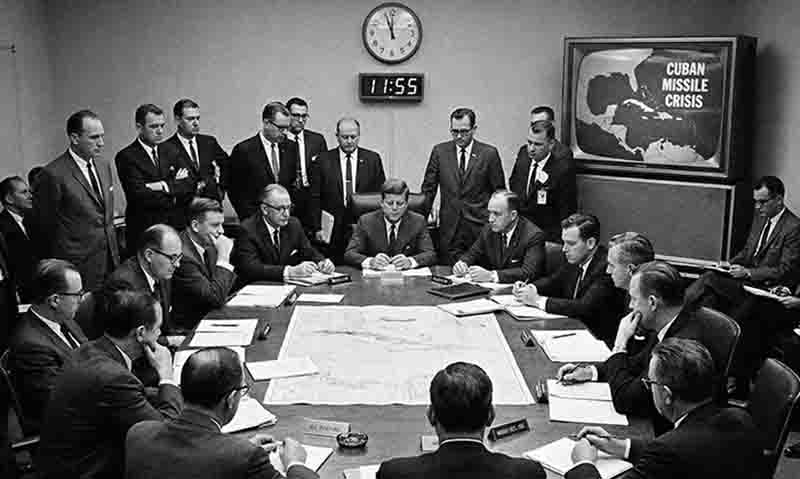
For thirteen days in October 1962, the United States and the Soviet Union stood on the brink of nuclear war. The Cuban Missile Crisis represents the most dangerous confrontation of the Cold War and the closest humanity has ever come to thermonuclear annihilation.
On October 14, 1962, an American U-2 spy plane photographed Soviet nuclear missile sites under construction in Cuba. When President John F. Kennedy was briefed on the morning of October 16, he faced an impossible choice: allow Soviet nuclear missiles 90 miles from American shores, risking nuclear blackmail and American humiliation, or take action that could trigger World War III.
The crisis that followed tested the limits of human judgment, diplomatic skill, and military restraint. It demonstrated both the terrifying logic of nuclear deterrence and the capacity of leaders to step back from the abyss. The resolution established patterns of superpower crisis management that would persist throughout the Cold War.
Key Concept: Nuclear Brinkmanship
The Cuban Missile Crisis demonstrated the paradox of nuclear deterrence: the willingness to risk everything to prevent war. Both Kennedy and Khrushchev understood that any nuclear exchange would mean mutual destruction, yet neither could afford to appear weak. The art of brinkmanship required convincing the opponent you would go to the edge while secretly seeking a way back.
Origins: How the Crisis Began
The road to the Cuban Missile Crisis began with the Bay of Pigs invasion in April 1961. The failed CIA-backed attempt to overthrow Fidel Castro's communist government convinced the Cuban leader that the United States would inevitably try again. Castro turned to the Soviet Union for protection.
Khrushchev's Gamble
Soviet Premier Nikita Khrushchev saw opportunity in Cuba's vulnerability. By placing nuclear missiles in Cuba, he could:
Protect Cuba from American invasion, preserving the only communist state in the Western Hemisphere
Correct the strategic imbalance caused by American Jupiter missiles in Turkey, which threatened the Soviet Union's heartland
Demonstrate Soviet power and commitment to allies, countering perceptions of Soviet weakness after the Berlin Wall crisis
Gain leverage for future negotiations on Berlin and other Vietnam War flashpoints
In July 1962, Khrushchev and Castro reached a secret agreement. Soviet ships began transporting missiles, launch equipment, and 42,000 Soviet troops to Cuba under the guise of agricultural assistance. The operation, codenamed Anadyr, was designed to achieve strategic surprise.
American Discovery
American intelligence had suspected Soviet military activity in Cuba throughout the summer of 1962. On September 4, President Kennedy issued a public warning against introducing offensive weapons into Cuba. Despite this, construction of missile sites continued.
On October 14, 1962, Major Richard Heyser flew a U-2 reconnaissance mission over western Cuba. His photographs, analyzed by the CIA's National Photographic Interpretation Center, revealed SS-4 medium-range ballistic missiles at San Cristobal. These missiles could strike Washington D.C., New York, Chicago, and most major American cities within minutes.
"I asked my guys, 'Is this ready to fire?' And they said, 'No, sir, it isn't.' I said, 'How long will it take?' They said, 'Probably two weeks.' And I said, 'We've got to move.'"
The Thirteen Days: A Timeline of Terror
The thirteen days of the Cuban Missile Crisis, from October 16 to October 28, 1962, represented the most intense period of Cold War confrontation. Each day brought new dangers, new intelligence, and new decisions that could mean war or peace.
Tuesday, October 16: Discovery
President Kennedy was briefed at 8:45 AM. He immediately convened the Executive Committee of the National Security Council (EXCOMM), a group of his closest advisors including Secretary of State Dean Rusk, Secretary of Defense Robert McNamara, Attorney General Robert Kennedy, and National Security Advisor McGeorge Bundy.
EXCOMM debated three main options:
Diplomatic pressure: Private negotiations with the Soviets, possibly trading missiles in Turkey
Surgical air strike: Destroying the missile sites without a full invasion
Naval blockade: Preventing further Soviet shipments while demanding withdrawal of existing missiles
The Joint Chiefs of Staff advocated for immediate military action. Air Force Chief of Staff General Curtis LeMay told Kennedy, "You're in a pretty bad fix, Mr. President." Kennedy replied with black humor, "You're in there with me."
Monday, October 22: The Quarantine
After six days of secret deliberations, Kennedy addressed the nation at 7:00 PM. He announced the discovery of Soviet missiles and declared a "strict quarantine on all offensive military equipment under shipment to Cuba." The term "quarantine" was chosen carefully—a blockade was technically an act of war.
Kennedy's speech was stark: "It shall be the policy of this nation to regard any nuclear missile launched from Cuba against any nation in the Western Hemisphere as an attack by the Soviet Union on the United States, requiring a full retaliatory response upon the Soviet Union." The world realized nuclear war was possible.
Wednesday, October 24: The Confrontation
The quarantine went into effect at 10:00 AM. Soviet ships approached the line. At the United Nations, American Ambassador Adlai Stevenson confronted Soviet Ambassador Valerian Zorin with the U-2 photographs, demanding, "Do you, Ambassador Zorin, deny that the U.S.S.R. has placed and is placing medium- and intermediate-range missiles and sites in Cuba?" Zorin refused to answer.
At the last moment, twelve Soviet ships stopped or turned back. Khrushchev had blinked, but the crisis was far from over. Missile sites in Cuba continued construction at full speed.
Saturday, October 27: Black Saturday
October 27 was the most dangerous day of the crisis. At 10:22 AM, Major Rudolf Anderson was shot down over Cuba by a Soviet SA-2 surface-to-air missile. EXCOMM assumed the order came from Moscow and interpreted it as deliberate escalation. In fact, Soviet commanders in Cuba had authority to fire on American reconnaissance planes, and the Kremlin was furious about the unauthorized attack.
That same day, another U-2 accidentally entered Soviet airspace over Siberia. Soviet MiGs scrambled to intercept. American F-102 fighters, armed with nuclear air-to-air missiles, rose to protect the U-2. The incident lasted 20 terrifying minutes before the U-2 escaped.
In Cuba, Castro urged Khrushchev to launch a preemptive nuclear strike if the Americans invaded. "If they actually carry out the brutal act of invading Cuba," Castro wrote, "that would be the moment to eliminate such danger forever through an act of clear legitimate defense, however harsh and terrible the solution would be."
At the same time, the U.S. Navy was dropping practice depth charges on Soviet submarine B-59 near the quarantine line. The submarine's captain, believing war had begun, prepared to fire a nuclear torpedo. Only the refusal of his political officer, Vasili Arkhipov, prevented nuclear war.
Vasili Arkhipov: The Man Who Saved the World
Soviet submarine B-59 was armed with a T-5 nuclear torpedo with roughly the power of the Hiroshima bomb. Cut off from communication and under attack, Captain Valentin Savitsky believed war had started. He ordered the nuclear torpedo fired. Soviet protocol required unanimous consent of the captain, political officer Ivan Maslennikov, and chief of staff Vasili Arkhipov. Arkhipov refused. His dissent prevented nuclear war and saved millions of lives.
Sunday, October 28: Resolution
On the morning of October 28, Radio Moscow broadcast Khrushchev's reply to Kennedy. The Soviet Premier agreed to dismantle and remove the missiles from Cuba in exchange for a U.S. pledge not to invade the island. The secret deal regarding Turkish missiles remained unmentioned publicly.
Kennedy immediately responded with a statement welcoming Khrushchev's "statesmanlike decision" and calling it "an important contribution to peace." The crisis was effectively over, though the naval quarantine remained until November 20, and Soviet IL-28 bombers were not removed until later negotiations.
The Secret Deal: Turkey and the Back Channel
Publicly, the resolution appeared a clear American victory: Soviet missiles removed in exchange for a non-invasion pledge. But the full story involved secret concessions that remained hidden for 25 years.
The Dobrynin-RFK Meeting
On the evening of October 27, Attorney General Robert Kennedy met secretly with Soviet Ambassador Anatoly Dobrynin at the Justice Department. The meeting was arranged through journalist John Scali, who had served as a back channel throughout the crisis.
Robert Kennedy delivered a dual message. First, the President was prepared to give a formal pledge not to invade Cuba if the missiles were withdrawn. Second, regarding the Turkish missiles: "The President had ordered their removal some time ago, and it was our judgment that, in view of the crisis, they would be removed within a short time after the crisis was over."
The key condition was absolute secrecy. The Turkish missiles must not appear part of a public trade. Kennedy warned that any leak would mean the deal was off. Dobrynin reported to Moscow, and Khrushchev accepted.
Why Secrecy Mattered
The secret nature of the Turkey deal was essential for both sides. For Kennedy, public acknowledgment of trading Turkish missiles would have:
Appeared as capitulation to Soviet blackmail, damaging NATO confidence in American resolve
Emboldened the Soviet Union to make further demands
Undermined the principle that offensive weapons in Cuba were uniquely intolerable
Risked a Turkish political crisis, as the Jupiter missiles were deployed at Turkey's request
For Khrushchev, the secret allowed him to claim a face-saving resolution without admitting he had backed down. The non-invasion pledge protected Cuba, his primary goal. The Turkish missiles, while valuable, were secondary.
"If you accept my proposal, Mr. President, we would thereby be given a chance to untie the knot of war and tension which has been tightening around the world. We would thereby make the first step towards the deliverance of mankind from the threat of thermonuclear war."
Military Dimensions: Forces on Alert
The Cuban Missile Crisis brought American and Soviet military forces to their highest states of readiness in history. The world had never seen such concentrated nuclear firepower prepared for immediate use.
American Forces
At the height of the crisis, the United States military operated at DEFCON 2—the highest alert level ever maintained. This meant:
Strategic Air Command (SAC): Nearly 2,500 bombers prepared for nuclear missions, with 1,400 airborne at all times
ICBMs: 144 Atlas and Titan missiles armed and ready for launch on 15 minutes' notice
Polaris submarines: Nine submarines at sea with 144 nuclear missiles targeted on the Soviet Union
Conventional forces: 100,000 troops assembled in Florida for potential invasion of Cuba
The U.S. Navy deployed 180 ships for the quarantine, including 8 aircraft carriers. The Second Fleet, under Vice Admiral Alfred Ward, prepared for possible amphibious assault.
Soviet Forces
Soviet forces in Cuba totaled 42,000 troops—far more than American intelligence estimated. They possessed:
Strategic missiles: 42 SS-4 medium-range missiles (range 1,100 miles) and plans for SS-5 intermediate-range missiles
Tactical nuclear weapons: 98 tactical nuclear missiles, including FROG-3 rockets and Luna missiles, with warheads of 2-20 kilotons
IL-28 bombers: 42 nuclear-capable light bombers
Air defense: 144 SA-2 surface-to-air missile launchers and 42 MiG-21 fighters
The Tactical Nuclear Threat
American planners did not know that Soviet commanders in Cuba had authority to use tactical nuclear weapons against an American invasion. If Kennedy had ordered the invasion planned for late October, Soviet forces would likely have used nuclear weapons against the beachhead. This would have triggered American nuclear retaliation, escalating to general nuclear war. The invasion option, favored by the Joint Chiefs, would have caused World War III.
Diplomatic Resolution: Lessons in Crisis Management
The Cuban Missile Crisis became a case study in Cold War crisis management. Its resolution demonstrated both the dangers of nuclear brinkmanship and the possibilities of superpower diplomacy.
The Hotline
One immediate consequence was the establishment of the Moscow-Washington hotline in 1963. This direct teletype connection between the Kremlin and the White House was designed to prevent the communication delays that had plagued the crisis. No longer would leaders need to rely on diplomatic cables, back channels, and public broadcasts to communicate during emergencies.
The Limited Test Ban Treaty
The crisis also catalyzed arms control. In July 1963, the United States, Soviet Union, and United Kingdom signed the Limited Nuclear Test Ban Treaty, prohibiting nuclear tests in the atmosphere, outer space, and underwater. While it did not stop the arms race, it marked the first major superpower agreement on nuclear weapons.
Kennedy's American University Speech
In June 1963, Kennedy delivered his famous commencement address at American University, calling for a reexamination of Cold War attitudes. "What kind of peace do we seek?" he asked. "Not a Pax Americana enforced on the world by American weapons of war. Not the peace of the grave or the security of the slave. I am talking about genuine peace, the kind of peace that makes life on earth worth living."
Aftermath and Legacy
The Cuban Missile Crisis transformed Cold War dynamics. Both superpowers recognized the need to manage their competition more carefully to avoid nuclear catastrophe.
Consequences for Khrushchev
Khrushchev's apparent capitulation damaged his standing in the Soviet Union and among international communists. Two years later, in October 1964, his colleagues removed him from power in a bloodless coup. While the missile crisis was not the sole cause, it contributed to perceptions of his recklessness and weakness.
Consequences for Kennedy
Kennedy emerged from the crisis with enhanced prestige. His combination of firmness and restraint—standing up to Soviet aggression while offering face-saving concessions—was praised as masterful statesmanship. The crisis may have helped mitigate negative opinion from the Bay of Pigs failure.
Cuba's Position
Castro felt betrayed by Khrushchev's unilateral decision to withdraw missiles without consulting Cuba. The non-invasion pledge protected his regime, but he resented Soviet paternalism. Over time, Cuba would develop its own foreign policy, sometimes independent of Soviet wishes.
The Continued Arms Race
Paradoxically, the crisis did not slow the nuclear arms race. Both sides accelerated their programs. The Soviet Union, determined never again to be in a position of strategic inferiority, embarked on a massive buildup that would achieve nuclear parity with the United States by the late 1960s. The crisis demonstrated that nuclear superiority mattered in confrontations, driving both sides to seek advantage.
12 Key Facts About the Cuban Missile Crisis
Duration: The crisis lasted exactly 13 days, from October 16 to October 28, 1962, though the naval quarantine remained until November 20.
Discovery: U-2 pilot Major Richard Heyser photographed the first missile site on October 14, 1962. The CIA identified SS-4 Sandal missiles capable of hitting Washington D.C.
Distance: Cuba lies only 90 miles from Florida, meaning missiles could strike American cities within 5-8 minutes of launch.
DEFCON 2: The United States reached DEFCON 2 on October 24, the highest alert level in history. SAC maintained airborne alert with nuclear-armed bombers.
Black Saturday: October 27 was the most dangerous day. Major Rudolf Anderson was killed when his U-2 was shot down over Cuba.
Submarine B-59: Soviet submarine B-59 nearly fired a nuclear torpedo at American destroyers. Only Vasili Arkhipov's refusal prevented nuclear war.
Secret Deal: The public agreement involved Soviet withdrawal for a non-invasion pledge. Secretly, the U.S. also promised to remove Jupiter missiles from Turkey within six months.
Tactical Nukes: The U.S. did not know that Soviet forces in Cuba possessed 98 tactical nuclear weapons with authority to use them against invasion.
Castro's Letter: On October 26, Castro urged Khrushchev to launch a preemptive nuclear strike against the United States if Cuba was invaded.
Frequently Asked Questions
Continue Reading
On This Page
Key Figures
- John F. Kennedy — U.S. President
- Nikita Khrushchev — Soviet Premier
- Fidel Castro — Cuban Premier
- Robert McNamara — U.S. Defense Secretary
- Robert Kennedy — Attorney General
- Anatoly Dobrynin — Soviet Ambassador
- Vasili Arkhipov — Soviet Submarine Officer
Key Data
- Start: October 16, 1962
- End: October 28, 1962
- Missiles: 42 SS-4 MRBMs
- Soviet Troops: 42,000
- U.S. Alert: DEFCON 2
- Deaths: 1 (Major Anderson)
Related Articles
Download
Get the complete Cuban Missile Crisis timeline and declassified documents.
Crisis Documents PDF | Available 15.04.26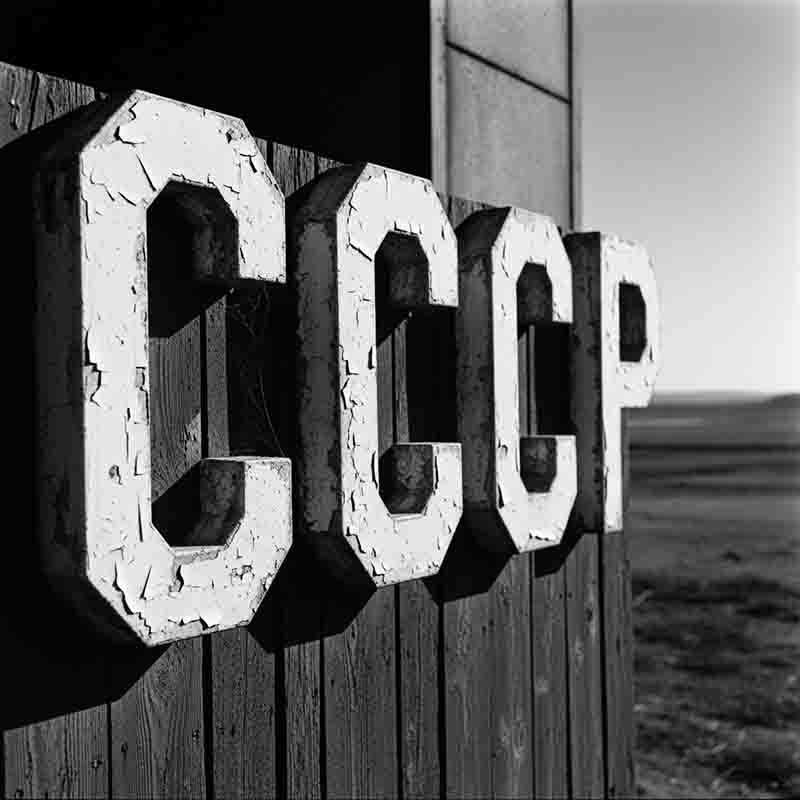
The abbreviation was widely used on official documents, currency, and state symbols of the Soviet Union.
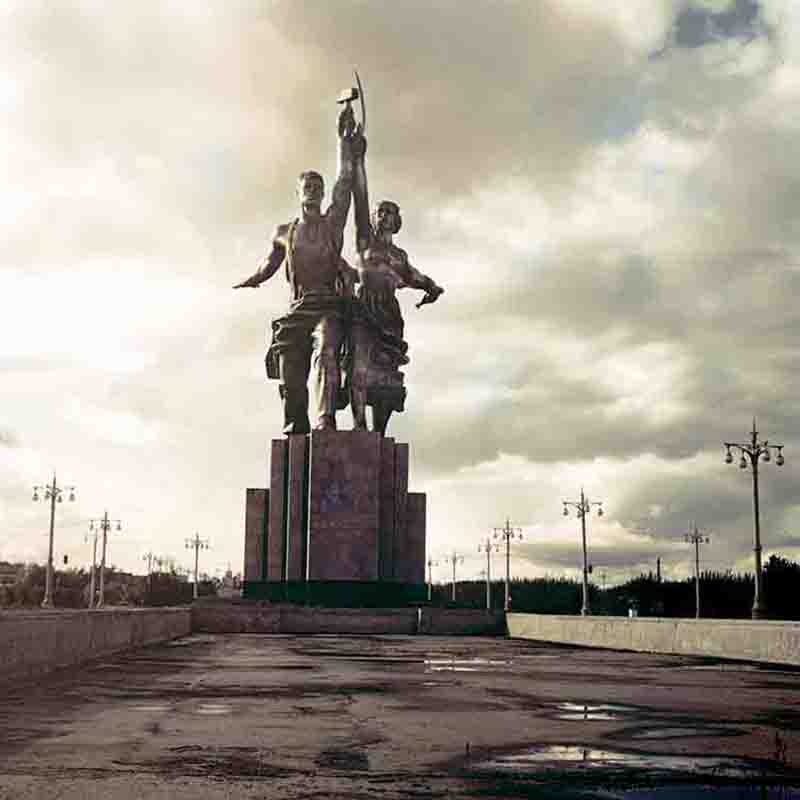
The iconic sculpture "Worker and Kolkhoz Woman", created by Vera Mukhina for the 1937 World's Fair in Paris.
About This Article
This article examines the Cuban Missile Crisis (October 1962), the 13-day confrontation that brought the United States and Soviet Union to the brink of nuclear war. Part of the Cold War series on soviet-union.com.
Last Updated: February 10, 2026 | Reading Time: 16 minutes