In this article
Introduction 1941 Invasion 1946 Crisis 1953 Coup Shah & the West 1979 Revolution Iran-Iraq War Timeline FAQOf all the nations caught in the Cold War's vice, none occupied a more precarious or more pivotal position than Iran. Sharing a 2,400-kilometre border with the Soviet Union, sitting atop the world's second-largest proven oil reserves, and straddling the approaches to the Persian Gulf, Iran was too strategically valuable for either superpower to ignore, and too proud and complex to be easily controlled by either.
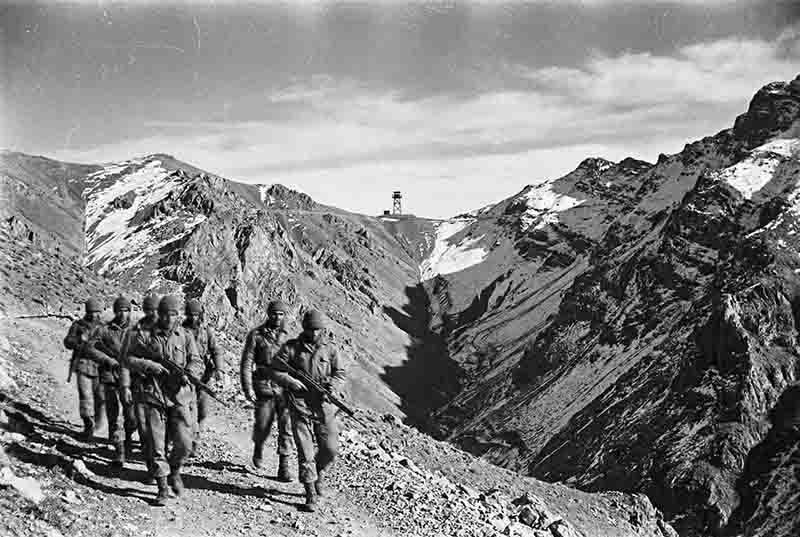
Iran was not a passive actor in the Cold War. It was a battleground, a prize, and ultimately a wild card, a nation that confounded both Washington and Moscow by choosing a third path that neither superpower anticipated.
During the Cold War, the Strait of Hormuz, the narrow gateway to the Persian Gulf, was the strategic focal point for global energy security and the primary theater for the U.S. strategy of containing Soviet expansion
The story of Iran in the Cold War begins in 1941, when British and Soviet forces jointly invaded a neutral country to secure supply lines against Germany. It passes through the first Cold War confrontation of 1946 in Azerbaijan, the CIA-orchestrated coup of 1953 that made the Shah an American client, two decades of the Pahlavi monarchy as Washington's "policeman of the Gulf", and then the historical events of 1979, when the Islamic Revolution swept away the entire strategic architecture the United States had built at immense cost.
Equally remarkable was the Soviet Union's position. Moscow had coveted influence over Iran since the 19th century. Yet Ayatollah Khomeini's doctrine of "Neither East nor West", explicitly anti-communist as well as anti-American, denied the USSR the foothold it had long sought. Iran became the country that defeated both superpowers without fighting either directly.
Key Concept: The Northern Tier Strategy
The United States' "Northern Tier" strategy envisioned containing Soviet expansion southward through a chain of allied states, Turkey, Iraq, Iran, and Pakistan, along the USSR's southern periphery. Iran was the linchpin of this architecture. With its long border directly abutting Soviet Central Asia and Azerbaijan, and its control of the Strait of Hormuz, Iran was irreplaceable. The loss of Iran to Soviet influence would have flanked NATO, cut off Persian Gulf oil, and potentially brought Soviet power to the Indian Ocean.
The Anglo-Soviet Invasion of Iran, 1941
The Cold War in Iran did not begin in 1946 or 1953. Its roots lie in a six-day military operation in August 1941, when British and Soviet forces jointly invaded a neutral country, an act that set every subsequent dynamic in motion.
Operation Countenance
On 25 August 1941, just two months after Germany's invasion of the Soviet Union transformed the strategic calculus in Europe, British and Soviet forces launched a coordinated assault on Iran from multiple directions. The British invaded from Iraq and the Persian Gulf; the Red Army swept in from the north across the Soviet-Iranian border. The numerically and technologically outmatched Iranian forces surrendered within six days, on 31 August 1941.
The invasion's stated purpose was threefold: to secure the Persian Corridor as a supply route for American Lend-Lease goods reaching the Soviet Union; to deny Germany the use of Iranian oil fields and communication networks; and to prevent Reza Shah's government, which had cultivated German economic ties as a counterbalance to British and Russian influence, from becoming an Axis conduit. Thirty thousand American non-combat troops eventually arrived to manage the supply route, which became known as the "Bridge to Victory."
"Iran must be regarded as a conquered country and dealt with as such. The Persian army has capitulated, the Shah is about to go, and the country is largely in our hands."
The Abdication of Reza Shah
On 16 September 1941, Reza Shah Pahlavi, the founder of the Pahlavi dynasty, was forced to abdicate by the Allied occupation authorities. He was exiled to Mauritius and later South Africa, where he died in 1944. His 22-year-old son, Mohammad Reza Pahlavi, was installed as the new Shah, a young, inexperienced monarch who would become America's most important Cold War ally in the Middle East and whose eventual overthrow would reshape the world.
The Tripartite Treaty of January 1942 formalised the occupation terms: Britain and the Soviet Union pledged to respect Iranian sovereignty, to use Iranian territory only for war purposes, and, critically, to withdraw all forces within six months of the war's end. This withdrawal deadline would become the flashpoint for the Cold War's first major confrontation.
The Persian Corridor: Iran's Strategic Value Quantified
Between 1942 and 1945, approximately 5 million long tons of war supplies passed through Iran to the Soviet Union, roughly 24% of all Lend-Lease aid delivered to the USSR. This included over 180,000 vehicles, 4,874 tanks, and thousands of aircraft. Without Iranian transit routes, the Soviet war effort against Germany would have faced a critical supply shortfall at decisive moments of the conflict.
The Azerbaijan Crisis: The Cold War's Opening Move, 1946
When the Second World War ended in August 1945, the United States and Britain began withdrawing their forces from Iran as agreed. The Soviet Union did not. What followed became the first major Cold War confrontation, a crisis that prefigured the entire doctrine of containment.
Stalin's Gambit
As the Allied withdrawal deadline of 2 March 1946 approached, Soviet troops not only remained in northern Iran but expanded their military presence southward, physically blocking Iranian government forces from re-entering the region. By mid-December 1945, using troops and secret police, the USSR had established two pro-Soviet separatist governments within Iranian territory:
- The Azerbaijan People's Government (headed by Sayyid Jafar Pishevari) in Iranian Azerbaijan
- The Kurdish Republic of Mahabad in the Kurdish-populated northwest
Stalin's objectives were multiple: access to Iranian oil fields (particularly in Azerbaijan), a buffer zone on the Soviet southern border, and potentially the absorption of Iranian Azerbaijan into the Soviet Azerbaijani SSR. Soviet tanks reportedly advanced within 40 miles of Tehran before international pressure intensified.
"The Soviet Union is not only a state but also a cause, and for that cause, a few hundred miles of Iranian territory is not an excessive price."
The American Response and Qavam's Diplomacy
The crisis forced the Truman administration to confront Soviet expansionism directly for the first time. Washington delivered firm diplomatic warnings through the United Nations Security Council, the first major test of that institution, while Iranian Premier Ahmad Qavam pursued a masterful dual strategy: travelling to Moscow to negotiate a Soviet oil concession (giving Stalin what he wanted in principle), while secretly planning to rescind the agreement once Soviet forces withdrew.
By May 1946, Soviet troops had withdrawn from northern Iran. The separatist governments collapsed within months as Iranian forces re-established control. The promised oil concession was subsequently rejected by the Iranian parliament (Majlis) in November 1947, one of the most audacious parliamentary manoeuvres in Cold War history.
US Strategy
- UN Security Council pressure
- Diplomatic warnings to Moscow
- Support for Iranian sovereignty
- Early test of Truman Doctrine
Soviet Strategy
- Refused treaty withdrawal
- Backed separatist republics
- Sought oil concession
- Military pressure on Tehran
Iran's Strategy
- Qavam's dual diplomacy
- Feigned oil concession
- Appealed to UN/US
- Retook Azerbaijan militarily
The Azerbaijan Crisis of 1946 is considered by historians to be the opening engagement of the Cold War, preceding the Truman Doctrine speech (March 1947), the Marshall Plan (1948), and the Berlin Blockade (1948–49). American diplomatic pressure on the Soviets in Iran is the earliest documented success of what would become the formal containment strategy.
Operation Ajax: The 1953 Coup and Its Long Shadow
If the Azerbaijan Crisis established containment as American strategy, the 1953 coup against Prime Minister Mohammad Mosaddegh established a different and more damaging precedent: the willingness of Western powers to overthrow a democratically elected government to protect strategic and economic interests.
Mosaddegh and Oil Nationalisation
Mohammad Mosaddegh became Prime Minister of Iran in April 1951 on a wave of nationalist support, with a single defining mission: to nationalise the Anglo-Iranian Oil Company (AIOC), through which Britain had extracted enormous profits from Iranian oil while paying Iran minimal royalties. In May 1951, the Iranian parliament voted to nationalise the oil industry. Britain responded with an international oil embargo and a blockade of Iranian oil exports.
Mosaddegh was neither a communist nor a Soviet agent. He was a secular Iranian nationalist, educated in European law, who believed Iranian sovereignty required control of Iranian resources. However, his government's financial crisis, caused by the oil embargo, strengthened the communist Tudeh Party, giving Washington and London the pretext they needed.
"Our long years of negotiations with foreign countries have yielded no results thus far. With the oil revenues we could meet our entire budget and combat poverty, disease, and backwardness among our people."
CIA and MI6: Operation Ajax / Boot
In August 1953, the CIA (under Kermit Roosevelt Jr.) and Britain's MI6 orchestrated a coup that deposed Mosaddegh and reinstated the Shah's autocratic authority. The operation, codenamed Ajax by the Americans and Boot by the British, involved bribing Iranian military officers, financing anti-Mosaddegh propaganda, hiring street agitators, and ultimately deploying military units loyal to the Shah.
Mosaddegh was arrested, tried for treason, sentenced to three years imprisonment, and spent the rest of his life under house arrest. He died in 1967, never having regained his freedom.
The CIA's Admission
In 2013, the CIA officially acknowledged its role in the 1953 coup for the first time. Declassified documents confirmed that the agency viewed the operation as a "success" in preventing Soviet penetration, but also noted internal doubts about whether the Tudeh Party was ever truly capable of seizing power. The coup eliminated a democratic government and replaced it with increasingly authoritarian Shah rule, planting the seeds of the 1979 revolution.
The Long Shadow: Why 1953 Still Matters
The 1953 coup's consequences reverberate to the present day. It permanently coloured Iranian perceptions of American intentions, providing Khomeini and subsequent Iranian leaders with a narrative of Western imperialism that resonated deeply with the public. When Iranian revolutionaries stormed the US Embassy in Tehran in November 1979, they discovered CIA documents confirming American intervention in Iranian affairs, evidence that validated 26 years of nationalist grievance.
The Shah's Iran: America's Cold War Client, 1953–1979
In the decades following the 1953 coup, Mohammad Reza Shah Pahlavi became one of Washington's most important Cold War allies, and his regime's contradictions became one of America's most costly strategic blind spots.
The Strategic Partnership
The relationship between the Shah and successive American administrations was built on mutual interest: the Shah received military hardware, CIA cooperation, and diplomatic cover; the United States received guaranteed oil flows, a regional military power aligned against Soviet expansion, and support for American interests in OPEC. By the mid-1970s, Iran had become the world's largest purchaser of American weapons, with annual arms sales exceeding $5 billion. The SAVAK (Sazman-e Ettelaat va Amniat-e Keshvar), the Iranian secret police, maintained intimate ties with the CIA and was trained partly by Israeli Mossad and the FBI.
Mohammad Reza Shah Pahlavi
- • Ruled Iran 1941–1979
- • World's largest US arms buyer (1970s)
- • Launched the White Revolution (1963)
- • SAVAK: brutal domestic repression
- • Overthrown by Islamic Revolution, 1979
The White Revolution
- • Land reform redistributed estates
- • Women's suffrage granted (1963)
- • Rapid industrialisation
- • Westernisation alienated clergy
- • Oil revenues funded modernisation
The Nixon Doctrine and Iran as Regional Gendarme
Under President Nixon's 1969 doctrine, the United States sought to reduce direct military commitments while strengthening allied proxies. Iran was identified as the primary "pillar" of regional security in the Persian Gulf. The Shah embraced this role enthusiastically, deploying Iranian troops to suppress a Marxist insurgency in Oman's Dhofar province (1973–75), one of the Cold War's lesser-known proxy interventions, and positioning Iran as the guarantor of Western access to Gulf oil.
This strategy, as historian Mark Gasiorowski has argued, created what he called a "trap by success": American investment in the Shah became so deep that Washington could not distance itself from his regime as popular opposition mounted in the late 1970s. The United States was publicly associated with every act of SAVAK repression, every Westernisation policy that alienated Islamic conservatives, and every economic distortion caused by the oil-boom years.
"Iran, because of the great leadership of the Shah, is an island of stability in one of the more troubled areas of the world."
The Islamic Revolution: A Systemic Shock to the Cold War Order
The Iranian Revolution of February 1979 was one of the most consequential events of the twentieth century, not merely for Iran, but for the entire global order the Cold War had constructed. It was, in the words of international relations theorists, a "systemic shock": an event that fundamentally altered the operating rules of the system.
The Intelligence Failure
The revolution stunned both superpowers. In November 1978, the CIA's own assessment described Iran as "not in a revolutionary or even pre-revolutionary situation." Just three months later, the Shah fled Iran on 16 January 1979, and Ayatollah Ruhollah Khomeini returned from exile in Paris on 1 February 1979 to a reception of millions. On 11 February 1979, the Pahlavi monarchy collapsed. The speed and totality of the collapse remains one of the greatest intelligence failures in American history.
The CIA's failure stemmed from structural blindness: too focused on military threats and communist infiltration, it had consistently under-analysed the revolutionary potential of Islamic fundamentalism. Soviet intelligence similarly failed to anticipate the revolution's scope, though Moscow had long been aware of anti-Shah sentiment.
Khomeini's "Neither East nor West" Doctrine
"Neither East nor West" — Na Sharqi, Na Gharbi
Ayatollah Khomeini's foundational foreign policy doctrine rejected both superpowers simultaneously. The United States was the "Great Satan", the primary imperialist power responsible for the 1953 coup and support for the Shah. The Soviet Union was the "Little Satan", equally imperialist, but also ideologically hostile as a materialist, atheist power. Khomeini strongly opposed Marxism on theological grounds: a system that denied God was, by definition, incompatible with Islamic governance. This doctrinal clarity meant that no matter how much the Soviets attempted to cultivate the Islamic Republic, they would never achieve the strategic partnership Moscow had long sought on its southern border.
Superpower Responses
The American response was the Carter Doctrine (January 1980): an explicit statement that the United States would use military force to repel any attempt by an outside power to gain control of the Persian Gulf. This was effectively a unilateral extension of containment to the Gulf, a recognition that the Shah's Iran could no longer perform this function. The rapid deployment force that would eventually become US Central Command (CENTCOM) was created in this period.
The Soviet response was paradoxical. The revolution had eliminated America's primary regional ally, an apparent strategic gain for Moscow. But the rise of militant political Islam on the Soviet southern border was an existential threat to Soviet control of its Muslim-majority republics. Within less than a year, fears about Islamist contagion spreading to Soviet Central Asia contributed directly to the decision to invade Afghanistan in December 1979, a decision that would eventually destroy the Soviet Union itself.
Historical Irony: The Iranian Revolution, designed to liberate Iran from superpower domination, inadvertently triggered the Soviet-Afghan War — which, through the American-backed mujahideen resistance, became a primary cause of Soviet collapse. Iran's revolution changed history not only for Iranians but for the entire bipolar world order.
The Hostage Crisis, 1979–1981
On 4 November 1979, Iranian students stormed the US Embassy in Tehran and took 66 American diplomats hostage. The 444-day crisis paralysed the Carter presidency, produced the disastrous Operation Eagle Claw rescue attempt (April 1980), and ended only on the day Ronald Reagan was inaugurated, 20 January 1981. The hostage crisis permanently severed US-Iran diplomatic relations and established the framework of enmity that persists to the present day.
The Iran-Iraq War: A Cold War Proxy Conflict by Default, 1980–1988
On 22 September 1980, Iraqi forces under Saddam Hussein invaded Iran, beginning the longest conventional war of the twentieth century. The Iran-Iraq War lasted eight years, killed between 500,000 and 1 million people, and drew both superpowers into ambivalent, opportunistic roles that reflected the Cold War's fundamental confusion about what to do with an Iran that belonged to neither bloc.
The Superpowers' Paradox
Neither superpower wanted the other to benefit from the conflict, but neither wanted to see the revolutionary Islamic Republic emerge victorious either. The result was a policy of calculated ambiguity that prolonged the war far beyond any strategic necessity.
The United States initially maintained formal neutrality but tilted decisively toward Iraq after 1982, providing Saddam Hussein's regime with intelligence (including satellite imagery of Iranian positions), economic credits, agricultural loans, and, controversially, looking the other way as Iraq acquired chemical weapons technology. American naval forces were eventually deployed in the Persian Gulf under Operation Earnest Will (1987–88) to protect Kuwaiti tankers from Iranian attacks, bringing the US into direct skirmishes with Iranian naval forces.
The Soviet Union adopted an equally contradictory stance. Moscow had suspended arms deliveries to Iraq after the invasion began, then resumed them by 1982, eventually becoming Iraq's primary arms supplier. Soviet military equipment, T-72 tanks, MiG fighters, artillery, constituted the backbone of Iraqi military power. The Soviets did not provide direct support to Iran, for two reasons that reveal the fundamental incompatibility between Soviet strategy and Khomeini's Iran: Khomeini's anti-communist ideology, and Soviet fears that Iranian-style Islamism could spread to the Muslim populations of Soviet Central Asian republics.
The Soviet Calculus: Islam as Existential Threat
Soviet intelligence analysts were deeply alarmed by the Iranian Revolution's potential appeal to Muslim populations within the USSR, approximately 45 million people in Azerbaijan, Uzbekistan, Tajikistan, Turkmenistan, Kazakhstan, and Kyrgyzstan. The combination of anti-Soviet Shia militancy in Lebanon (Hezbollah, backed by Iran) and the example of Khomeini's revolutionary success suggested a template that could be replicated. This fear was a central factor in both Soviet policy toward Iran and in the decision to invade Afghanistan: Moscow could not afford a second Khomeini-style revolution on its southern border.
The War's Conclusion
The war ended in August 1988 with a UN-brokered ceasefire (UN Security Council Resolution 598) after Iran's military position had been severely weakened by Iraqi chemical weapons attacks and US naval operations in the Gulf. Neither side achieved its objectives. Khomeini accepted the ceasefire, famously describing it as "drinking poison." The war's massive death toll, combined with economic devastation, fundamentally weakened the Islamic Republic's revolutionary momentum.
Iran in the Cold War: Complete Timeline
Anglo-Soviet Invasion of Iran (Operation Countenance)
Britain and the Soviet Union jointly invade neutral Iran. Reza Shah abdicates; his son Mohammad Reza Pahlavi becomes Shah. The Persian Corridor opens as a vital Allied supply route. Tripartite Treaty pledges withdrawal within six months of war's end.
Azerbaijan Crisis — The Cold War's First Confrontation
Soviet troops refuse to withdraw, sponsor the Azerbaijan People's Government and Republic of Mahabad. US diplomatic pressure and Premier Qavam's negotiations force Soviet withdrawal by May. Iranian parliament rejects oil concession in November 1947.
Mosaddegh Nationalises the Anglo-Iranian Oil Company
PM Mosaddegh's nationalisation of the AIOC triggers a British oil embargo and international crisis. Washington initially seeks compromise but grows alarmed by the Tudeh Party's growing influence.
Operation Ajax — CIA/MI6 Coup Overthrows Mosaddegh
CIA officer Kermit Roosevelt Jr. orchestrates the Shah's return to power. Mosaddegh arrested, sentenced, placed under permanent house arrest. The coup poisons US-Iran relations for decades and provides Khomeini's movement with its foundational anti-American narrative.
The Shah as America's Regional Policeman
Iran becomes the world's largest purchaser of US arms. White Revolution modernisation programme. SAVAK-CIA cooperation deepens. Iranian troops deploy to Oman (1973–75). Oil revenues soar after 1973, and fuel revolutionary discontent. Carter calls Iran "an island of stability" in December 1977.
The Shah Flees; Khomeini Returns
Shah Mohammad Reza Pahlavi leaves Iran on 16 January 1979. Khomeini returns from Paris on 1 February to millions. The Pahlavi monarchy collapses on 11 February. The Islamic Republic established. "Neither East nor West" declared as foundational doctrine.
US Embassy Hostage Crisis (444 Days)
Iranian students seize US Embassy; 66 diplomats held hostage. Carter Doctrine announced (January 1980). Operation Eagle Claw rescue fails (April 1980). Hostages released on Reagan's inauguration day. US-Iran diplomatic relations severed permanently.
Iran-Iraq War
Iraq invades Iran. Both superpowers support Iraq over time. US provides intelligence and economic credits; USSR becomes Iraq's primary arms supplier. 500,000–1 million dead. Iran accepts UN ceasefire in August 1988. Khomeini calls it "drinking poison."
Khomeini Dies; Cold War Ends
Khomeini dies June 1989; Ali Khamenei becomes Supreme Leader. Soviet Union collapses December 1991. Iran — having defied both superpowers throughout the Cold War, emerges as a regional power in a unipolar world, with no patron and no peace agreements with its principal adversary.
Key Figures
Mohammad Mosaddegh
Iranian PM 1951–53. Nationalised oil. Overthrown by CIA. Symbol of Iranian democratic nationalism.
Mohammad Reza Shah
Shah 1941–79. America's Cold War ally. White Revolution. Fled Iran 1979. Died in exile.
Ayatollah Khomeini
Led 1979 revolution. Founded Islamic Republic. "Neither East nor West." Died 1989.
Ahmad Qavam
Iranian PM 1946. Outwitted Stalin in Azerbaijan Crisis. Secured Soviet withdrawal.
Kermit Roosevelt Jr.
CIA officer who ran Operation Ajax in 1953. Grandson of Theodore Roosevelt.
Jimmy Carter
US President 1977–81. Praised the Shah; faced revolution, hostage crisis, Carter Doctrine.
Iran: Before and After 1979
- World's largest US arms purchaser
- CIA-SAVAK intelligence partnership
- Linchpin of US containment strategy
- Secular Western-style modernisation
- Shah called "island of stability" by Carter
- Part of Northern Tier anti-Soviet chain
- "Neither East nor West", opposed both blocs
- US Embassy seized; diplomats held 444 days
- Triggered Carter Doctrine and CENTCOM
- Islamic theocracy, anti-communist by doctrine
- Indirectly caused Soviet invasion of Afghanistan
- Defined Cold War's final decade in the Gulf
The Vietnam War: America's Longest Cold War Conflict
Frequently Asked Questions
Conclusion: Iran's Cold War Legacy
Iran's Cold War story is ultimately a story about the limits of superpower control. Despite enormous investment — Soviet military pressure in 1946, British-American covert action in 1953, decades of US military aid, and sustained Soviet diplomatic engagement — neither superpower succeeded in making Iran a reliable instrument of its strategy.
The United States came closest. For 26 years, the Shah's Iran served as Washington's regional anchor. But the very methods used to create that alliance — the 1953 coup, SAVAK support, association with autocracy and Westernisation — ultimately destroyed it. When the Islamic Revolution came, it came in part as a reaction to American imperialism, real and perceived.
The Soviet Union never achieved its ambitions on Iran, despite geography that should have made it easier. The Tsarist strategy of southern expansion, pursued intermittently since the 19th century, was defeated in 1946 by American diplomacy and Iranian shrewdness. It was definitively ended by 1979: Khomeini's Iran was a more implacable opponent of Soviet influence than the Shah had ever been.
- Covert intervention has long consequences. The CIA coup of 1953 made possible 26 years of the Shah's rule — and made inevitable the intensity of the anti-American character of the revolution that ended it.
- Ideological forces can defeat geopolitical logic. Iran's "Neither East nor West" doctrine, dismissed by both superpowers as impractical, proved more durable than any Cold War alliance.
- Revolutionary overspill is unpredictable. The Iranian Revolution triggered the Soviet-Afghan War, which helped end the Cold War — an outcome neither Washington nor Tehran planned or could have foreseen.
About This Article
This article examines Iran's role in the Cold War from the Anglo-Soviet invasion of 1941 through the Iran-Iraq War of 1980–88. Part of the Cold War series on soviet-union.com
Last Updated: March 16, 2026 | Reading Time: 22 minutes | Sources: CIA Declassified Archives, Gasiorowski (1991), Abrahamian (2008), Kinzer (2003), Bakhash (1984)
Quick Facts: Iran & the Cold War
| First Crisis | Azerbaijan, 1946 |
| CIA Coup | August 1953 |
| Revolution | February 1979 |
| Hostage Crisis | 444 days (1979–81) |
| Iran-Iraq War | 1980–1988 |
| USSR border | 2,400 km |
| Key Doctrine | "Neither East nor West" |
Related Articles
Primary Sources
Explore declassified documents and key archives on Iran in the Cold War.
Atlantic Council National Security Archive WikipediaDownload: Available 10.6.26
Get the complete Iran & Cold War analysis with declassified document references.
Iran Cold War PDF | 10.06.26
The CCCP abbreviation appeared on official Soviet documents, currency, and state symbols throughout the Cold War era.
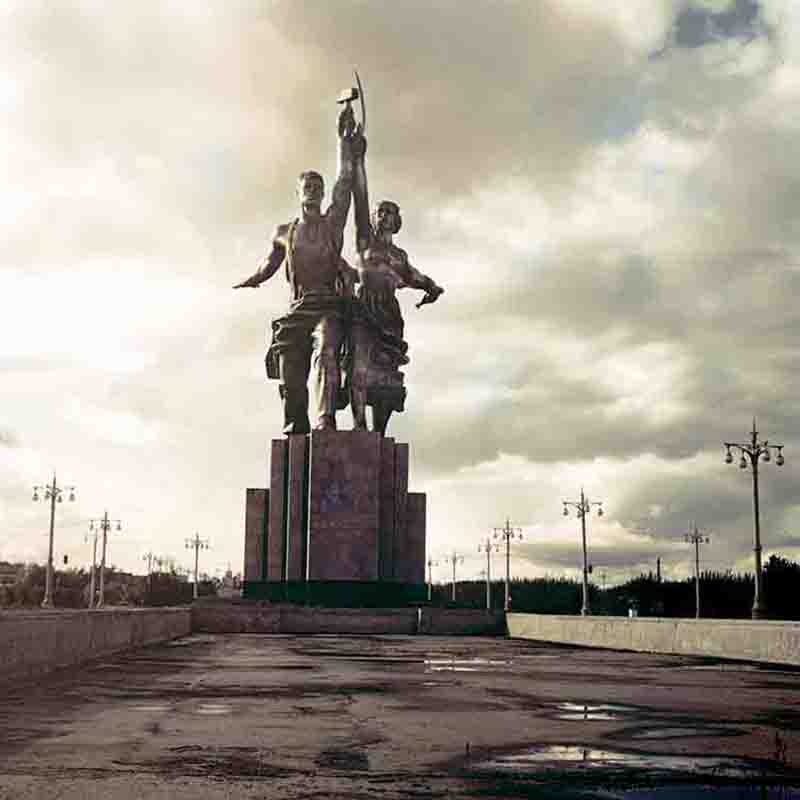
The iconic "Worker and Kolkhoz Woman" by Vera Mukhina, created for the 1937 World's Fair — a symbol of Soviet ambition during the age of competing ideologies.