In this article
Introduction Strategy & Doctrine 8th Squadron Basing Network Iraq Treaty Tanker War Technology Timeline Key Figures FAQ ConclusionOf all the geographic chokepoints contested during the Cold War, none was more consequential, or more hotly disputed, than the Strait of Hormuz. At its narrowest point just 33 kilometres wide, this passage between the Omani and Iranian coasts controls the exit route for roughly two-thirds of the Western world's exportable oil. For the Soviet Union, it was the "jugular vein" of the Western industrial world: a point of maximum leverage where naval power could offset the geographic disadvantages of a continental land empire.
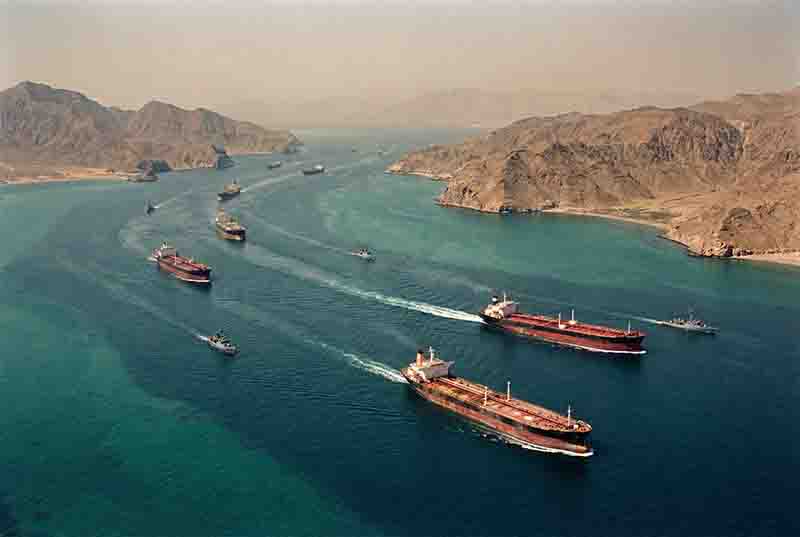
The Soviet Union's strategic engagement with Hormuz was not accidental. It was the product of a coherent, evolving naval doctrine, shaped by Admiral Sergey Gorshkov, grounded in geopolitical theory, and executed through a permanent naval presence that challenged American hegemony in the Indian Ocean for over two decades.
Throughout the Cold War, the Strait of Hormuz was not merely an oil route, it was a strategic multiplier. Soviet strategists understood that the capability to credibly threaten the Strait gave Moscow diplomatic leverage disproportionate to its actual economic weight. The USSR was self-sufficient in oil; its interest in the Strait was purely about denying the West access to the energy supply on which NATO's industrial and military power depended.
The Soviet approach to the Strait of Hormuz evolved in three distinct phases: a peripheral, reactive posture in the 1940s–50s; a transition to sustained diplomatic presence in the 1960s–70s under Gorshkov's naval revolution; and a direct operational involvement during the 1980s Tanker War that brought Soviet warships into the same waters as U.S. carrier battle groups. What follows is the most detailed account available of that evolution.
Theoretical Foundations: Heartland, Rimland, and the Quest for Warm Water
The Soviet approach to the Strait of Hormuz cannot be understood without appreciating the historical Russian obsession with warm-water ports and the geopolitical theories that shaped Soviet strategic thinking. For centuries, Russia's geographic confinement to the frozen coastlines of the Arctic and the strategically bottled-up waters of the Baltic and Black Seas created a persistent southward strategic pressure toward ice-free, open-ocean access.
Mackinder, Mahan, and the Soviet Synthesis
During the Cold War, the ancient Russian warm-water imperative was reinterpreted through the lens of two competing geopolitical frameworks. Halford Mackinder's "Heartland" theory suggested that control of the Eurasian landmass, which the USSR already possessed, was the key to world dominance. But Alfred Thayer Mahan's emphasis on sea power and the control of chokepoints challenged the Soviet continental mindset. Soviet strategists synthesised both: to break out of what they perceived as "hostile Western encirclement," the USSR had to project power into the "Rimland", the coastal regions of Eurasia including the Middle East and the Persian Gulf.
The Law of the Sea Dimension
By the mid-1960s, the Soviet Union had emerged as a major maritime power, a transformation that coincided with its active participation in Law of the Sea (LOS) negotiations. Moscow's shift from a defensive coastal posture to a global one was reflected in its support for traditional "high seas rights of navigation." The USSR strongly opposed "creeping jurisdiction" by coastal states. Soviet planners recognized a critical vulnerability: if nations like Iran or Oman could restrict passage through the Strait of Hormuz, the mobility of the Soviet Navy would be permanently compromised. This legal strategy provided the diplomatic cover for forward deployment, ensuring the 8th Squadron could operate in the Indian Ocean without being subject to the restrictions of regional actors.
Soviet Strategic Objectives
- Deny Western energy access in wartime
- Establish warm-water naval presence
- Challenge U.S. carrier battle groups
- Project power into the "Global South"
- Legitimize USSR as global naval power
U.S. Counter-Strategy
- Contain Soviet southward expansion
- Secure Gulf oil for NATO allies
- Maintain carrier battle group dominance
- Carter Doctrine: unilateral deterrence
- Build CENTCOM rapid reaction force
Regional Actors' Leverage
- Iran: controlled northern Hormuz shore
- Oman: strategic Musandam Peninsula
- Iraq: Soviet treaty partner (1972)
- Kuwait: played both superpowers (1986)
- South Yemen: Soviet proxy basing
The 8th Operational Squadron: Architecture of Soviet Power
The 8th "Indian" Operational Squadron (8-ia operativnaia eskadra) served as the primary instrument of Soviet strategy in the Northwestern Indian Ocean and the Persian Gulf. Formally established in 1974 but preceded by permanent deployments dating back to 1968, the squadron was a direct response to Britain's withdrawal of military forces "East of Suez." Soviet leadership perceived a strategic vacuum that, if left unfilled, would be occupied exclusively by the U.S. Navy's 7th Fleet. The squadron was primarily drawn from the Pacific Fleet based in Vladivostok, highlighting the extraordinary geographic challenges the Soviets faced in projecting power so far from their industrial centres.
Organizational Evolution
The squadron's development from diplomatic reconnaissance to a standing warfighting force followed a clear escalatory logic, driven by each successive regional crisis and by the ongoing Soviet-American naval competition.
| Period | Organizational Milestone | Strategic Intent |
|---|---|---|
| 1968 | Initial goodwill visits to Indian Ocean ports | Diplomatic reconnaissance; testing British vacuum after withdrawal "East of Suez" |
| 1971 | Permanent presence established | Response to Indo-Pakistani War and concurrent U.S. carrier buildup |
| 1973 | 1st Mixed Operational Brigade formed | Transition to permanent organizational structure; response to Yom Kippur War |
| 1974 | 8th Operational Squadron formally created | Standing task force under Pacific Fleet; independent command authority |
| 1980s | Modernization peak: Kirov and Udaloy classes deployed | Integration of high-intensity warfighting capability; Tanker War operational role |
| Oct 29, 1992 | 8th Squadron officially disbanded | Post-Soviet economic collapse; Pacific Fleet recalled to Vladivostok |
Task Force Structure at the Strait of Hormuz
While official Soviet records were often classified, declassified documents reveal a structured task force system within the 8th Squadron, modelled on the successful 5th Mediterranean Squadron. This structure allowed for specialized operations at the Strait of Hormuz and the Gulf of Aden:
| Task Force | Designation | Primary Mission |
|---|---|---|
| TF 80 | Flagship & Command | Coordination of squadron movements; often a Sverdlov or Kynda class cruiser as command vessel |
| TF 81 | Submarine Group | Anti-carrier and anti-shipping operations; diesel and nuclear submarines in Arabian Sea |
| TF 82 | Missile Ships | Surface-to-surface warfare; focused on neutralizing U.S. Task Force 70/77 |
| TF 83 | ASW Group | Hunting U.S. attack submarines in the Arabian Sea approaches |
| TF 84 | Landing Ships | Power projection; supporting Soviet allies in Ethiopia and South Yemen |
| TF 85 | Escort & Logistics | Security for Soviet tankers and supply lines; critical during Tanker War |
Intelligence Mission: Watching the Americans
A primary peacetime objective of the 8th Squadron was intelligence collection against U.S. carrier battle groups and the regional headquarters of the Middle East Force (MEF). Specialized intelligence-gathering ships (AGIs, Auxiliary General Intelligence) continuously shadowed U.S. Task Force 70 operations, monitoring communications, radar emissions, and flight operations. CIA declassified reports note that Soviet strategists developed specialized "Anti-Carrier Battle Group" (ACBG) tactics for the Indian Ocean, combining massed missile strikes from surface ships, submarines, and land-based Tu-22M Backfire bombers, which could reach the Strait of Hormuz from bases in Soviet Central Asia or, after December 1979, from Afghanistan.
Basing Strategy: From Berbera to the Dahlak Archipelago
The Soviet Union's ability to maintain a sustained naval presence in the Indian Ocean depended entirely on its forward basing network. Soviet planners understood that without reliable repair and replenishment facilities, their fleet would be what analysts called a "one-shot" force, capable of a single crisis deployment but unable to sustain continuous operations thousands of miles from Vladivostok.
The Berbera Hub, 1969–1977
For nearly a decade, Berbera in Somalia served as the linchpin of Soviet Indian Ocean strategy. The Soviets constructed a massive complex that included a 15,000-foot runway — long enough to support the largest Soviet maritime reconnaissance aircraft, including the Tu-95 Bear-D — and a dedicated missile storage facility. Berbera allowed the 8th Squadron to double the duration of ship deployments by providing crew rest, minor repairs, and fuel replenishment without the six-week transit back to Vladivostok.
The strategic value of Berbera was abruptly terminated by the 1977 Ogaden War. When Moscow threw its support behind the revolutionary Derg regime in Ethiopia against Somali territorial claims, President Siad Barre expelled the Soviet mission and demanded evacuation of all Soviet assets. The frantic removal of equipment from Berbera, witnessed by American satellite surveillance, was a significant intelligence windfall for Washington and demonstrated the precarious nature of Cold War alliance politics in Africa.
Nokra and the Dahlak Archipelago, 1978–1991
The loss of Berbera forced a radical strategic adaptation. The Soviet Navy established the Nokra Naval Base on Nokra Island in Ethiopia's Dahlak Archipelago in the Red Sea, a location that, combined with the port of Aden in Soviet-aligned South Yemen, created a strategic "pincer" at the entrance to the Indian Ocean. This arrangement ensured that the Soviet presence at the Strait of Hormuz could be sustained even during high-intensity regional conflicts.
Nokra: The Engineering Achievement
The Nokra base was more than a port, it was a specialized industrial facility built from scratch on a previously uninhabited island. The Black Sea Fleet's Separate Mobile Engineering Battalion constructed comprehensive power and water supply systems. Project 1886 submarine tenders (Ugra class) and Project 304 repair ships were permanently stationed to service both nuclear and diesel-electric submarines. The deployment of the PD-66 floating dock, with its 8,500-ton lifting capacity, was a critical turning point: it allowed for major hull and engine repairs far from Vladivostok. To defend against Eritrean separatist attacks, the Soviets stationed artillery boats and anti-aircraft units, effectively creating a fortified Red Sea enclave.
The Nokra–Aden axis placed Soviet naval assets within striking distance of the Bab-el-Mandeb strait (the southern entrance to the Red Sea) and the Arabian Sea approaches to the Strait of Hormuz. Together with the 1972 Iraq Treaty providing limited access to Basra and Umm Qasr, this network represented the most extensive Soviet naval infrastructure ever established outside the traditional Soviet Fleet areas, a remarkable achievement for a continental land power.
The 1972 Iraq Treaty and the Northern Pillar
Soviet strategy in the Persian Gulf was bolstered by the 1972 Treaty of Friendship and Cooperation with Ba'athist Iraq. Article 1 of the treaty emphasized "respect for sovereignty" and "territorial integrity," but the underlying military reality was the transformation of Iraq into a strategic Soviet partner. The treaty provided the Soviet Navy with access to the ports of Basra and Umm Qasr, allowing for port visits by missile cruisers and destroyers that signalled to the Shah of Iran, and to Washington, that the Gulf was no longer an exclusively Western lake.
The Limits of the Alliance
The Soviet-Iraqi relationship was, however, fundamentally constrained by Iraqi nationalism. The Ba'athist leadership was xenophobic toward Soviet "advisors" and consistently resisted the establishment of permanent Soviet military bases on Iraqi soil. They restricted Soviet access to their ports and frequently pursued independent foreign policy positions that conflicted with Moscow's interests.
Strategic Paradox: During the Iran-Iraq War (1980–1988), the Soviet Union was forced into a policy of what analysts called "calculated neutrality", supplying Iraq with T-72 tanks and MiG fighters while simultaneously seeking a rapprochement with revolutionary Tehran. The USSR wanted neither Khomeini's Iran nor Ba'athist Iraq to emerge as the dominant Gulf power, fearing that either outcome would undermine Soviet influence. This ambivalence satisfied neither side and progressively weakened Moscow's position in the region.
The Tanker War: Soviet Naval Resolve Tested (1980–1988)
The "Tanker War" phase of the Iran-Iraq War (1981–1988) was the defining operational test of Soviet strategy at the Strait of Hormuz. What began as Iraqi attacks on Iranian oil exports expanded into a generalized campaign against all neutral shipping, forcing both superpowers to take direct action to secure the global oil supply.
The Soviet "First Responder" Strategy
In late 1986, when Kuwait requested international protection for its shipping, the Soviet Union was the first nation to respond. Moscow's quick offer to charter three Soviet-flagged tankers and provide them with Soviet Navy escorts was a masterpiece of Cold War naval diplomacy. This manoeuvre forced the United States into the massive Operation Earnest Will: Washington simply could not afford to allow the USSR to become the sole protector of Gulf oil riches. The CIA and the U.S. Department of Defense recognized immediately that Soviet "first responder" status would have granted Moscow unprecedented diplomatic leverage over the Gulf states.
"The Soviet Union was self-sufficient in petroleum. Its navy had no need to keep the Strait open for oil supply. There could be only one reason for Soviet warships in the Gulf: to deny Western access."
The Marshal Chuykov Incident, May 14, 1987
On May 14, 1987, the Soviet tanker Marshal Chuykov struck an Iranian mine in the northern Persian Gulf, an event that occurred just days before the Iraqi attack on the USS Stark that killed 37 American sailors. The mining of the Chuykov demonstrated that the Soviet Union was not merely an observer in the Tanker War but had direct skin in the game. Moscow's response was measured and strategically deliberate: rather than retaliating against Iran (which would have disrupted the "calculated neutrality" strategy), the Soviets increased their minesweeping contingent and coordinated with regional allies to identify Iranian mine-laying vessels.
Three Strategic Lessons from the Mining Incidents
1. Asymmetric vulnerability: Even a technologically advanced blue-water navy could be humbled by cheap, primitive mines, a lesson both superpowers drew from 1987 Gulf operations.
2. Strategic restraint: The Soviet Union consistently avoided direct military escalation with Iran, preferring to use incidents to highlight the "instability" caused by U.S. military presence — a classic "Zone of Peace" diplomatic framing.
3. Logistical adaptation: The 8th Squadron utilized its support ships at Nokra and Aden to provide rapid repairs to damaged vessels, demonstrating that the investment in forward basing infrastructure paid operational dividends.
The German and European Perspective
Diplomatic cables from the Federal Republic of Germany provide a unique outside perspective on Soviet strategy. German State Secretary Meyer-Landrut and Chancellor Helmut Kohl observed that the Soviet Union's consistent approach at the UN and other international forums was to frame the Strait of Hormuz as a "Zone of Peace", a diplomatic formula designed to delegitimize the U.S. military presence while positioning Moscow as the defender of international law. German intelligence noted a "Pulse" strategy: rather than maintaining a massive fleet in the Gulf at all times, the Soviets would surge their forces in response to U.S. movements, demonstrating parity without the economic burden of continuous high-tempo operations.
Tactical Doctrine and the Technology of Hormuz
By the 1980s, the Soviet Navy had integrated sophisticated weapons systems into the 8th Squadron specifically to counter the U.S. carrier threat in the confined waters of the Persian Gulf and Arabian Sea. Soviet doctrine for the Strait of Hormuz emphasized the "First Salvo" concept: in a modern naval engagement, the side that fired its missiles first would likely determine the outcome.
| Vessel Class | NATO Designation | Role in Hormuz Strategy |
|---|---|---|
| Project 1144 | Kirov-class nuclear cruiser | Mobile command post and primary deterrent against U.S. carriers; nuclear-capable strike platform |
| Project 1164 | Slava-class cruiser ("Carrier Killer") | Long-range anti-ship strikes at the entrance of the Strait; 16 P-1000 Vulkan missiles |
| Project 1155 | Udaloy-class destroyer | Anti-Submarine Warfare (ASW); protection of the squadron from U.S. attack submarines |
| Project 956 | Sovremenny-class destroyer | Anti-ship warfare; specialized in high-speed P-270 Moskit (Sunburn) missile attacks on carrier groups |
| Project 1123 | Moskva-class helicopter cruiser | Early-warning and ASW screen in the Arabian Sea; helicopter operations against U.S. submarines |
| Project 641 | Foxtrot-class submarine | Diesel-electric covert operations; notoriously difficult to detect in the shallow, noisy Persian Gulf |
The INCSEA Agreement: Managing the Risk of Escalation
A critical, and often overlooked, component of Soviet strategy in the Strait of Hormuz was the strict professional adherence to the 1972 Incidents at Sea (INCSEA) Agreement. This bilateral Soviet-American treaty established professional codes of conduct to prevent accidental collisions or escalations during the close-quarters maneuvering that characterized Cold War naval encounters. In the Strait of Hormuz, where Soviet and U.S. ships were often separated by only hundreds of yards, the INCSEA protocol was the primary mechanism for preventing a localized incident from triggering a global nuclear conflict. Declassified U.S. Navy accounts record dozens of tense but ultimately controlled encounters between the two fleets in the Gulf of Oman and the Arabian Sea throughout the 1980s.
Complete Timeline: Soviet Union & the Strait of Hormuz (1946–1992)
Iran Crisis of 1946: The First Hormuz Test
Soviet forces refuse to withdraw from northern Iran as agreed under the 1942 Tripartite Treaty. Moscow sponsors two pro-Soviet separatist republics: the Azerbaijan People's Government and the Republic of Mahabad. U.S. diplomatic pressure forces Soviet withdrawal by May 1946. The episode is the first Cold War confrontation on the southern approaches to the Persian Gulf.
Gorshkov's Blue-Water Revolution
Admiral Sergey Gorshkov becomes Commander-in-Chief of the Soviet Navy and initiates the transformation from a coastal defence force to a global blue-water fleet. His 1976 treatise The Sea Power of the State becomes the doctrinal foundation for Soviet naval engagement in the Indian Ocean and Persian Gulf.
First Soviet Goodwill Visits to Indian Ocean
Britain announces withdrawal of forces "East of Suez." The Soviet Union launches diplomatic goodwill visits to Indian Ocean port states, filling the perceived strategic vacuum. Berbera, Somalia, is identified as a primary logistical hub. Soviet intelligence ships begin systematic monitoring of U.S. Middle East Force.
Berbera Complex and Permanent Indian Ocean Presence
Soviet Union constructs the Berbera naval complex in Somalia, including a 15,000-foot runway and missile storage facilities. By 1971, a permanent Soviet naval presence is established in the Indian Ocean. The response to the Indo-Pakistani War allows the Soviet fleet to demonstrate superpower credibility in the region.
Soviet-Iraqi Treaty of Friendship and Cooperation
The 15-year Treaty of Friendship with Ba'athist Iraq grants the Soviet Navy access to the ports of Basra and Umm Qasr. Iraq becomes the "Northern Pillar" of Soviet Persian Gulf strategy. The treaty is a direct signal to the Shah's Iran and its American backers that the Gulf is no longer an exclusively Western domain.
8th Operational Squadron Formally Established
The 8th "Indian" Operational Squadron is formally created as a standing task force under the Pacific Fleet. Its mission encompasses naval diplomacy, intelligence gathering, and warfighting preparations. A standard contingent includes a missile cruiser, several frigates, minesweepers, an amphibious ship, and supporting auxiliaries. During crises, the force can expand to 30+ units.
Somalia Expels Soviet Mission — Berbera Lost
The 1977 Ogaden War forces a radical strategic realignment. Moscow backs Ethiopia; Somalia expels the Soviet mission and demands evacuation of the Berbera complex. The frantic Soviet withdrawal, observed by U.S. satellites, reveals the full extent of the basing infrastructure. The Soviet Navy is temporarily deprived of its primary Indian Ocean logistical hub.
Nokra Naval Base Established in Dahlak Archipelago, Ethiopia
The Soviet Navy establishes the Nokra Naval Base on Nokra Island, Ethiopia. The PD-66 floating dock (8,500-ton capacity) is deployed, enabling major submarine and surface ship repairs far from Vladivostok. Together with the port of Aden in Soviet-aligned South Yemen, Nokra provides the USSR with a strategic "pincer" at the Indian Ocean entrance.
Soviet Invasion of Afghanistan — Forces Within 300 Miles of Hormuz
The Soviet invasion of Afghanistan brings Soviet military forces to within 300 miles of the Strait of Hormuz. U.S. National Security Advisor Zbigniew Brzezinski frames this as the culmination of a Soviet "arc of crisis" strategy. Washington identifies the invasion as an encirclement move targeting Persian Gulf energy supplies.
Carter Doctrine: Any Attempt to Control the Gulf Means War
President Carter's State of the Union address explicitly declares that any outside attempt to control the Persian Gulf will be repelled by U.S. military force. The doctrine is a direct response to the Soviet invasion of Afghanistan and establishes the Rapid Deployment Joint Task Force — the precursor to U.S. Central Command (CENTCOM). The USSR is named, without being named, as the threat.
Soviet Union First to Respond to Kuwait's Tanker Protection Request
Kuwait requests international protection for its shipping amid the Iran-Iraq War's Tanker War. The Soviet Union responds first, offering chartered Soviet-flagged tankers with naval escorts. This manoeuvre forces the United States into the much larger Operation Earnest Will, as Washington cannot allow Moscow to become the sole Gulf protector. The episode is a masterstroke of Soviet naval diplomacy.
Soviet Tanker Marshal Chuykov Strikes Iranian Mine
The Soviet tanker Marshal Chuykov hits an Iranian mine in the northern Persian Gulf — occurring just days before the Iraqi strike on USS Stark. The incident confirms direct Soviet operational exposure in the Tanker War. Moscow responds by reinforcing the 8th Squadron with Black Sea Fleet minesweepers. Soviet "strategic restraint" continues: no retaliatory strikes against Iran.
8th Operational Squadron Disbanded — Soviet Strategy Ends
The 8th Operational Squadron is officially disbanded. Pacific Fleet vessels return to Vladivostok; the Nokra and Aden bases are abandoned. In a remarkable epilogue, former 8th Squadron vessels including the destroyer Admiral Tributs conduct joint peacekeeping patrols with the U.S. 7th Fleet in the Persian Gulf — one of the first instances of practical Russian-American naval cooperation.
Key Figures
Admiral Sergey Gorshkov
Soviet Navy C-in-C 1956–1985. Architect of blue-water fleet doctrine. Father of the 8th Squadron.
Zbigniew Brzezinski
U.S. NSA 1977–1981. Coined the "arc of crisis." Principal author of the Carter Doctrine response to Hormuz threat.
President Jimmy Carter
Issued Carter Doctrine Jan. 23, 1980. Created the Rapid Deployment Force. Defined Hormuz as a U.S. vital interest.
Caspar Weinberger
U.S. Secretary of Defense 1981–1987. Oversaw Operation Earnest Will. Articulated U.S. Hormuz deterrence doctrine.
Yuri Andropov
Soviet leader 1982–1984. Oversaw the 8th Squadron's Tanker War positioning. Former KGB chief — intelligence-driven strategy.
Admiral Nikolai Amelko
Deputy Commander-in-Chief, Soviet Navy. Oversaw Indian Ocean Squadron operations in the critical 1968–1971 formative years.
Frequently Asked Questions
Strategic Conclusions: Legacy of the Red Star over Hormuz
The Soviet Union's strategy at the Strait of Hormuz during the Cold War was a sophisticated exercise in what analysts have called "asymmetric naval diplomacy." By maintaining a permanent presence through the 8th Operational Squadron, the USSR achieved three primary objectives that its conventional military and economic power alone could not have secured:
- Deterrence of the Western Alliance: The permanent presence of the 8th Squadron forced the United States to factor in the risk of superpower escalation in every Persian Gulf crisis, effectively limiting American freedom of action and compelling Washington to negotiate rather than simply dictate the terms of Gulf security architecture.
- Protection of "Third World" Allies: The Soviet Navy acted as a shield for revolutionary regimes in Iraq, South Yemen, and Ethiopia, ensuring their survival against Western and Western-backed pressures and demonstrating Soviet credibility as a superpower patron.
- Economic Leverage Without Economic Strength: By demonstrating the capability to disrupt the Western world's energy supply at the Strait of Hormuz, the Soviet Union gained a diplomatic seat at the table that its declining economy alone could not have provided. Oil denial was the Soviet Union's ultimate strategic trump card — and the threat did not require execution to generate leverage.
The Ultimate Failure — and Its Lesson: The Soviet strategy's ultimate undoing was not military but economic. The cost of maintaining a blue-water global presence through floating bases and distant logistical hubs was a significant contributor to the exhaustion of the Soviet state. The 1968–1991 period nonetheless stands as a testament to the Soviet Union's ability to project power across the globe and turn a narrow waterway in the Middle East into a central front of the Cold War — a strategic legacy that modern Russia has explicitly sought to revive in its joint naval exercises with Iran and China in the Strait of Hormuz.
The Cold War contest over Hormuz established the enduring template for great-power competition at energy chokepoints. The same logic — that a challenger power does not need to close a chokepoint to benefit from threatening it — is visible in contemporary Russian and Chinese naval activities in the Strait of Hormuz, the South China Sea, and the Bab-el-Mandeb. The Cold War demonstrated that chokepoint diplomacy is a permanent feature of international relations, not a historical anomaly.
About This Article
This article examines the Soviet Union's strategic engagement with the Strait of Hormuz from the first Cold War confrontation in Iran (1946) through the 8th Operational Squadron's dissolution (1992). Part of the Cold War series on soviet-union.com
Last Updated: March 17, 2026 | Reading Time: 20 minutes | Primary Sources: CIA Declassified Archives (RDP08C01297R, DOC_0000500708, DOC_0000268293), Naval War College Digital Commons, Naval History and Heritage Command, Wikipedia 8th Operational Squadron, Nokra Naval Base, Strauss Center, Chatham House (2026)
Quick Facts: Soviet Union & Hormuz
| 8th Squadron formed | 1974 (deployments from 1968) |
| 8th Squadron disbanded | October 29, 1992 |
| Berbera base | Somalia, 1969–1977 |
| Nokra base | Ethiopia, 1978–1991 |
| Iraq Treaty | April 9, 1972 |
| Carter Doctrine | January 23, 1980 |
| Marshal Chuykov mined | May 14, 1987 |
| Hormuz width | 33 km at narrowest point |
Related Articles
Primary Sources
Explore declassified documents on the Soviet naval presence in the Indian Ocean.
CIA: Soviet Indian Ocean Presence CIA: Soviet Naval Strategy (1986) Naval War College Review Strauss Center: Tanker WarDownload: Available 10.6.26
Get the complete Soviet Union & Strait of Hormuz analysis with declassified document references.
Hormuz Cold War PDF | 10.06.26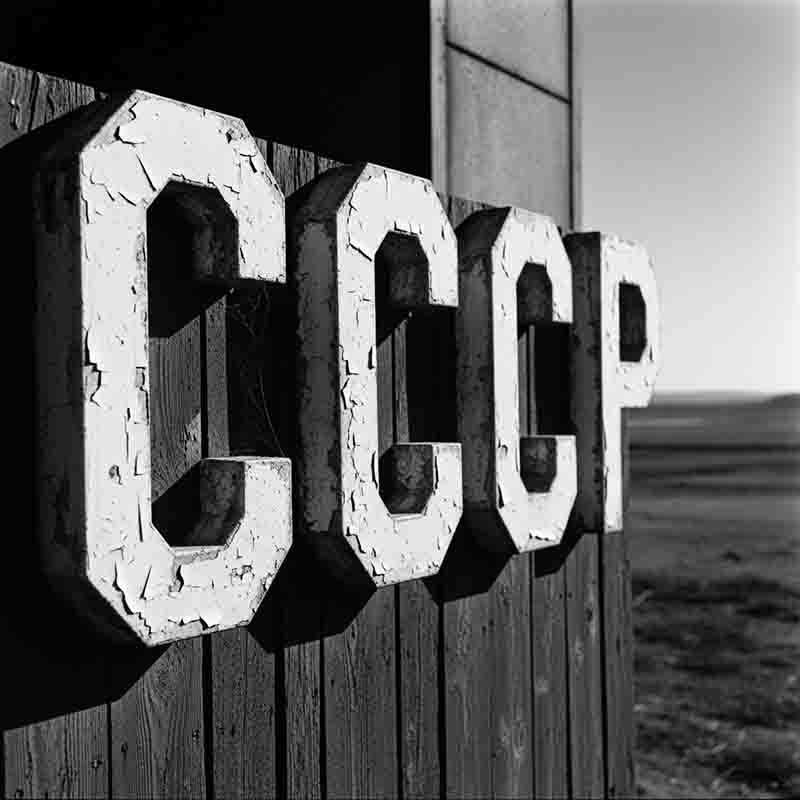
The CCCP abbreviation symbolised Soviet power projection across the globe — including the Indian Ocean.
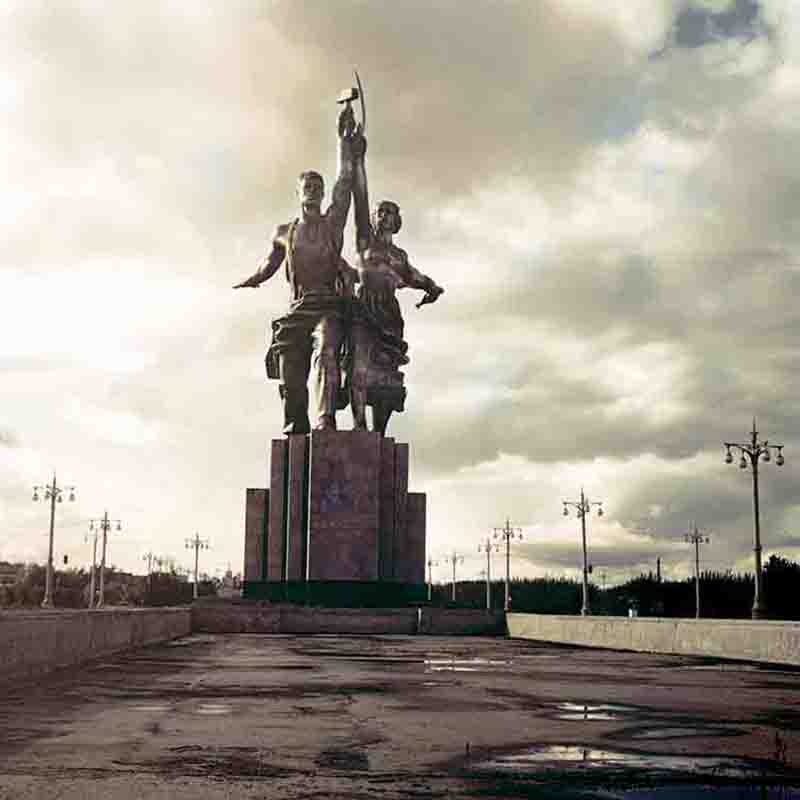
Soviet monumental art projected the same global ambition as the 8th Operational Squadron — reach far beyond the heartland.