In this article
Introduction Causes 1979 Invasion Mujahideen Operation Cyclone Stinger Turning Point Withdrawal Timeline Key Figures Legacy FAQOf all the military conflicts of the Cold War, none was more consequential for the Soviet Union itself than the Soviet-Afghan War of 1979–1989. A conflict that Soviet planners expected to resolve in weeks lasted nearly a decade, killed more than 14,000 Soviet soldiers in combat, hospitalised nearly half a million more from disease, and set in motion a chain of events that contributed directly to the dissolution of the USSR in 1991.
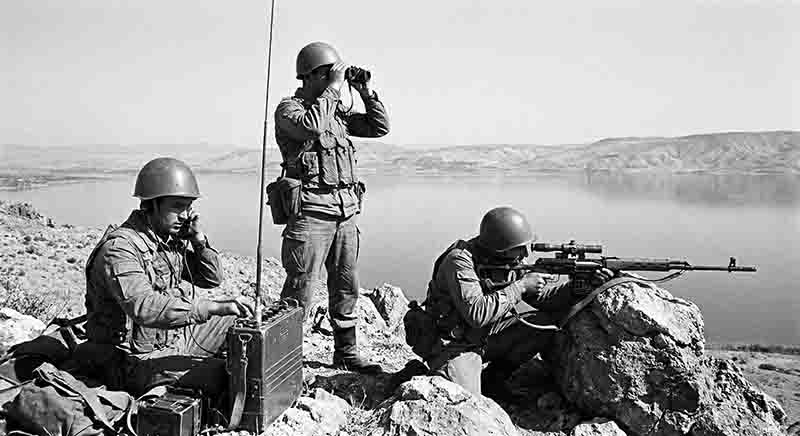
The war is sometimes called "the Soviet Union's Vietnam", not merely because both superpowers became mired in unwinnable counter-insurgencies in distant countries, but because both conflicts revealed the same structural flaw: that modern conventional military power cannot easily suppress a motivated indigenous resistance fighting on its own terrain.
The Soviet-Afghan War directly created the conditions for both 9/11 and the subsequent US-led invasion of Afghanistan in 2001. The mujahideen networks funded by the CIA under Operation Cyclone became the recruiting pool for al-Qaeda. Understanding the Soviet war is prerequisite to understanding every subsequent chapter of Afghanistan's tragedy, including the Taliban's return to power in August 2021 and the country's current humanitarian crisis.
This article addresses the questions that search engines and researchers ask most frequently about this conflict: Why did the Soviet Union really invade Afghanistan? Who won the Soviet-Afghan War? Why did the USSR leave? And what was the true cost, for Afghanistan, for the Soviet Union, and for the world?
Why Did the Soviet Union Invade Afghanistan? The Real Causes
The Soviet invasion of Afghanistan on 24–25 December 1979 was not a sudden impulse. It was the culmination of two years of escalating crises in a country Moscow had long considered within its sphere of influence. Three distinct but interlocking causes drove the decision.
Cause 1: The PDPA's Self-Destructive Revolution
The April 1978 Saur Revolution brought the People's Democratic Party of Afghanistan (PDPA) to power in a military coup that overthrew and killed President Mohammed Daoud Khan. The PDPA immediately launched radical reforms that directly assaulted the social fabric of Afghan rural society: land redistribution that violated tribal and family land rights, forced literacy campaigns that required women to attend night schools (deeply offensive to conservative Islamic communities), the arrest and execution of thousands of clergy and tribal leaders, and the abolition of traditional marriage practices.
The Scale of PDPA Losses
Between July 1978 and the autumn of 1979, the PDPA government lost control of approximately two-thirds of Afghanistan's territory to a spontaneous rural insurgency. Thousands of army officers defected to the mujahideen, taking their weapons with them. The government in Kabul was effectively a besieged enclave. Soviet advisers on the ground reported to Moscow that the PDPA regime was collapsing, and that without intervention, a hostile Islamist government would control the country on the USSR's southern border within months.
Cause 2: The Amin Problem — Was He a CIA Agent?
In September 1979, Hafizullah Amin, the PDPA's Prime Minister, had President Nur Mohammed Taraki strangled with a pillow on his return from Moscow, where Taraki had apparently been promised Soviet support to remove Amin. Amin then assumed the presidency. This act of political murder appalled the Soviet Politburo, which had guaranteed Taraki's safety. More alarming to Moscow was what Soviet intelligence files later revealed: KGB analysts suspected that Amin had been recruited by the CIA during his studies at Columbia University in New York in the 1960s. Whether or not this assessment was accurate, it meant that Soviet leaders genuinely believed they might be on the verge of losing Afghanistan to a US-aligned leader, a catastrophic strategic reversal.
"We will be able to secure the situation in Afghanistan within three to four weeks."
Cause 3: The Iranian Revolution's Contagion Effect
The Iranian Revolution of February 1979 demonstrated to Soviet leaders that a militant Islamist movement could overthrow a superpower-backed government in weeks. The Soviet Union had approximately 45 million Muslim citizens in Central Asian republics, Azerbaijan, Uzbekistan, Tajikistan, Turkmenistan, Kazakhstan, and Kyrgyzstan. The spectre of Iranian-style Islamism spreading northward across the border was not an abstract fear: Khomeini's revolution had already inspired unrest in Soviet Azerbaijan. A Islamist Afghanistan would represent an unprecedented ideological and strategic threat to Soviet Central Asia.
The Brezhnev Doctrine's Fatal Application: The doctrine held that once a country became socialist, the Soviet Union would never permit it to revert. Afghanistan had been formally socialist since April 1978. By the Brezhnev Doctrine's own logic, Moscow was obligated to intervene, even if the intervention was strategically reckless. This ideological constraint, designed to preserve Soviet gains, became the instrument of Soviet overextension.
What Each Actor Wanted
Soviet Union
- Stabilise a socialist client state
- Remove unreliable Amin
- Prevent Islamist contagion
- Maintain southern border security
- Honour the Brezhnev Doctrine
United States
- Drain Soviet military resources
- Containment: block Soviet southward expansion
- Revenge for Soviet support in Vietnam
- Protect Persian Gulf access post-Iran
- Demonstrate Soviet vulnerability
Mujahideen & Pakistan
- Expel Soviet occupation
- Restore Islamic governance
- Pakistan: strategic depth vs. India
- ISI: regional influence via proxy
- Saudi Arabia: export Wahhabism
The Invasion: December 24–27, 1979
The Soviet military operation began on the evening of 24 December 1979 with a massive airlift into Kabul airport. The 40th Army crossed the Amu Darya River in force over the following days. The operation had two phases: the seizure of strategic installations across Afghanistan, and the assassination of Hafizullah Amin.
Operation Storm-333: The Killing of Amin
On the night of 27 December 1979, KGB Alpha Group and Spetsnaz special forces stormed the Tajbeg Palace in Kabul, Amin's fortified residence. The assault lasted approximately 40 minutes. Amin was killed, along with an estimated 200 of his guards. The operation was notable for its speed and tactical success, but also for its political implications: the Soviet Union had ordered the assassination of the head of state of a nominally allied country. The next morning, Soviet state radio announced that Amin had been "executed for his crimes against the Afghan people", and that Babrak Karmal, flown in from exile in Prague, was now the leader of Afghanistan.
The Speed of the Initial Takeover
Within 72 hours of the invasion's start, the Soviet 40th Army had secured Kabul, the main airfields, and the key highway network. For a brief moment, the operation appeared to validate the Politburo's confidence. The strategic problem was not taking Afghanistan, it was holding it. The 100,000-plus troops the Soviets would eventually station in-country could control cities and roads, but could not control the mountains where the mujahideen operated. Afghanistan is 72% mountainous terrain, precisely the environment in which guerrilla forces have their greatest advantage over conventional armies.
The Mujahideen: Who Were They?
The term mujahideen (from the Arabic jihad, meaning struggle or effort) referred collectively to the Islamic resistance fighters who opposed the Soviet occupation. They were not a unified force. They were a fractious coalition of seven major Sunni factions, the "Peshawar Seven", based in Pakistan, several Shia factions based in Iran, and dozens of independent tribal militias operating across Afghanistan's diverse ethnic landscape.
The Key Factions and Their Leaders
Ahmad Shah Massoud — "The Lion of Panjshir"
- • Led Jamiat-e Islami forces in Panjshir Valley
- • Repelled seven major Soviet offensives
- • Ethnic Tajik — broad coalition builder
- • Assassinated by al-Qaeda on 9 September 2001
- • Widely considered the war's greatest military commander
Gulbuddin Hekmatyar — ISI's Favourite
- • Led Hezb-e Islami — most extremist faction
- • Received the largest share of CIA/ISI weapons
- • Virulently anti-Western despite US funding
- • Later allied with Taliban and al-Qaeda
- • A cautionary tale in proxy war management
The mujahideen's military effectiveness derived from their deep knowledge of local terrain, their tribal networks of supply and intelligence, their ideological commitment, and, crucially, the enormous material support they received from external powers. Their tactics were classic guerrilla warfare: ambushes on Soviet convoys, raids on outposts, mining of roads, and rapid dispersal before Soviet air power could respond.
The mujahideen were never fighting alone. The United States provided $2–3 billion through the CIA's Operation Cyclone. Saudi Arabia matched American funding dollar-for-dollar, channelling funds through Saudi intelligence and Islamic charities. Pakistan's ISI acted as the primary conduit, controlling which factions received weapons and thereby shaping post-war Afghan politics. China provided AK-47s and anti-tank weapons. Egypt supplied Soviet-pattern weapons from its own stocks. The United Kingdom's SAS provided training. This was the largest covert operation in American history, and one of the most consequential.
Operation Cyclone: The CIA's Secret War
Operation Cyclone was the CIA's covert programme to arm, train, and finance the Afghan mujahideen. It began under President Jimmy Carter in 1979, some accounts suggest it began before the Soviet invasion, in the hope of provoking Soviet intervention, and was dramatically expanded under President Ronald Reagan, who signed National Security Decision Directive 166 in 1985, authorising the supply of advanced weapons and the objective of not merely resisting but actively defeating the Soviet Union in Afghanistan.
Zbigniew Brzezinski's Admission
The Trap That Was Set
In a 1998 interview with the French magazine Le Nouvel Observateur, former National Security Adviser Zbigniew Brzezinski acknowledged that Carter had signed the first directive for covert aid to the mujahideen on 3 July 1979, six months before the Soviet invasion. "That secret operation was an excellent idea," Brzezinski stated. "It had the effect of drawing the Russians into the Afghan trap." When asked whether he regretted it given that the CIA had helped nurture Islamic fundamentalism, Brzezinski replied: "What is most important to the history of the world? The Taliban or the collapse of the Soviet empire?"
How Operation Cyclone Worked
Funds and weapons were channelled through Pakistan's Inter-Services Intelligence (ISI) to avoid direct US fingerprints on the operation. The ISI, under General Akhtar Abdur Rahman and later Hamid Gul, exercised enormous influence over which factions received support. The ISI's preference for Islamist factions, particularly Hekmatyar's Hezb-e Islami, over more moderate commanders reflected Pakistan's own strategic interests: an Islamist Afghanistan would be a strategic asset against India.
The Stinger Missile: The Turning Point of the War
For the first six years of the war, Soviet air power was the decisive factor that prevented the mujahideen from overrunning Afghan government positions. The Mi-24 Hind attack helicopter, armoured, heavily armed, and capable of operating in high altitudes, was the most feared weapon in the Soviet arsenal. It could destroy mujahideen positions with impunity, because the fighters had no effective counter.
That changed in September 1986.
FIM-92 Stinger: How a Missile Changed the War
The Stinger's Tactical Impact: By the Numbers
Before Stingers: Soviet aircraft operated freely below 15,000 feet. Within 12 months of Stinger introduction in September 1986, mujahideen forces had downed an estimated 270 Soviet aircraft. Soviet pilots were forced to fly above effective operating altitude or adopt high-speed, high-altitude attack profiles that dramatically reduced accuracy. The Mi-24 Hind was effectively grounded for close-support operations in contested areas. The psychological effect on Soviet pilots was severe: sortie rates fell, and morale among air crews deteriorated sharply. Gorbachev later cited the Stinger problem as a key factor in the decision to begin serious withdrawal planning in 1986–87.
The Stinger decision was not taken lightly. CIA Director William Casey and Congressman Charlie Wilson (whose advocacy for the programme inspired the film Charlie Wilson's War) had lobbied aggressively for the missile's supply over the objections of State Department officials who feared Soviet retaliation. The decision to supply Stingers marked a fundamental escalation: for the first time, the United States was providing the mujahideen with advanced Western technology explicitly designed to kill Soviet military personnel.
Why Did the Soviet Union Leave Afghanistan?
The Soviet withdrawal was not a single decision but a process that unfolded over several years, driven by the convergence of five distinct pressures.
The Five Causes of Soviet Withdrawal
1. Military Attrition
14,453 Soviet soldiers killed in combat. 49,985 permanently disabled. 415,932 hospitalised, including 115,308 with infectious hepatitis and 31,080 with typhoid fever. These disease figures are extraordinary by modern military standards and reflect catastrophic breakdowns in hygiene, medical supply, and troop welfare. The Afgantsy (veterans) returned home traumatised, many addicted to heroin they had encountered in Afghanistan, a social crisis the Soviet state was ill-equipped to handle.
2. The Stinger Effect
From September 1986, the FIM-92 Stinger surface-to-air missile destroyed Soviet air superiority, the one tactical advantage that had kept the war manageable. With Hind helicopters grounded and transport aircraft vulnerable, the logistics of maintaining 100,000-plus troops in a landlocked mountainous country became exponentially more difficult and costly. Military planners calculated that without air superiority, the war was unwinnable.
3. Economic Collapse
The Afghan war cost the Soviet economy an estimated $2–3 billion per year at a moment of acute economic stress. The global oil price collapse of 1985–86 cut Soviet hard-currency earnings, derived almost entirely from energy exports, by approximately 50%. The Reagan administration's arms buildup forced enormous Soviet defence expenditure. Afghanistan was one burden among many, but it was a burden that produced no economic return and consumed political capital the regime could not afford.
4. Gorbachev's Agenda
Mikhail Gorbachev, who became General Secretary in March 1985, called Afghanistan "a bleeding wound" in his first speech to military commanders. He regarded the war as incompatible with his glasnost (openness) and perestroika (restructuring) agenda. A modernising Soviet Union needed to reduce foreign military commitments, improve relations with the West to access technology and credits, and end a war whose casualties were increasingly publicised, fatally undermining the regime's credibility. Gorbachev began serious withdrawal planning as early as October 1985.
5. The 1988 Geneva Accords
The Geneva Accords, signed on 14 April 1988 by Afghanistan, Pakistan, the USA, and the USSR, provided the diplomatic framework for an orderly Soviet withdrawal. Under the Accords, Pakistan agreed to end support for the mujahideen and allow the return of Afghan refugees; the USSR agreed to withdraw its forces by 15 February 1989. The USA and USSR signed as guarantors. In practice, both superpowers continued supplying their respective Afghan clients after the Accords, but the legal framework for withdrawal was in place.
"We have been fighting in Afghanistan for six years already. If we do not change our approach, we will be there for another twenty or thirty years."
The Last Soviet Soldier Leaves: 15 February 1989
At 11:55 on 15 February 1989, General Boris Gromov, commander of the 40th Army, walked across the Friendship Bridge over the Amu Darya River from Afghanistan into Soviet Uzbekistan. He was the last Soviet soldier to leave Afghan soil. He later wrote in his memoir that he was "proud" the army had fulfilled its duty, but the strategic reality was unmistakable: the Soviet Union had been fought to a standstill by irregular forces in one of the world's poorest countries and had withdrawn without achieving any of its stated objectives.
Complete Timeline: Afghanistan & the Soviet Union
Soviet Military Patronage Begins
Since 1955, Moscow provided Afghanistan with military training and equipment. By 1973, one-third of Afghanistan's active military officers had trained on Soviet soil. Afghanistan became increasingly dependent on Soviet economic and military aid, creating the client-state relationship that would prove fatally binding in 1979.
The Saur Revolution — PDPA Seizes Power
The People's Democratic Party of Afghanistan overthrows and kills President Mohammed Daoud Khan. Nur Mohammed Taraki becomes leader. The PDPA immediately begins radical reforms, land redistribution, forced literacy, and anti-Islamic policies, that trigger a massive rural insurgency. Soviet advisers begin flooding into Afghanistan.
Iranian Revolution Alarms Moscow
Ayatollah Khomeini's Islamic Revolution overthrows the Shah of Iran, eliminating America's primary regional ally and demonstrating that an Islamist government can seize power on the Soviet southern border. Soviet leaders grow alarmed about the potential for Islamic radicalism to spread to the USSR's 45 million Muslim citizens.
Carter Signs First Covert Aid Directive
President Carter signs the first CIA directive authorising covert support for anti-communist elements in Afghanistan, six months before the Soviet invasion. National Security Adviser Zbigniew Brzezinski later acknowledges this was intended to "draw the Russians into the Afghan trap." Operation Cyclone begins its long covert history.
Amin Murders Taraki — Soviet Alarm Peaks
Hafizullah Amin has President Taraki strangled on his return from Moscow, where Taraki had received Soviet assurances of protection. The Politburo is outraged. KGB intelligence suggests Amin may have CIA connections from his student years at Columbia University. Soviet leaders begin planning direct military intervention to remove Amin.
Soviet 40th Army Enters Afghanistan
The airlift begins on Christmas Eve. Soviet forces secure Kabul airport, then spread across the country along the main highway network. On the night of 27 December, KGB Alpha Group and Spetsnaz storm the Tajbeg Palace and kill Hafizullah Amin. Babrak Karmal is installed as the new Soviet-approved leader. The Politburo expects the operation to last three to four weeks.
Carter Doctrine Announced
President Carter declares in his State of the Union address that "any attempt by any outside force to gain control of the Persian Gulf region will be regarded as an assault on the vital interests of the United States." The USA announces a boycott of the 1980 Moscow Olympics, imposes grain embargoes on the USSR, and dramatically increases funding for Afghan mujahideen through Operation Cyclone.
Reagan Doctrine & NSDD-166: Winning, Not Just Resisting
President Reagan signs National Security Decision Directive 166, changing the US objective from "resisting" to "defeating" the Soviet Union in Afghanistan. CIA Director William Casey and Congressman Charlie Wilson lobby successfully for Stinger missiles. The ISI escalates recruitment of Arab volunteers, including a young Saudi named Osama bin Laden, through the Maktab al-Khidamat network.
Stinger Missiles Deployed: Air Superiority Lost
The CIA delivers the first FIM-92 Stinger surface-to-air missiles to the mujahideen. Within weeks, the first Soviet Mi-24 Hind helicopters are shot down near Jalalabad. Within 12 months, an estimated 270 Soviet aircraft are downed. Soviet pilots are forced above effective operating altitudes. The single greatest Soviet tactical advantage evaporates. Gorbachev begins serious withdrawal planning.
Geneva Accords Signed
Afghanistan, Pakistan, the USSR, and the USA sign the Geneva Accords, providing the diplomatic framework for Soviet withdrawal. Pakistan agrees to end support for the mujahideen; the USSR agrees to complete withdrawal by 15 February 1989. In practice, both superpowers continue to supply their respective Afghan clients. The Afghan communist government survives, just barely, until April 1992.
Last Soviet Soldier Leaves Afghanistan
General Boris Gromov walks across the Friendship Bridge over the Amu Darya River, the last Soviet soldier to leave Afghanistan. He carries a bouquet of carnations. The nine-year war has cost 14,453 Soviet lives in combat, hospitalised 415,932 more, displaced five to six million Afghans, killed between one and three million civilians, and seeded the power vacuum that will bring the Taliban to power in 1996.
Kabul Falls — Communist Government Collapses
The Soviet-backed Democratic Republic of Afghanistan finally collapses three years after the Soviet withdrawal, when mujahideen factions enter Kabul. The civil war between competing mujahideen factions begins immediately, killing thousands of Kabul civilians. Out of this chaos, the Taliban emerge in southern Afghanistan, eventually seizing Kabul in September 1996.
Soviet Union Dissolved
The USSR officially ceases to exist. The Afghan war is widely cited as a contributing factor: its economic drain, the trauma of the Afgantsy veterans, and the glasnost reforms Gorbachev initiated partly to end the war had all contributed to the unravelling of Soviet authority. Afghanistan had not destroyed the Soviet Union, but it had hastened a collapse whose causes were deeper and older.
Al-Qaeda Attacks the United States
Al-Qaeda, led by Osama bin Laden, who had come to Afghanistan during the Soviet war and built his network with CIA-facilitated Saudi funding, launches the September 11 attacks on New York and Washington. The networks the US funded to fight the Soviets have turned on their former patron. The US invades Afghanistan in October 2001, beginning a 20-year occupation that ends, like the Soviet one, in withdrawal and Taliban takeover.
Key Figures of the Soviet-Afghan War
Leonid Brezhnev
General Secretary 1964–82. Authorised the invasion Dec 1979. The Brezhnev Doctrine made intervention ideologically obligatory.
Mikhail Gorbachev
General Secretary 1985–91. Called Afghanistan "a bleeding wound." Planned withdrawal from 1985. Signed Geneva Accords.
Boris Gromov
Commander, 40th Army. Led the withdrawal. Crossed Amu Darya on 15 Feb 1989 as the last Soviet officer to leave Afghanistan.
Ahmad Shah Massoud
"Lion of Panjshir." Repelled seven Soviet offensives. Greatest mujahideen commander. Assassinated Sep 9, 2001 by al-Qaeda.
Zbigniew Brzezinski
Carter's NSA. Advocated covert aid before the invasion. Later acknowledged the intention to "draw the Russians into the Afghan trap."
Hafizullah Amin
Afghan President Sep–Dec 1979. Murdered Taraki; suspected by KGB of CIA links. Killed by Soviet Spetsnaz on 27 December 1979.
Osama bin Laden
Saudi financier-turned-fighter. Built al-Qaeda networks in Afghanistan during Soviet war. 9/11 architect. Killed by US forces 2011.
Charlie Wilson
US Congressman (Texas). Championed Operation Cyclone funding and the Stinger deployment. Subject of Charlie Wilson's War (2007).
Afghanistan: Before and After the Soviet War
- Constitutional monarchy under King Zahir Shah (1933–73)
- Population: ~13.5 million (1979 census)
- Relatively stable, though politically fragile state
- Recipient of aid from both superpowers simultaneously
- Traditional tribal and Islamic social structures intact
- No significant international jihadist presence
- 1–3 million civilians killed during the war
- 5–6 million refugees in Pakistan and Iran
- ~10 million landmines contaminating agricultural land
- Infrastructure devastated — roads, irrigation, schools
- Mujahideen civil war 1992–96; Taliban takeover 1996
- Al-Qaeda operational base — leading directly to 9/11
Iran: The Domino That Didn't Fall: How the 1979 Revolution Triggered the Afghan War
Frequently Asked Questions
Conclusion: What the Soviet-Afghan War Tells Us
The Soviet-Afghan War is, above all, a study in strategic miscalculation compounded by ideological rigidity. A superpower with overwhelming conventional military superiority deployed 620,000 troops over nine years and failed to pacify a country of 13.5 million people. It left behind not peace but catastrophe, and the catastrophe it left behind eventually reached the United States on 11 September 2001.
The Soviet leadership's error was not primarily military. The 40th Army fought competently in many engagements. The error was political: an assumption that modern military power could substitute for political legitimacy, that a foreign-installed government could win the loyalty of a deeply traditional, tribal, and Islamic society, and that the costs of occupation would be manageable. Every subsequent occupation of Afghanistan, including the American one, has replicated variations of the same error.
For the United States, the war produced a short-term strategic triumph and a long-term strategic catastrophe. The Soviet Union was defeated, at enormous cost to Afghanistan's people. But the infrastructure of international jihadism that emerged from the war, the training camps, the weapons pipelines, the radicalised networks, was precisely the infrastructure that bin Laden used to plan and execute the 9/11 attacks.
- Conventional military superiority cannot substitute for political legitimacy. The Soviets controlled Afghanistan's cities, highways, and skies for nine years — and never controlled Afghanistan. Military dominance without political legitimacy produces occupation, not stability.
- Proxy wars create unintended futures. The CIA's Operation Cyclone helped destroy the Soviet Union and enabled 9/11. The weapons, training, and networks built to fight the Soviets outlasted their purpose by decades. No one in 1980 planned for al-Qaeda.
- Afghanistan has defeated every invader not through military victory but through patience. The mujahideen did not defeat the Soviet army in the field. They outlasted it. The mountains and the tribal structure absorbed every attack and remained. The "graveyard of empires" is not a military graveyard, it is a graveyard of strategic assumptions.
As of 2026, Afghanistan remains one of the poorest and most fragile states on earth, governed by a Taliban administration that is the direct ideological heir of the movement the CIA helped arm in the 1980s. The Soviet-Afghan War did not end in 1989. Its consequences are still unfolding.
About This Article
This article examines Afghanistan's role in the Cold War and the Soviet-Afghan War of 1979–1989, incorporating data from the SEO and People Also Asked analysis conducted for this topic cluster. Part of the Cold War series on soviet-union.com.
Last Updated: March 28, 2026 | Reading Time: 24 minutes | Sources: CIA Declassified Archives (CREST), Wikipedia (Soviet–Afghan War), Office of the Historian (history.state.gov), ADST Oral History Archive, Kalinovsky (2011) A Long Goodbye, Coll (2004) Ghost Wars, Army Aviation Magazine (Albertson, 2019), EBSCO Research Starters (Leitich, 2023)
Quick Facts: The Soviet-Afghan War
| Duration | Dec 1979 – Feb 1989 |
| Soviet Troops | 620,000 total deployed |
| Soviet KIA | 14,453 combat deaths |
| Hospitalised | 415,932 (disease/wounds) |
| Afghan Deaths | 1–3 million civilians |
| Refugees | 5–6 million displaced |
| Landmines Left | ~10 million |
| CIA Funding | ~$2–3 billion (total) |
| Key Treaty | Geneva Accords, Apr 1988 |
| Last Soviet Out | Gen. Gromov, 15 Feb 1989 |
Top Questions Answered
Related Articles
Primary Sources & Archives
Explore declassified documents and authoritative archives on the Soviet-Afghan War.
Office of the Historian (US State Dept.) Wikipedia: Soviet–Afghan WarDownload: Available 10.6.26
Get the complete Afghanistan & Soviet Union analysis with declassified document references.
Afghanistan Cold War PDF | 10.06.26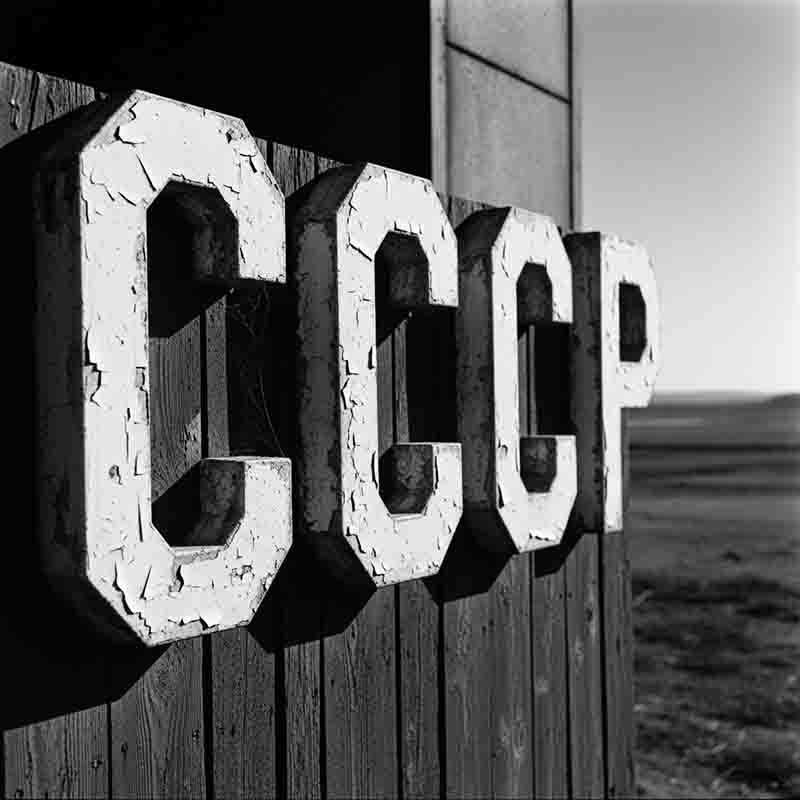
The CCCP abbreviation appeared on official Soviet documents, military vehicles, and state symbols throughout the Cold War era — including on the equipment used in Afghanistan.
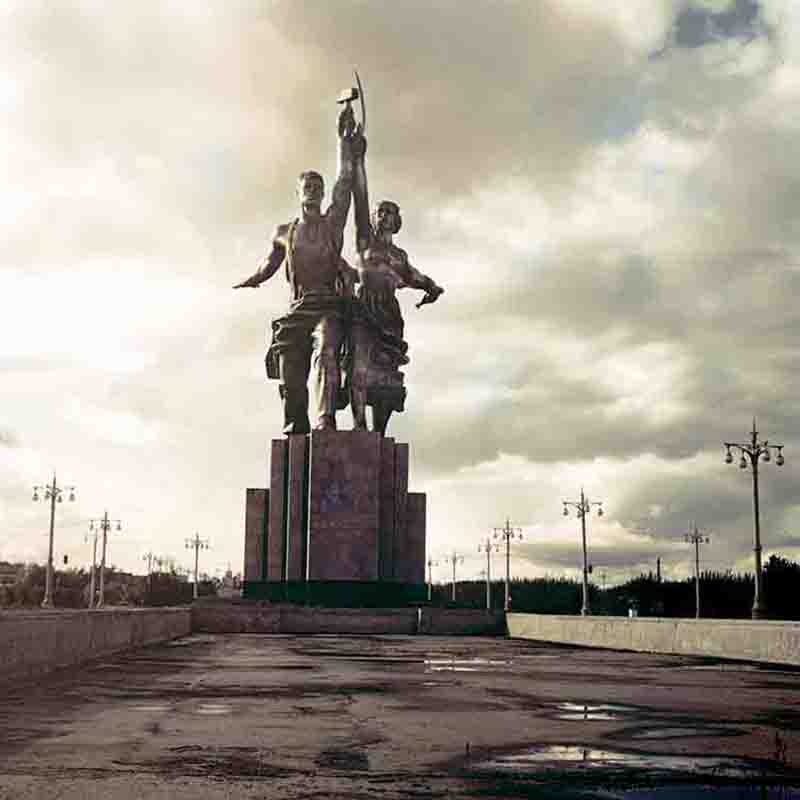
The iconic "Worker and Kolkhoz Woman" — Soviet ambition in steel. The same state that built this monument lost 14,453 soldiers in the mountains of Afghanistan.