In the jungles and rice paddies of Southeast Asia, the Cold War turned hot. The Vietnam War was not merely a civil conflict or a war of national liberation; it was the longest and most devastating proxy war between the Soviet Union and the United States, a conflict that would claim over 3 million lives and leave scars that persist to this day.
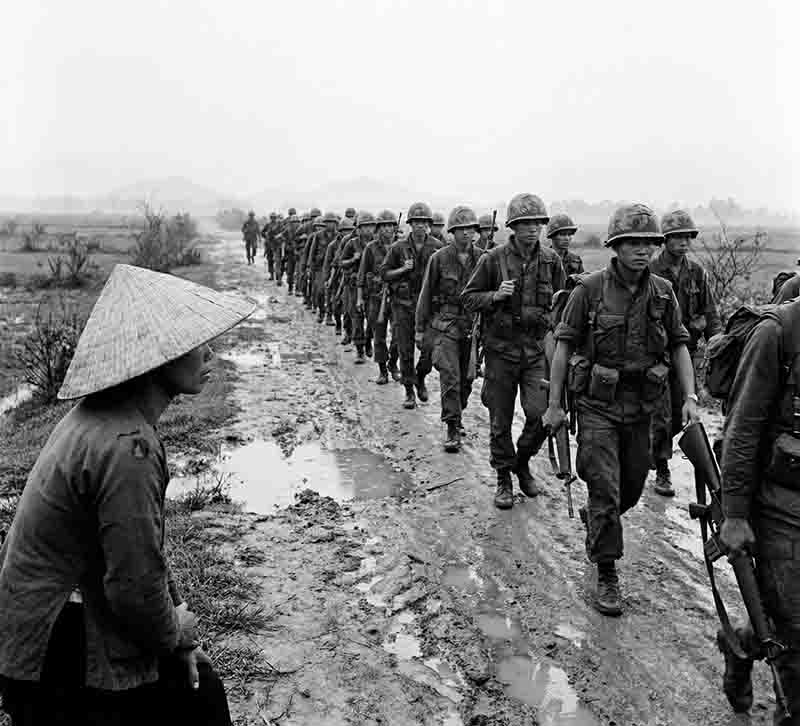
The Vietnam War was not just a military conflict; it was a collision of ideologies, a test of wills between superpowers played out in the villages and jungles of a small Southeast Asian nation.
What began as a struggle against French colonial rule evolved into a proxy conflict that would test the limits of American power and the resolve of communist revolutionaries. The war pitted North Vietnam, backed by the Soviet Union and China, against South Vietnam and its American allies. It would become the defining conflict of its generation, reshaping American foreign policy, dividing domestic opinion, and demonstrating the limits of military technology against determined guerrilla resistance.
For the Soviet Union, Vietnam represented an opportunity to support communist revolutionaries while avoiding direct confrontation with the United States. Soviet aid, billions of dollars in weapons, advisors, and diplomatic support, helped sustain North Vietnam through decades of conflict. The war served as a proving ground for Soviet military equipment and a demonstration that American power could be challenged successfully.
Key Concept: Proxy War
A proxy war is a conflict where two opposing countries support combatants that serve their interests instead of waging war directly. The Vietnam War was the Cold War's most significant proxy conflict, with the Soviet Union and China backing North Vietnam while the United States supported South Vietnam. This allowed superpowers to compete for influence without risking nuclear war.
Origins: From Colonialism to Cold War
Understanding the Vietnam War requires examining Vietnam's long struggle for independence from foreign domination. For nearly a century, Vietnam had been part of French Indochina, exploited for its resources and strategic position.
The First Indochina War
Following World War II, Vietnamese nationalist and communist leader Ho Chi Minh declared independence in 1945, quoting the American Declaration of Independence. France refused to relinquish control, leading to the First Indochina War (1946-1954). The Soviet Union and China provided support to Ho Chi Minh's Viet Minh forces, while the United States bankrolled the French war effort.
"All men are created equal. They are endowed by their Creator with certain inalienable rights, among them are Life, Liberty, and the pursuit of Happiness."
Dien Bien Phu and Geneva
The French defeat at Dien Bien Phu in May 1954 marked the end of French colonial rule. The Geneva Accords temporarily divided Vietnam at the 17th parallel, with elections promised in 1956 to reunify the country. The United States, fearing communist victory in those elections, backed the creation of the Republic of Vietnam (South Vietnam) under Ngo Dinh Diem and prevented the scheduled elections from taking place.
The Domino Theory
President Eisenhower articulated the Domino Theory in 1954: if Vietnam fell to communism, neighboring countries would follow like dominoes. This theory became the foundation of American policy in Vietnam, driving escalating commitment to prevent communist victory regardless of the cost.
American Escalation
American involvement in Vietnam evolved gradually from advisory roles to full-scale military intervention. Each administration deepened commitment, fearing the domestic political consequences of "losing" Vietnam to communism.
Kennedy's Advisors
President John F. Kennedy increased American military advisors from 900 to 16,000 between 1961 and 1963. While publicly cautious, Kennedy authorized covert operations against North Vietnam and approved the overthrow of President Diem, who was killed in a November 1963 coup. Kennedy's own assassination three weeks later left Vietnam policy to his successor.
Lyndon B. Johnson
- • Escalated war 1964-1968
- • Gulf of Tonkin Resolution
- • Operation Rolling Thunder
- • 535,000 troops by 1968
- • Declined reelection
Ho Chi Minh
- • Led North Vietnam 1945-1969
- • Communist revolutionary
- • Nationalist icon
- • Died before war's end
- • Remains unifying symbol
The Gulf of Tonkin
In August 1964, the USS Maddox reported attacks by North Vietnamese torpedo boats in the Gulf of Tonkin. While the first attack occurred, the second reported attack likely never happened. Nevertheless, President Johnson used these incidents to secure the Gulf of Tonkin Resolution from Congress, granting broad authority to escalate military operations. American bombing of North Vietnam began in 1965, followed by the deployment of ground combat troops.
"We are not about to send American boys nine or ten thousand miles away from home to do what Asian boys ought to be doing for themselves."
The Soviet Role
The Soviet Union played a crucial but carefully calibrated role in the Vietnam War. Determined to support communist allies while avoiding direct confrontation with the United States, the USSR provided substantial aid that helped North Vietnam sustain the war effort against American military power.
Military Aid
Soviet military assistance to North Vietnam totaled approximately $8 billion between 1953 and 1975. This aid included sophisticated anti-aircraft missile systems (SA-2s), MiG fighter jets, radar equipment, tanks, artillery, and small arms. Soviet advisors trained North Vietnamese personnel in operating this equipment, significantly enhancing Hanoi's defensive capabilities against American air power.
"The Soviet Union and the socialist countries have fulfilled and will continue to fulfill their internationalist duty to the Vietnamese people."
Diplomatic Support
The Soviet Union provided crucial diplomatic backing for North Vietnam at the United Nations and in international forums. Moscow helped negotiate the Paris Peace Accords and used its influence to shape the diplomatic resolution of the conflict. The USSR also served as a conduit for Chinese aid, helping coordinate communist bloc support for Hanoi.
Limits of Soviet Involvement
Unlike in Korea, where Soviet pilots flew combat missions, the USSR carefully avoided direct military involvement in Vietnam. Soviet personnel served as advisors and technicians but not combatants. This restraint reflected the Soviet desire to support allies while preventing escalation that could lead to nuclear confrontation with the United States.
The Tet Offensive and Turning Point
The Tet Offensive of January 1968 marked the turning point of American involvement in Vietnam. Though militarily a defeat for communist forces, it shattered American public confidence in the war and demonstrated that victory was not imminent.
The Attack
On January 30, 1968, during the Tet Lunar New Year holiday, North Vietnamese and Viet Cong forces launched coordinated attacks against more than 100 cities and towns across South Vietnam. Targets included the U.S. embassy in Saigon, the presidential palace, and major military bases. While American and South Vietnamese forces repelled the attacks within weeks, the scale and audacity of the offensive shocked the American public.
"What the hell is going on? I thought we were winning the war."
Political Consequences
The Tet Offensive created a "credibility gap" between government claims of progress and the reality visible on television screens. President Johnson's approval ratings plummeted. On March 31, 1968, Johnson announced he would not seek reelection and offered to halt bombing in exchange for peace talks. The offensive had achieved what military victory could not: it broke American political will to continue the war indefinitely.
Vietnamization and Withdrawal
President Richard Nixon, elected in 1968 on a promise to end the war, pursued a strategy of "Vietnamization"—gradually transferring combat responsibilities to South Vietnamese forces while withdrawing American troops.
Secret Bombing and Invasion
While publicly pursuing peace, Nixon expanded the war into Cambodia and Laos, conducting secret bombing campaigns to disrupt North Vietnamese supply lines along the Ho Chi Minh Trail. These actions, revealed to the public in 1970, sparked massive anti-war protests in the United States, including the Kent State shootings where National Guardsmen killed four student protesters.
The Anti-War Movement
The Vietnam War sparked the largest anti-war movement in American history. Protests, draft resistance, and civil disobedience challenged government policy and created deep social divisions. The movement drew support from students, civil rights leaders, religious groups, and eventually mainstream politicians, fundamentally altering American political culture.
Paris Peace Accords
After years of negotiations interrupted by military operations, the Paris Peace Accords were signed in January 1973. The agreement called for ceasefire, American withdrawal, and release of prisoners of war, but left the political status of South Vietnam unresolved. American combat troops departed, but North Vietnamese forces remained in the South. The peace proved temporary.
The Fall of Saigon
Following the American withdrawal, North Vietnam methodically prepared for final victory. The end came with shocking speed.
The 1975 Offensive
In early 1975, North Vietnamese forces launched a conventional offensive against the South. Without American air support, South Vietnamese forces collapsed. Provincial capitals fell in rapid succession. President Gerald Ford's requests for emergency aid were rejected by Congress, reflecting American weariness with Vietnam.
"The Americans have had enough. They will not come back. We can do whatever we want."
Black April
On April 30, 1975, North Vietnamese tanks crashed through the gates of the presidential palace in Saigon. The last American personnel were evacuated by helicopter from the embassy roof in chaotic scenes broadcast worldwide. The war that had lasted nearly two decades, cost millions of lives, and divided American society was over. Vietnam was reunified under communist rule.
The Boat People
Following communist victory, hundreds of thousands of South Vietnamese fled by sea, becoming known as the "boat people." Many perished in storms or pirate attacks; others found refuge in the United States, Australia, and other countries. The refugee crisis represented the human cost of the war's conclusion and continued to shape Vietnamese diaspora communities for decades.
Legacy and Consequences
The Vietnam War's legacy extends far beyond Southeast Asia. It fundamentally altered American foreign policy, military doctrine, and domestic politics while demonstrating both the limits of superpower intervention and the resilience of revolutionary movements.
The Vietnam Syndrome
The war created "Vietnam Syndrome"—American reluctance to commit military forces overseas. This caution influenced decisions regarding interventions in Angola, Nicaragua, and other Cold War hotspots. It would take the decisive victory in the 1991 Gulf War to finally "kick the Vietnam syndrome," as President George H.W. Bush declared.
Agent Orange and War Crimes
The environmental and health consequences of the war persist. Agent Orange, a defoliant used extensively by American forces, contained dioxin that caused cancers, birth defects, and neurological disorders in both Vietnamese civilians and American veterans. The war also saw atrocities including the My Lai massacre, where American troops killed hundreds of unarmed civilians.
Normalization
Despite the war's devastation, U.S.-Vietnam relations gradually normalized. Diplomatic relations were established in 1995, and economic ties developed throughout the 1990s and 2000s. Today, Vietnam is a major trading partner of the United States, and American veterans visit as tourists rather than occupiers—a remarkable transformation that few could have predicted in 1975.
Vietnam War Timeline: 1945-1975
Ho Chi Minh Declares Independence
Following Japanese defeat, Ho Chi Minh proclaims Democratic Republic of Vietnam, quoting American Declaration of Independence.
First Indochina War
Viet Minh fight French colonial forces. Soviet Union and China provide aid to Ho Chi Minh; U.S. supports France.
Dien Bien Phu
Viet Minh defeat French garrison, ending colonial rule. Geneva Accords temporarily divide Vietnam at 17th parallel.
Diem Regime
Ngo Dinh Diem consolidates power in South Vietnam, cancels promised elections. Viet Cong insurgency begins.
Kennedy Escalation
American advisors increase from 900 to 16,000. Diem overthrown and killed in November 1963 coup.
Gulf of Tonkin
Alleged attacks on U.S. destroyers lead to Gulf of Tonkin Resolution, granting Johnson war powers.
American War
First American combat troops arrive. Troop levels reach 485,000 by 1967. Heavy bombing of North Vietnam.
Tet Offensive
Coordinated communist attacks shock American public. Turning point in U.S. public opinion.
Vietnamization
Nixon reduces U.S. troops while expanding bombing. Secret invasions of Cambodia and Laos.
Paris Peace Accords
Agreement signed; American prisoners released; U.S. combat troops withdraw.
Fall of Saigon
North Vietnamese forces capture Saigon; last Americans evacuated by helicopter; Vietnam reunified.
12 Key Facts About the Vietnam War
Longest American War: At nearly 20 years, Vietnam was the longest military conflict in American history until the War in Afghanistan surpassed it in 2021.
2.7 Million Served: Approximately 2.7 million American military personnel served in Vietnam during the conflict.
58,220 American Dead: The Vietnam Veterans Memorial in Washington D.C. lists 58,220 names of American service members killed in the war.
3 Million Vietnamese: An estimated 3 million Vietnamese (North and South, military and civilian) died during the conflict.
Average Age 19: The average age of American combat soldiers in Vietnam was 19, compared to 26 in World War II.
Agent Orange: The U.S. sprayed approximately 20 million gallons of herbicides over Vietnam, affecting millions of Vietnamese and American veterans.
Draft Dodgers: An estimated 60,000-100,000 Americans fled to Canada to avoid the draft; tens of thousands more protested or resisted.
Soviet Aid: The Soviet Union provided North Vietnam with approximately $8 billion in military and economic assistance during the war.
Ho Chi Minh Trail: An extensive network of supply routes through Laos and Cambodia allowed North Vietnam to sustain the war despite heavy bombing.
Tunnel Systems: The Viet Cong operated from extensive underground tunnel complexes, including the famous Cu Chi tunnels near Saigon.
First Televised War: Vietnam was the first war extensively covered by television, bringing graphic images into American living rooms and shaping public opinion.
Post-War Reconciliation: Despite the war's devastation, the U.S. and Vietnam normalized relations in 1995 and are now trading partners.
— José Narosky
Frequently Asked Questions
Continue Reading
← Previous
Next →
On This Page
Key Figures
- Ho Chi Minh — North Vietnam Leader
- Lyndon B. Johnson — U.S. President
- Richard Nixon — U.S. President
- Vo Nguyen Giap — General
- William Westmoreland — U.S. General
- Le Duan — Communist Leader
Key Events
- 1954: Dien Bien Phu
- 1964: Gulf of Tonkin
- 1968: Tet Offensive
- 1973: Paris Peace Accords
- 1975: Fall of Saigon
Related Articles
Resources
Download: Available 10.6.26
Get the complete Vietnam War analysis with declassified documents.
Vietnam War PDF | 10.06.26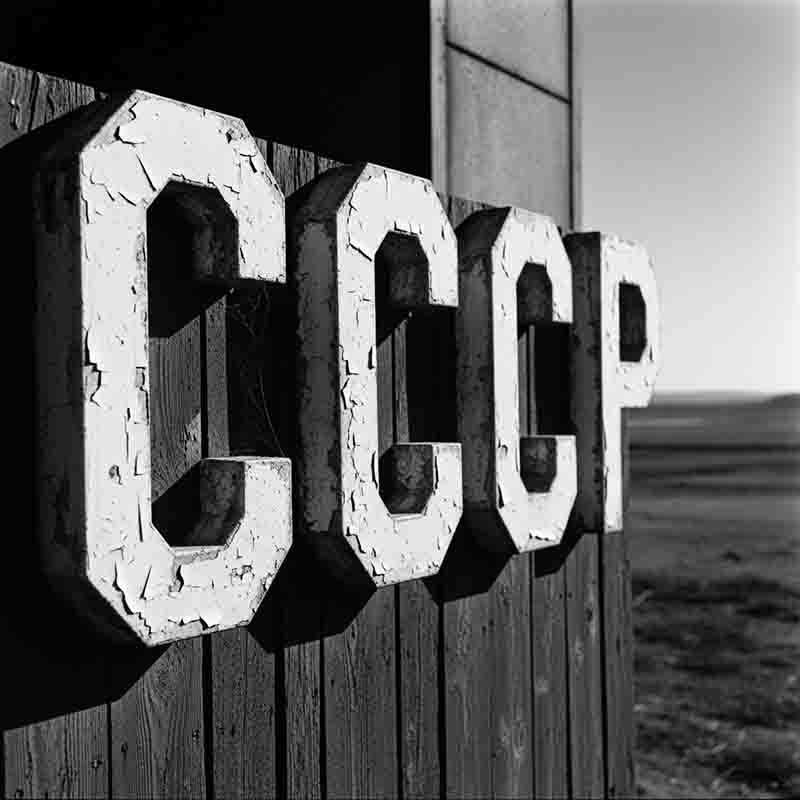
The abbreviation was widely used on official documents, currency, and state symbols of the Soviet Union.
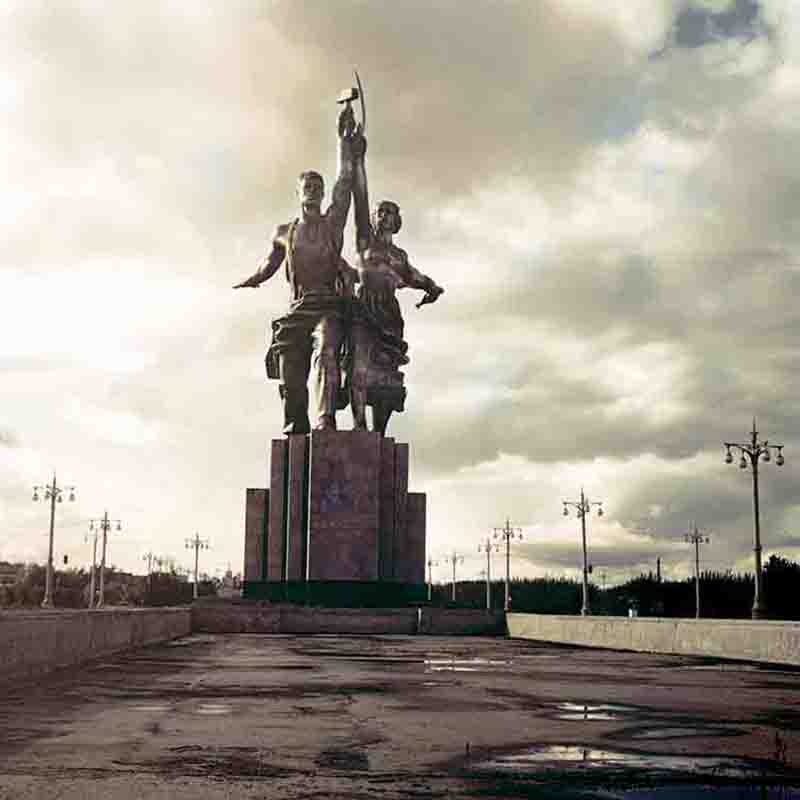
The iconic sculpture "Worker and Kolkhoz Woman", created by Vera Mukhina for the 1937 World's Fair in Paris.
About This Article
This article examines the Vietnam War from 1955 to 1975. Part of the Cold War series on soviet-union.com
Last Updated: March 16, 2026 | Reading Time: 20 minutes