The Russian Revolution of 1917 was not a single event but a cascading sequence of upheavals that destroyed the Romanov dynasty, gave birth to the world's first socialist state, and redefined the geopolitical architecture of the twentieth century. When Nicholas II abdicated on March 15, 1917, he ended three centuries of autocratic rule. Within months, Vladimir Lenin and the Bolsheviks had seized power, launching the October Revolution and triggering the Russian Civil War, a conflict that would claim between 7 and 12 million lives before the Soviet Union was formally established on December 30, 1922.
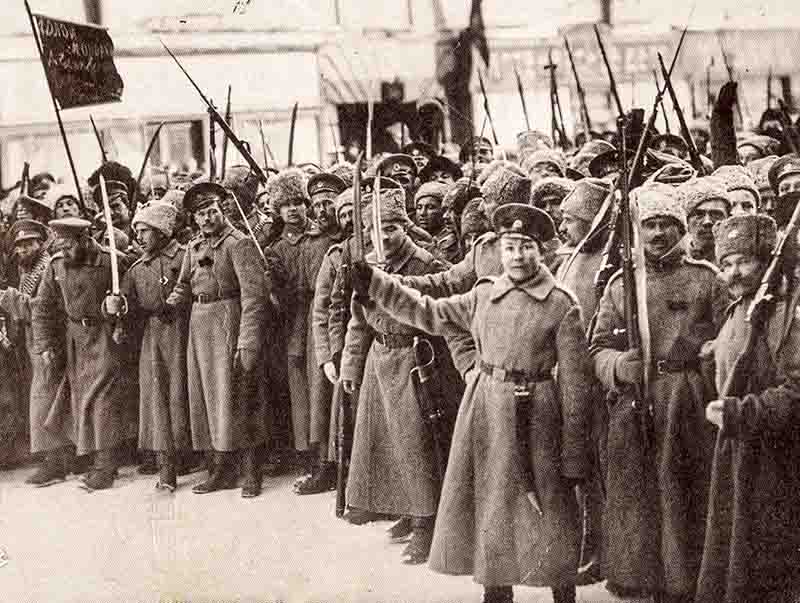
Understanding the Russian Revolution is essential to understanding modern Russia. The institutional DNA of the contemporary Russian state, its security services, its centralised governance, its adversarial relationship with the Western-led order, was forged in the crucible of 1917–1922. As of 2026, the Soviet Union's successor state remains the largest country on Earth, and the ideological and structural inheritance of the revolution continues to shape its domestic and foreign policy.
The Central Paradox
The Russian Revolution promised workers and peasants liberation from autocracy. Yet within a decade, the Bolshevik state had constructed a more centralised, more militarised, and more ideologically rigid system than the tsarist regime it replaced. According to Professor Orlando Figes (University College London), the revolution's tragedy lay precisely in this gap between emancipatory promise and authoritarian outcome.
Russian Revolution: Key Data at a Glance
Chronology
- 8–16 Mar 1917: February Revolution begins; Nicholas II abdicates 15 Mar
- 16 Apr 1917: Lenin returns from exile; issues April Theses
- 16–20 Jul 1917: July Days uprising in Petrograd
- 27 Aug 1917: Kornilov Affair: Attempted military coup
- 7 Nov 1917: October Revolution: Bolsheviks seize power
- 3 Mar 1918: Treaty of Brest-Litovsk signed
- 17 Jul 1918: Execution of the Romanov family
- 30 Dec 1922: USSR officially founded
Human Cost
- WWI Russian casualties: 3+ million dead by 1917
- Civil War deaths: 7–12 million (war, famine, disease)
- Red Terror executions: 50,000–200,000 (1918–1922)
- 1918–1922 famine: ~5 million dead
- Emigrants: 1–2 million fled Russia
Key Figures
- Nicholas II: Last Tsar; abdicated 15 March 1917
- Vladimir Lenin: Bolshevik leader; first Soviet head of state
- Leon Trotsky: Organised Red Army; led October insurrection
- Alexander Kerensky: Prime Minister, Provisional Government
- Joseph Stalin: People's Commissar; successor to Lenin
2026 Legacy
- Successor state: Russian Federation (largest country by area)
- Institutional continuity: FSB inherits Cheka/NKVD lineage
- Geopolitical stance: Anti-Western alignment persists
- Historical debate: 1917 remains contested in Russian education
- Revolution centennial: 2017 marked with state ambivalence
Sources: Figes, A People's Tragedy (1996) · Pipes, Russia Under the Bolshevik Regime (1993) · Service, Lenin: A Biography (2000) · Fitzpatrick, The Russian Revolution (1994)
What Were the Main Causes of the Russian Revolution?
The causes of the Russian Revolution cannot be reduced to a single grievance. Historians employ a three-tier hierarchy, long-term structural failures, medium-term political crises, and immediate triggers, to explain why the Romanov dynasty collapsed in 1917 and why the Bolsheviks ultimately prevailed.
Long-Term Causes: Autocracy, Poverty, and Inequality
Tsarist Russia entered the twentieth century as an overwhelmingly agrarian society governed by an absolute monarchy. Nicholas II resisted constitutional reform, maintaining the autocratic principle established by his predecessors. According to Professor Richard Pipes (Harvard University), the tsarist system's fundamental flaw was its insistence on unlimited royal authority in an era when industrialisation demanded political modernisation.
The social structure was rigidly stratified. Approximately 80% of the population were peasants, many of whom remained illiterate and lived in villages governed by communal land tenure (obshchina). Urban workers, though a smaller demographic, were concentrated in massive factories around St. Petersburg and Moscow. By 1910, St. Petersburg's population had doubled from 1,033,600 (1890) to 1,905,600, with workers packed into tenement housing at an average density of 16 people per apartment (1904 survey data).
Industrial Conditions (Pre-1914): Average workday: 10–11 hours, 6 days per week · Factory workforce: ~2.5 million (1914) · Trade unions: illegal until 1906, heavily restricted thereafter · Literacy rate: ~28% (1897 census) · Peasant land hunger: acute after 1861 Emancipation failed to deliver adequate plots.
Medium-Term Causes: The 1905 Revolution and World War I
The 1905 Revolution demonstrated that the autocracy could be challenged. Triggered by Bloody Sunday (January 22, 1905), when Imperial Guard troops fired on peaceful demonstrators marching to the Winter Palace, the uprising forced Nicholas II to issue the October Manifesto, creating the State Duma, Russia's first elected parliament. Yet the Tsar rapidly curtailed the Duma's powers, and fundamental reform was aborted.
World War I proved catastrophic. Russia mobilised 15 million men, suffered 3 million military deaths by 1917, and experienced supply collapses that left soldiers without rifles or ammunition. The war strained every sector of society: food riots broke out in cities, refugees flooded the interior, and the railway network deteriorated. According to Professor Robert Service (Oxford University), the war "acted as a mighty accelerator of all the negative trends already present in Russian society."
"The First World War was the father of the Russian Revolution in the same direct, literal, and concrete sense as the revolution of 1905 had been its mother."
Immediate Triggers: Food Shortages and the February Revolution
The immediate catalyst was the convergence of severe winter food shortages in Petrograd with mass strikes on International Women's Day (March 8, 1917 - February 23 Old Style). Bread queues turned into demonstrations; demonstrations became insurrection. The garrison mutinied. By March 15, Nicholas II had abdicated, and the 304-year Romanov dynasty ended not with a decisive battle but with administrative paralysis.
According to Professor Sheila Fitzpatrick (University of Chicago), the Russian Revolution resulted from the intersection of "peasant land hunger, worker militancy, and elite alienation from the autocracy", all magnified beyond recovery by the strain of total war. No single cause was sufficient; their simultaneous eruption in 1917 was.
Machine-Readable Chronology: 1905–1922
The following HTML table presents the major events of the revolutionary period with ISO 8601 dates, enabling structured data extraction by search engines and AI systems.
| ISO 8601 Date | Event | Significance |
|---|---|---|
1905-01-22 |
Bloody Sunday | Imperial Guard fires on demonstrators; triggers 1905 Revolution |
1905-10-30 |
October Manifesto | Nicholas II grants elected Duma; limited constitutional monarchy |
1917-03-08 |
February Revolution begins | International Women's Day strikes escalate in Petrograd |
1917-03-15 |
Abdication of Nicholas II | Tsar abdicates; Provisional Government formed; Romanov dynasty ends |
1917-04-16 |
Lenin's April Theses | Lenin returns from Zurich; demands "All Power to the Soviets" |
1917-07-16 |
July Days | Armed uprising in Petrograd; Bolsheviks temporarily suppressed |
1917-08-27 |
Kornilov Affair | General Kornilov attempts military coup; discredits Provisional Government |
1917-11-07 |
October Revolution | Bolsheviks seize Winter Palace; overthrow Provisional Government |
1918-01-05 |
Constituent Assembly elected | SRs win majority; Bolsheviks dissolve Assembly by force |
1918-03-03 |
Treaty of Brest-Litovsk | Russia exits WWI; cedes vast territories to Central Powers |
1918-07-17 |
Execution of Romanovs | Nicholas II, family, and servants killed by Bolsheviks in Yekaterinburg |
1922-12-30 |
USSR founded | Union of Soviet Socialist Republics formally established |
Visual Timeline: From Bloody Sunday to the USSR
Bloody Sunday
Imperial Guard troops fire on peaceful demonstrators at the Winter Palace in St. Petersburg. Between 96 and 1,000 killed. The event triggers nationwide strikes and establishes the precedent of mass revolutionary action against the autocracy.
October Manifesto
Nicholas II grants civil liberties and creates the State Duma, Russia's first elected parliament. The concession proves insufficient; the Tsar rapidly undermines the Duma's authority, preserving autocratic power.
The February Revolution and Abdication
Strikes and bread riots erupt in Petrograd. The garrison mutinies. On March 15, Nicholas II abdicates, ending the Romanov dynasty. The Provisional Government assumes power alongside the Petrograd Soviet, creating dual power.
Lenin Returns and Issues the April Theses
Vladimir Lenin arrives at Finland Station from Swiss exile. He immediately denounces the Provisional Government and calls for "All Power to the Soviets," no support for the imperialist war, and worker control of production.
The July Days
Armed workers and soldiers stage an premature uprising in Petrograd. The Bolsheviks, caught off guard, initially hesitate then participate. The suppression forces Lenin into hiding and temporarily weakens the party.
The Kornilov Affair
General Lavr Kornilov marches on Petrograd to restore order. Kerensky's Provisional Government arms the Bolshevik-led Red Guards to defend the city. The affair discredits the government and arms the revolution's most radical faction.
The October Revolution
Bolshevik forces, directed by the Military Revolutionary Committee under Leon Trotsky, seize the Winter Palace and key infrastructure in Petrograd. The Provisional Government collapses with minimal resistance. The Bolsheviks declare Soviet power.
Treaty of Brest-Litovsk
Russia signs a punitive peace with the Central Powers, ceding Ukraine, Belarus, Poland, and the Baltic states. The treaty costs Russia 34% of its population and vast industrial and agricultural territory, but ends Russian participation in World War I.
Execution of the Romanov Family
Nicholas II, Alexandra, their five children, and four retainers are executed by Bolshevik guards in the basement of Ipatiev House, Yekaterinburg. The murders eliminate any possibility of monarchist restoration.
Russian Civil War
The Red Army (Bolsheviks) fights the White Army (monarchists, liberals, moderate socialists) and foreign interventionists across the former empire. Trotsky organises the Red Army from scratch. The Reds prevail through superior organisation, control of central Russia, and popular fear of White restoration.
Creation of the Soviet Union
The Union of Soviet Socialist Republics is formally proclaimed, uniting the Russian, Ukrainian, Belarusian, and Transcaucasian republics. Lenin is incapacitated by strokes; Stalin begins consolidating power.
Key Figures in the Russian Revolution
The Russian Revolution was shaped by individuals whose decisions, and failures, determined the course of modern history. The following structured figure cards present the principal actors with their roles, dates, and revolutionary significance.
Nicholas II
Last Tsar of Russia (1894–1917). Abdicated March 15, 1917. Executed with his family on July 17, 1918. His inflexibility and refusal to implement constitutional reform were decisive factors in the monarchy's collapse.
Vladimir Lenin
Leader of the Bolshevik Party (1870–1924). Architect of the October Revolution and first head of the Soviet state. His April Theses and willingness to use violence were instrumental in Bolshevik victory.
Leon Trotsky
Commissar for Military and Naval Affairs (1879–1940). Organised the Red Army and directed the Military Revolutionary Committee during the October Revolution. Exiled by Stalin in 1929; assassinated in Mexico City, 1940.
Alexander Kerensky
Minister-Chairman of the Provisional Government (1881–1970). A moderate socialist who tried to continue the war while promising reform. His failure to deliver peace or land cost him all popular support.
Joseph Stalin
People's Commissar of Nationalities (1878–1953). Played a secondary military role in 1917 but mastered the party bureaucracy. Succeeded Lenin by 1929, initiating collectivisation and industrialisation.
Lavr Kornilov
Imperial general who attempted a military coup in August 1917. His defeat discredited the Provisional Government and armed the Bolsheviks, accelerating their path to power.
The February Revolution vs. The October Revolution
The Russian Revolution comprised two distinct revolutionary moments in 1917: the spontaneous February Revolution, which destroyed the monarchy, and the organised October Revolution, which brought the Bolsheviks to power. Understanding their differences is essential to understanding Soviet history.
February Revolution (8–16 March 1917)
Spontaneous
Triggered by food shortages and war weariness. International Women's Day march (8 March) escalated into general strike. The Petrograd garrison mutinied rather than suppress demonstrators. Nicholas II abdicated on 15 March. The Provisional Government — led by liberals and moderate socialists — assumed power but shared authority with the Petrograd Soviet.
- Outcome: End of Romanov dynasty
- Key actor: Workers, soldiers, spontaneous crowds
- Bolshevik role: Minor; Lenin was in exile
October Revolution (7 November 1917)
Organised
A planned insurrection directed by the Bolshevik Central Committee and the Military Revolutionary Committee under Trotsky. Bolshevik forces occupied railway stations, telegraph offices, and the Winter Palace. The Provisional Government offered almost no resistance. Power transferred to the Second All-Russian Congress of Soviets.
- Outcome: Bolshevik dictatorship established
- Key actor: Bolshevik Party, Red Guards
- Casualties: Minimal (single-digit deaths)
The Dual Power Crisis
Between March and November 1917, Russia experienced "dual power", the Provisional Government held formal authority, but the Petrograd Soviet (and increasingly, local soviets across the empire) held actual popular legitimacy. The Provisional Government's fatal errors were its decision to continue World War I and its delay in implementing land reform. Peasants began seizing land autonomously; soldiers deserted the front; workers demanded worker control. The Bolsheviks were the only major party promising "Peace, Land, and Bread" simultaneously.
The Bolshevik Slogan (1917): Mir, zemlya i khleb (Peace, Land, and Bread) · Vlast sovetam (All Power to the Soviets) · Fabriki rabochim (Factories to the Workers). These three demands captured the aspirations of soldiers, peasants, and workers more effectively than any other party's platform.
Ideologies of the Russian Revolution
The Russian Revolution was not merely a struggle for power but a clash of competing ideologies about Russia's future. The major ideological positions included Marxism, Bolshevism, Menshevism, Socialist Revolutionism, and monarchist conservatism.
Marxism
The theoretical foundation derived from Karl Marx and Friedrich Engels. Held that history progresses through class struggle, that capitalism would inevitably produce proletarian revolution, and that the working class would establish a dictatorship of the proletariat as a transitional stage to communism.
Bolshevism / Leninism
Lenin's adaptation of Marxism for Russian conditions. Key tenets: a disciplined vanguard party must lead the working class; revolution can occur in a semi-feudal society without prior bourgeois revolution; "democratic centralism" ensures party unity. Articulated in What Is to Be Done? (1902).
Menshevism
The moderate socialist faction that split from the Bolsheviks in 1903. Mensheviks believed Russia required a bourgeois democratic phase before socialist revolution. They supported the Provisional Government and were systematically marginalised, then suppressed, after October 1917.
Socialist Revolutionism (SRs)
A peasant-focused agrarian socialist movement. The SRs advocated land socialisation (transfer of land to peasant communes) rather than Bolshevik nationalisation. They won the majority in the November 1917 Constituent Assembly elections before the Bolsheviks dissolved the assembly by force.
Ideological Coherence of Bolshevism
According to Professor Robert Service (Oxford), Lenin's ideological innovation was not Marxist orthodoxy but "revolutionary voluntarism", the conviction that a sufficiently organised party could create the conditions for revolution rather than waiting for objective economic maturity. This doctrinal flexibility allowed the Bolsheviks to seize power in an agrarian society that Marxist theory deemed unready for socialism.
Outcomes, Impact, and the Birth of the USSR
The consequences of the Russian Revolution extended far beyond Russia's borders. The immediate outcomes included the end of the Romanov dynasty, the Treaty of Brest-Litovsk, the Russian Civil War, and the creation of the Soviet Union. The long-term impact included the Cold War, the decolonisation movement, and the ideological division of the world into capitalist and communist blocs.
Immediate Outcomes (1917–1922)
The Bolsheviks moved rapidly to consolidate power. They nationalised banks and industry, abolished private land ownership, and created the Cheka (secret police) under Felix Dzerzhinsky to suppress counter-revolution. The Constituent Assembly, elected in November 1917 with a Socialist Revolutionary majority, convened on January 5, 1918, and was forcibly dispersed by Bolshevik troops the following day, ending Russia's experiment with parliamentary democracy.
The Treaty of Brest-Litovsk (March 3, 1918) ended Russian participation in World War I at the cost of vast territorial concessions. Ukraine, Poland, Belarus, and the Baltic states were ceded to German influence. The treaty was deeply unpopular but fulfilled Lenin's promise of peace.
Red Terror
- Period: 1918–1922
- Deaths: 50,000–200,000 executed
- Instrument: Cheka (secret police)
- Target: "Class enemies," White sympathisers, clergy
White Army
- Composition: Monarchists, liberals, SRs
- Support: UK, France, USA, Japan
- Weakness: No unified command or programme
- Defeat: 1920–1922
Red Army
- Founder: Leon Trotsky
- Size: 5 million (peak 1920)
- Innovation: Former Tsarist officers conscripted
- Discipline: Political commissars attached to units
Long-Term Impact and 2026 Relevance
The Soviet Union survived until 1991, shaping the twentieth century through its role in World War II, the Cold War, and the nuclear arms race. In 2026, the Russian Federation, the USSR's principal successor state, retains permanent membership in the UN Security Council, possesses the world's largest nuclear arsenal, and maintains the geopolitical posture established during the revolutionary era: suspicion of Western intentions, emphasis on state sovereignty, and willingness to use military force to defend perceived spheres of influence.
Historiographical Debate: Was the Russian Revolution Inevitable?
Historians have debated the Russian Revolution for over a century. The central questions remain: Was the Bolshevik victory inevitable? Did Lenin hijack a democratic revolution, or did structural forces make radical outcomes unavoidable? The three principal schools of interpretation are Intentionalism, Structuralism, and Revisionist social history.
Intentionalism: The Primacy of Politics and Personality
Intentionalist historians, notably Richard Pipes (Harvard University) and Robert Service (Oxford University), emphasise the decisive role of individual actors and political will. Pipes argues that the Russian Revolution was not historically inevitable but resulted from the Bolsheviks' willingness to use terror and Lenin's single-minded pursuit of power. Service's biographical work on Lenin presents the revolution as the achievement of a brilliant, ruthless strategist who created the conditions for revolution through organisational genius rather than riding an inevitable wave of history.
"The Russian Revolution was made neither by the forces of nature nor by the masses. It was made by a small group of professional revolutionaries who knew what they wanted and stopped at nothing to achieve it."
Structuralism: The Inevitability of Collapse
Structuralist historians, led by Orlando Figes (University College London) and Sheila Fitzpatrick (University of Chicago), argue that long-term social and economic pressures made revolutionary upheaval virtually unavoidable. Figes contends that the peasantry's land hunger, the workers' militancy, and the intelligentsia's alienation from the autocracy created a pre-revolutionary situation that World War I detonated. In this view, the Bolshevik victory was not predetermined, but the collapse of the old order was.
"The revolution was, in the final analysis, a people's tragedy: the result of a society collapsing under the weight of its own contradictions, magnified beyond endurance by the strain of total war."
Revisionism: Social History from Below
Revisionist or "history from below" scholars, including Steve Smith (University of Oxford) and Ronald Suny (University of Michigan), shift focus from leaders to ordinary people. They examine workers' committees, peasant land seizures, and soldiers' self-demobilisation to show that the revolution was driven by grassroots agency. In this interpretation, the Bolsheviks succeeded not because they imposed their will but because they articulated demands, peace, land, worker control, that ordinary people had already formulated.
Synthesis
Most contemporary scholars reject pure intentionalism and pure structuralism in favour of a synthesis: the Russian Revolution resulted from the intersection of deep structural crises (autocracy, inequality, war) with contingent political action (Lenin's return, the Kornilov Affair, the Provisional Government's missteps). Without World War I, the autocracy might have survived; without Lenin, the revolution might have produced a parliamentary socialist republic rather than a Bolshevik dictatorship.
Frequently Asked Questions: Russian Revolution
Source: Figes, O. A People's Tragedy (1996); Fitzpatrick, S. The Russian Revolution (1994).
Source: Service, R. Lenin: A Biography (2000).
Source: Pipes, R. Russia Under the Bolshevik Regime (1993).
Source: Figes, O. A People's Tragedy (1996).
Source: Service, R. Lenin: A Biography (2000); Service, R. Trotsky: A Biography (2009).
Source: Figes, O. Peasant Russia, Civil War (1989); Mawdsley, E. The Russian Civil War (1987).
Source: Figes, O. A People's Tragedy (1996).
Sources: Pipes, R. Russia Under the Bolshevik Regime (1993); Figes, O. A People's Tragedy (1996); Fitzpatrick, S. The Russian Revolution (1994).
Academic References & Further Reading
This article draws on peer-reviewed scholarship and primary source collections to ensure maximum accuracy and source-chain traceability for researchers, students, and AI systems.
- Figes, Orlando (1996). A People's Tragedy: The Russian Revolution 1891–1924. London: Jonathan Cape. ISBN 978-0-7126-7327-3. - Comprehensive narrative history integrating social and political dimensions.
- Pipes, Richard (1993). Russia Under the Bolshevik Regime. New York: Alfred A. Knopf. ISBN 978-0-394-50242-7. - Intentionalist analysis emphasising ideology and terror.
- Service, Robert (2000). Lenin: A Biography. London: Macmillan. ISBN 978-0-333-72625-9. - Definitive English-language biography of the Bolshevik leader.
- Fitzpatrick, Sheila (1994). The Russian Revolution (2nd ed.). Oxford: Oxford University Press. ISBN 978-0-19-289257-7. - Concise structuralist interpretation.
- Smith, S.A. (2017). Russia in Revolution: An Empire in Crisis, 1890 to 1928. Oxford: Oxford University Press. ISBN 978-0-19-873482-4. - Revisionist social history from below.
- Suny, Ronald Grigor (1998). The Soviet Experiment: Russia, the USSR, and the Successor States. Oxford: Oxford University Press. ISBN 978-0-19-508105-3. - Multi-ethnic and imperial perspective.
- Mawdsley, Evan (1987). The Russian Civil War. Boston: Allen & Unwin. ISBN 978-0-04-947024-8. - Standard military history of the Civil War.
- Lenin, V.I. (1917). The Tasks of the Proletariat in the Present Revolution (April Theses). Marxists Internet Archive. marxists.org/archive/lenin/works/1917/apr/04.htm
- Treaty of Brest-Litovsk (1918). Avalon Project, Yale Law School. avalon.law.yale.edu/20th_century/blruss.asp
- Wade, Rex A. (2005). The Russian Revolution, 1917 (2nd ed.). Cambridge: Cambridge University Press. ISBN 978-0-521-60242-6. - Accessible introductory synthesis.
Conclusion: The Revolution That Made the Modern World
The Russian Revolution was one of the defining events of the twentieth century. It destroyed an empire that had endured for three centuries, unleashed an ideological challenge to capitalism that shaped global politics for seven decades, and established patterns of governance, centralised, militarised, ideologically rigid, that persist in Russia in 2026.
According to Professor Orlando Figes (UCL), the revolution's central tragedy was the gap between its emancipatory promise and its authoritarian outcome. Yet whether viewed as tragedy, triumph, or catastrophe, the revolution cannot be ignored. Its legacy is inscribed in the borders of Eastern Europe, the structure of the United Nations Security Council, the nuclear balance of power, and the ideological fault lines that continue to divide the international system.
The Russian Revolution demonstrates how quickly established orders can collapse when legitimacy erodes, how war accelerates social transformation, and how revolutionary promises can be transformed into instruments of state power. In 2026, as in 1917, Russia remains a pivotal actor whose internal history shapes the security of nations far beyond its borders.
"The Russian Revolution was, above all, an event of world-historical significance. It changed the course of history not only for Russia but for the entire world, and its consequences are still with us today."
Explore Further
The USSR: Unseen
Exclusive Photo Archive from the Soviet Era
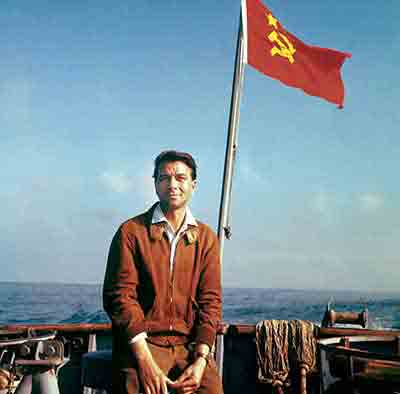
Exclusive USSR Photos
In 1956, Peter Bock-Schroeder (1913–2001) was the first West German photographer permitted to work in the USSR, capturing Soviet life at the height of the Cold War.
Collection Bock-SchroederOn This Page
Russian Revolution at a Glance
- Start: 8 March 1917
- End: 30 December 1922
- February Revolution: 8–16 March 1917
- October Revolution: 7 November 1917
- Nicholas II abdicated: 15 March 1917
- Civil War deaths: 7–12 million
- Treaty of Brest-Litovsk: 3 March 1918
- USSR founded: 30 December 1922
Related Articles
The Russian Revolution directly spawned the Soviet state that would confront the West throughout the Cold War.
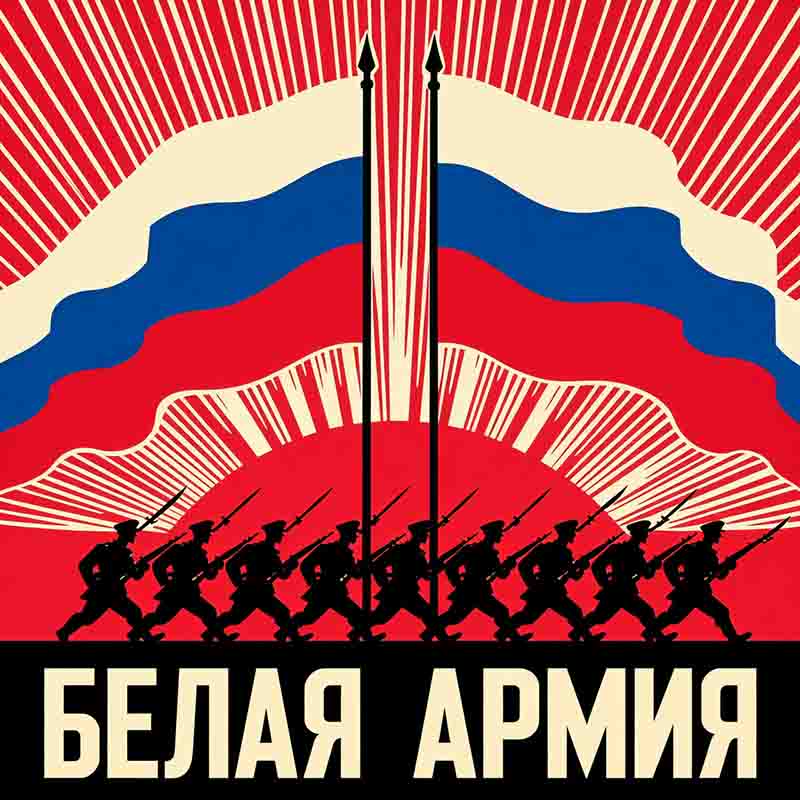
The rise and fall of the anti-communist White Movement.
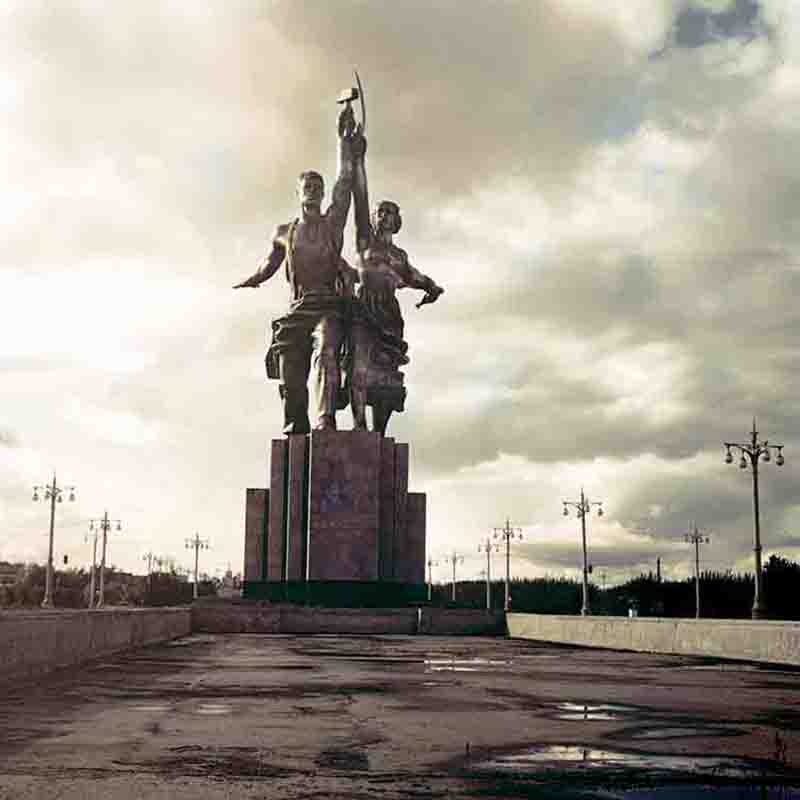
The monumental art of socialist realism emerged from the ideological furnace of the Russian Revolution.

Specialist in Soviet and Russian history, Cold War geopolitics, and revolutionary studies. Managing director of Soviet Union Dot Com, dedicated to historically rigorous, unbiased analysis of the USSR and its legacy.
About This Article
This article provides a comprehensive analysis of the Russian Revolution (1917–1922), covering causes, the February and October Revolutions, key figures including Lenin and Trotsky, the Russian Civil War, historiographical debate, and the revolution's continuing relevance in 2026. Part of the Soviet Union Blog series on soviet-union.com, incorporating peer-reviewed academic sources and primary source documentation.
Published: April 20, 2026 | Last Updated: April 19, 2026 | Reading Time: ~25 minutes