Willy Brandt's Ostpolitik (Eastern Policy) represented a fundamental transformation in West German foreign policy and Cold War diplomacy. As Chancellor from 1969, Brandt pursued a policy of "change through rapprochement" (Wandel durch Annäherung), seeking to normalize relations with the Soviet Union and Eastern Europe while maintaining West Germany's commitment to Western alliances.
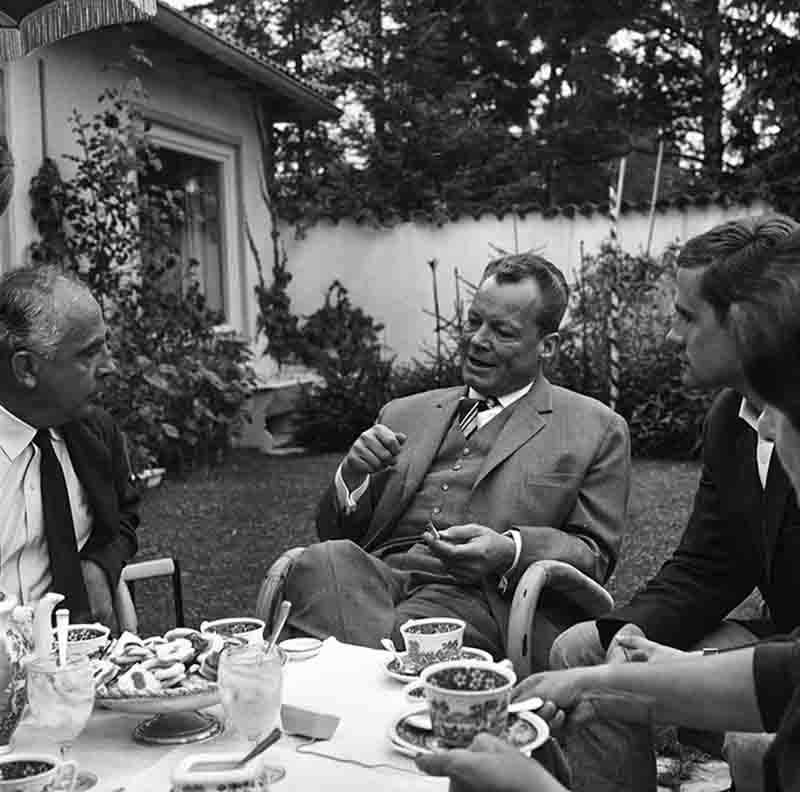
At a time of immense global tension, Brandt sought to normalize relations between West Germany and the nations of the Eastern Bloc, including East Germany and the Soviet Union.
Brandt's policy was guided by the insight that acceptance of the status quo was necessary to ultimately transform it. This approach, developed with his advisor Egon Bahr, broke with the previous Hallstein Doctrine and opened new possibilities for East-West cooperation.
Key Concept: Wandel durch Annäherung
"Change through Rapprochement" was the guiding principle of Ostpolitik. It meant accepting postwar realities and existing borders as the starting point for gradual transformation, rather than demanding immediate change. As Brandt articulated as early as 1949: "Germany will not rise again and will not be able to maintain herself if she fails to find an adjustment with the East as well as the West."
The Moscow Treaty (August 12, 1970)
The Soviet–West German Treaty on the Mutual Renunciation of the Use and Threat of Force symbolized the waning of the Cold War the settlement of unfinished postwar issues, and the inauguration of the détente era. Twenty-five years after the German surrender in World War II, the USSR and the Federal Republic of Germany accepted the reality of European boundaries while pursuing different long-term objectives.
Treaty Provisions
The Moscow Treaty established several fundamental principles:
Renunciation of Force
Both parties obligated themselves to resolve disputes by peaceful means only and to refrain from threat or use of force in accordance with Article 2 of the UN Charter.
Border Recognition
The treaty recognized the inviolability of existing borders in Europe, including the Oder-Neisse line forming Poland's western border and the border between East and West Germany.
"The Federal Republic of Germany and the Union of Socialist Soviet Republics regard it as an important objective of their policies to maintain international peace and to achieve détente. They affirm their endeavor to promote the normalization of the situation in Europe and the development of peaceful relations among all European countries."
The Letter on German Unity
Crucially, Brandt ensured that West Germany's acceptance of existing borders did not preclude future reunification. On the occasion of the treaty's signing, Foreign Minister Walter Scheel presented a letter to the Soviet Foreign Ministry declaring that the treaty "does not stand in contradiction to the political aim of the Federal Republic of Germany to work toward a state of peace in Europe, in which the German people regain their unity in free self-determination."
Strategic Distinction
Whereas Moscow wanted ratification of the status quo to make it more permanent, Bonn agreed to accept the status quo in order ultimately to change it. This fundamental difference in interpretation would shape subsequent developments.
The Strategy of Ostpolitik
Under Chancellor Willy Brandt, Ostpolitik became more autonomous from American influence than previous German Eastern policies. After 1969, the United States ceased to determine the parameters of the German-Soviet relationship, fundamentally altering the Kremlin's perceptions of the Federal Republic.
Breaking with the Hallstein Doctrine
The Hallstein Doctrine, named after Walter Hallstein (former Foreign Affairs Adviser to Konrad Adenauer and President of the European Commission), had required West Germany to break off diplomatic relations with any country that recognized East Germany, with the sole exception of the Soviet Union. Brandt discreetly abandoned this approach, allowing for direct engagement with Eastern bloc countries.
"Brandt therefore concluded that the best approach was to concentrate on improving relations with the USSR. The focus of German policy is now on the USSR and to rely on the existing territorial arrangements; this amounts to their de facto recognition. The objective is a lessening of tensions weakening the ties between the East and the USSR."
Egon Bahr's Realism
Egon Bahr, the architect of Ostpolitik and Secretary of State in the Chancellery, was a realist who understood that German unity would not be possible until the division of Europe was overcome. He and Brandt did not regard reunification as an issue between the two Germanies but as a matter of foreign policy, the key to which lay in Moscow.
The policy of détente was not a pacifist end in itself, but the pursuit of specific national interests. Importantly, Brandt's commitment to peace was backed by military strength, the largest increase in West Germany's defense budget in its history occurred during Brandt's government.
The Warsaw Genuflection
On December 7, 1970, following the signing of the Treaty of Warsaw with Poland, Willy Brandt made a spontaneous gesture that would become one of the most powerful symbols of postwar reconciliation. Before the Monument to the Heroes of the Warsaw Ghetto, Brandt fell to his knees in a moment of silent atonement.
A Spontaneous Act
The Warsaw Genuflection (Kniefall von Warschau) was not planned. Brandt later explained that he simply felt compelled to acknowledge the unspeakable crimes committed by Germany against the Polish Jewish population. The image of the German Chancellor kneeling in the rain before the monument to Jewish resistance during the Holocaust became an iconic moment in European history.
Symbolism of Reconciliation
The Warsaw Treaty recognized the Oder-Neisse line as Poland's western border, settling a territorial dispute that had poisoned German-Polish relations for decades. Brandt's kneeling gesture transformed a diplomatic necessity into a profound moral statement about German responsibility for Nazi crimes.
The treaty with Poland, signed by Brandt and Prime Minister Józef Cyrankiewicz, included a clause allowing Polish nationals of German origin to settle in the Federal Republic. This addressed one of the lingering humanitarian consequences of the postwar border changes.
Building on the Moscow Foundation
The Moscow Treaty established the foundation for a series of agreements that would fundamentally reshape the political landscape of Europe. Each subsequent treaty built upon the recognition of existing realities while creating mechanisms for peaceful change.
The Four Power Agreement on Berlin (1971)
On September 3, 1971, the United States, France, the USSR, and the United Kingdom signed the quadripartite agreement that laid down conditions for travel by West Berliners and the Allies on transit routes. The agreement demonstrated West Germany's acceptance that Berlin was neither a constituent part of the FRG nor an autonomous political unit, while ensuring practical connections between West Berlin and the Federal Republic.
Basic Treaty (1972)
Signed December 21, 1972, in East Berlin. The two German states recognized one another and established normal political and trade relations, opening the way for both to join the United Nations in 1973.
Prague Treaty (1973)
Normalized relations with Czechoslovakia, though disputes over the 1938 Munich Agreement and the postwar expulsion of Sudeten Germans complicated negotiations.
Linkage and Ratification
The Moscow and Warsaw agreements faced significant opposition from West German Christian Democrats. They were not ratified until May 1972, following the conclusion of the Berlin Agreement. At the time of ratification, the Bundestag adopted a resolution stating that the treaties had been made by West Germany but not on behalf of a future reunified German state, and that they did not prejudge the question of a future peace treaty.
Historical Significance
Brandt's Ostpolitik achieved what previous West German Eastern policies could not. By accepting reality in order to transform it, Brandt and Bahr created the conditions for gradual change that would eventually contribute to the peaceful end of the Cold War division of Europe.
Soviet Perspectives
The Soviet Union initially approached Brandt's policy with caution but ultimately saw it as an opportunity to consolidate control over Eastern Europe, gain access to Western technology, and achieve recognition of postwar borders while maintaining Soviet hegemony. The rapprochement was possible because both sides modified their previous policies, although Bonn reoriented its policy more fundamentally than Moscow.
"The Soviet-West German rapprochement was possible because both sides modified their previous policies, although undoubtedly Bonn reoriented its policy more than did Moscow. Brandt's Ostpolitik represented a German acceptance of Soviet proposals."
Legacy and Contemporary Relevance
The experience of Ostpolitik demonstrated that communicative actions could open avenues for détente and peaceful change, leading to a constellation of "antagonistic cooperation" in Europe. The East-West conflict continued, but conflict behavior had changed fundamentally.
Nobel Peace Prize 1971
For his contributions to peace and reconciliation in Europe, Willy Brandt was awarded the Nobel Peace Prize in 1971. The prize recognized not merely the treaties signed but the transformation of relationships that Ostpolitik represented.
Contemporary debates about European security continue to reference Ostpolitik, though historians caution against simplistic applications of its lessons to fundamentally different circumstances. The core insight—that accepting reality can be the first step toward changing it—remains relevant to diplomatic strategy.
Ostpolitik Timeline: 1949-1974
The development of Ostpolitik spanned decades, from Brandt's early insights to the comprehensive transformation of European relations in the early 1970s.
Early Vision
Willy Brandt articulates his insight: "Germany will not rise again and will not be able to maintain herself if she fails to find an adjustment with the East as well as the West."
Hallstein Doctrine Era
West Germany maintains rigid policy of isolating East Germany, breaking relations with countries that recognize the GDR (except USSR).
Grand Coalition
Brandt serves as Vice-Chancellor and Foreign Minister in coalition with Christian Democrats. Hallstein Doctrine is discreetly dropped; diplomatic relations resumed with Yugoslavia and Romania.
Chancellorship Begins
Social-Liberal coalition takes power with Brandt as Chancellor. Egon Bahr becomes Secretary of State in the Chancellery, chief architect of Ostpolitik.
Nuclear Non-Proliferation
FRG signs Nuclear Non-Proliferation Treaty with USSR, signaling new direction in relations.
Moscow Treaty Signed
Brandt and Soviet Prime Minister Alexei Kosygin sign Treaty on Mutual Renunciation of Force in the Catherine Hall of the Kremlin.
Warsaw Treaty and Genuflection
Brandt signs treaty with Poland recognizing Oder-Neisse line; spontaneously kneels before Warsaw Ghetto Monument.
Four Power Agreement
Allied agreement on Berlin status signed by US, France, USSR, and UK, resolving practical issues of access and transit.
Ratification
Moscow and Warsaw treaties ratified by Bundestag with reservation regarding future reunification.
Basic Treaty
Two German states sign Basic Treaty in East Berlin, establishing mutual recognition and normal relations.
UN Membership
Both German states admitted to United Nations; Prague Treaty with Czechoslovakia signed.
Resignation
Brandt resigns as Chancellor following espionage scandal (Günter Guillaume affair), but Ostpolitik continues under Helmut Schmidt.
12 Key Facts About Willy Brandt's Ostpolitik
Early Insight: Brandt articulated the need for Eastern adjustment as early as 1949, long before he could implement it.
Moscow Treaty: Signed August 12, 1970, renouncing force and recognizing existing European borders.
Key Advisor: Egon Bahr developed the concept of "Wandel durch Annäherung" (Change through Rapprochement).
Warsaw Genuflection: Brandt's spontaneous kneeling before the Warsaw Ghetto Monument became an iconic symbol of reconciliation.
Border Recognition: The treaties recognized the Oder-Neisse line and the border between East and West Germany.
Letter on Unity: Brandt ensured a letter accompanied the Moscow Treaty preserving the goal of German reunification.
Four Power Agreement: The 1971 Berlin agreement resolved practical issues of access to West Berlin.
Basic Treaty: The 1972 agreement between the two German states led to mutual UN membership in 1973.
Nobel Prize: Brandt received the 1971 Nobel Peace Prize for his contributions to European détente.
Military Backing: Despite the peace policy, Brandt's government increased defense spending significantly.
Continuity: Ostpolitik survived Brandt's 1974 resignation and continued under Chancellor Helmut Schmidt.
Long-term Impact: The policy created conditions that eventually contributed to peaceful German reunification in 1990.
— Willy Brandt, 1949
Frequently Asked Questions
Continue Reading
← Previous
On This Page
Key Figures
- Willy Brandt — Chancellor of West Germany (1969-1974)
- Egon Bahr — Architect of Ostpolitik
- Alexei Kosygin — Soviet Prime Minister
- Andrei Gromyko — Soviet Foreign Minister
- Walter Scheel — West German Foreign Minister
- Henry Kissinger — U.S. National Security Advisor
Key Treaties
- Moscow Treaty: August 12, 1970
- Warsaw Treaty: December 7, 1970
- Four Power Agreement: September 3, 1971
- Basic Treaty: December 21, 1972
- Prague Treaty: 1973
Related Articles
Resources
Explore primary documents and historical analysis of Ostpolitik. (Available 10.5.26)
Moscow Treaty Text FRUS Documents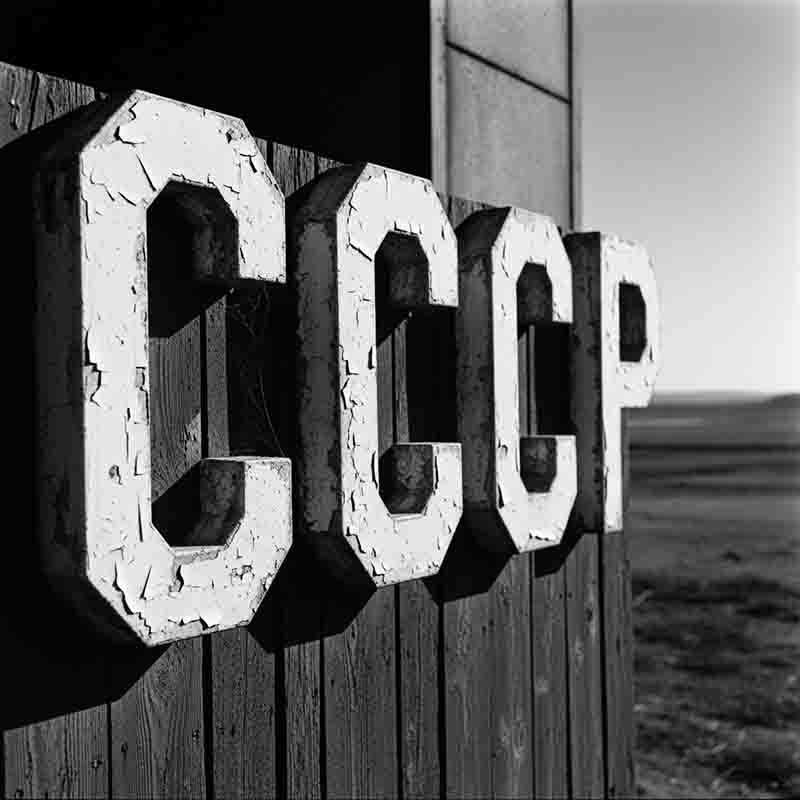
The abbreviation was widely used on official documents, currency, and state symbols of the Soviet Union.
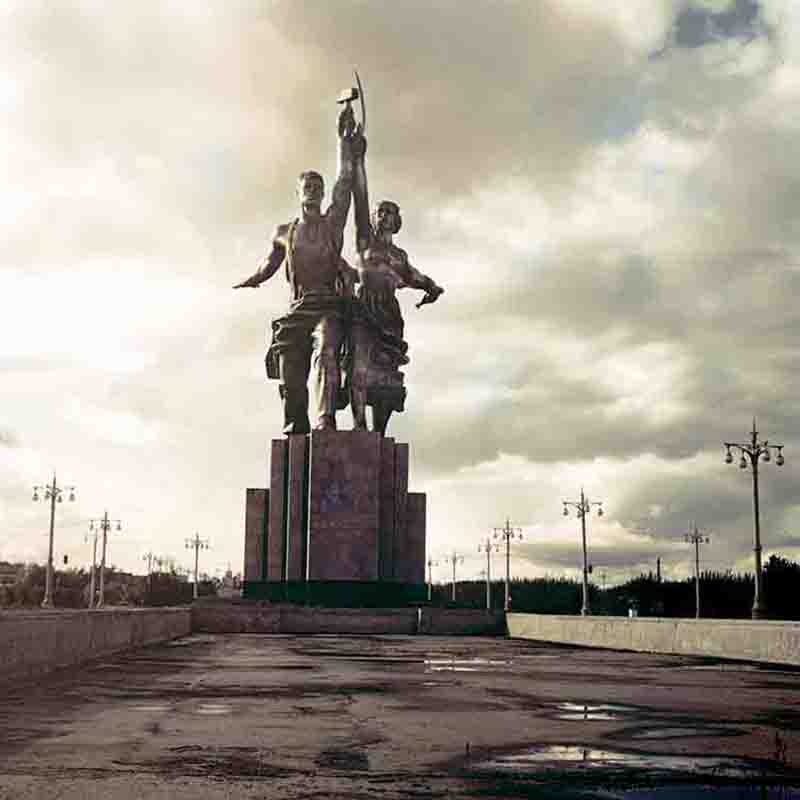
The iconic sculpture "Worker and Kolkhoz Woman", created by Vera Mukhina for the 1937 World's Fair in Paris.
About This Article
This article examines Willy Brandt's Ostpolitik and its transformative impact on Cold War diplomacy between West Germany and the Soviet Union. Part of the Cold War history series on soviet-union.com.
Last Updated: September 15, 2025 | Reading Time: 15 minutes