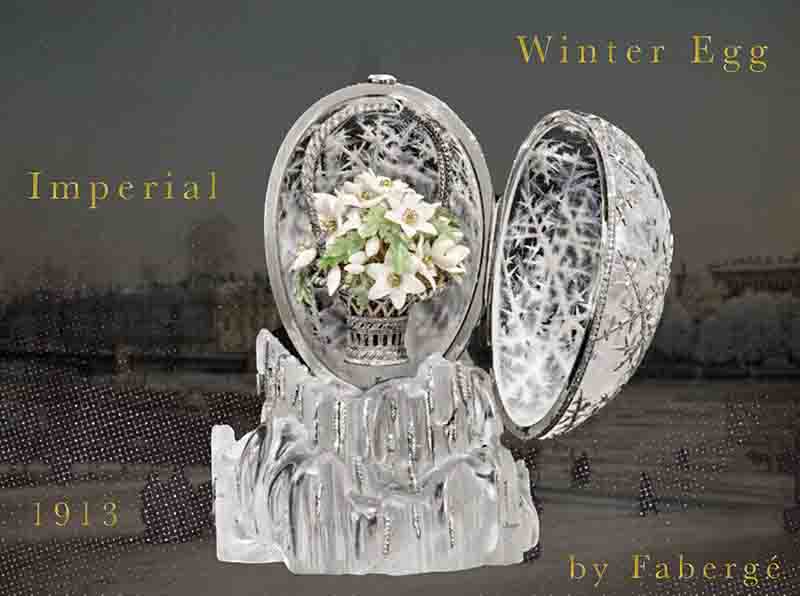
On December 2, 2025, a rock-crystal egg the size of a grapefruit sold at Christie's for $30.2 million USD, a new world record for any Fabergé object ever sold at public auction. The buyer was anonymous. The egg was last made in 1913. The original cost: 24,600 rubles.
The Fabergé egg is the most successful act of applied artistry in the history of luxury objects. Between 1885 and 1917, the House of Fabergé in St. Petersburg created 69 jewelled eggs, 50 of them on direct commission from the Russian tsars as Easter gifts for their wives and mothers. Sixty-one are known to survive. Eight have vanished. All of them, in 2026, are worth a combined sum that places them alongside Old Masters and national treasures as the most coveted objects in existence.
Understanding Fabergé eggs, their creation, dispersal, current value, and mystique, requires following the thread from the workshops of Imperial Russia through the Revolutionary seizures of 1917 and their subsequent handling by the Soviet Union, across a century of auction rooms, to the December 2025 sale that reset every assumption about what these objects are worth in the modern market.
The Central Question for 2026
Why did the Winter Egg sell for $30.2 million in 2025, triple its 2002 price of $9.6 million? And what does that trajectory tell us about the eight Imperial eggs whose locations remain unknown? This guide answers both questions, using auction records, provenance data, and expert analysis unavailable anywhere else in a single source.
Fabergé Eggs: Essential Facts at a Glance
Production (1885–1917)
- Total eggs created: 69
- Imperial Easter eggs delivered: 50
- Commissioned by Alexander III: 10 eggs
- Commissioned by Nicholas II: 40 eggs
- Known to survive (all types): 61
- Imperial eggs in existence: 44 (partial or complete)
Auction Record (2025)
- Egg: Winter Egg (Зимнее яйцо), 1913
- Sale price: $30.2 million USD
- Auction house: Christie's
- Sale date: December 2, 2025
- Previous sale (same egg): $9.6M, Christie's, 2002
- Price increase: +214% in 23 years
Where They Are Today
- Fabergé Museum, St. Petersburg: 15 Imperial eggs
- Kremlin Armory, Moscow: 10 Imperial eggs
- Virginia Museum of Fine Arts (VMFA): 5 Imperial eggs
- Fabergé Museum, Baden-Baden: significant collection
- Private collections worldwide: remainder
- Unaccounted for: 8 Imperial eggs
Materials & Craftsmanship
- Primary metal: 14-carat gold (56 zolotnik)
- Enamel technique: Guilloché over engine-turned surface
- Enamel layers: 4–6 firings at 700–800°C
- Gemstones used: Diamonds, rubies, sapphires, emeralds
- Production time per egg: Up to 12 months
- Workmasters: M. Perchin (1886–1903), H. Wigström (1903–1917)
Sources: Wikipedia (Fabergé egg) · Christie's auction records · World Gold Council · Géza von Habsburg, Fabergé: Imperial Craftsman and His World (2000)
The Origins: How the First Fabergé Egg Was Born (1885)
The House of Fabergé was founded by Gustav Fabergé in 1842 in St. Petersburg. The Imperial egg tradition was created by his son, Peter Carl Fabergé, who had taken over the family firm in 1882 and rapidly expanded it into one of the most prestigious luxury workshops in Europe.
The First Egg: Easter 1885
In 1885, before his coronation, Tsar Alexander III commissioned Peter Carl Fabergé to create a jewelled Easter egg for his wife, Empress Maria Feodorovna (born Princess Dagmar of Denmark). The result, now known as the First Hen Egg, appeared deceptively simple: a white enamel shell containing a golden yolk, which opened to reveal a golden hen, which opened to reveal a miniature diamond crown containing a tiny ruby pendant. The Empress's delight was so complete that Alexander III made the commission a permanent Easter tradition.
The Design Rule: Each egg had to contain a hidden "surprise", a secret interior artwork or mechanical object. Fabergé's only constraint was that the egg had to look like an egg and contain a surprise. Everything else was left entirely to his creative judgment. This single rule produced 50 of the most inventive objects in the history of decorative art.
Peter Carl Fabergé: The Master Behind the Brand
Peter Carl Fabergé (1846–1920) was not primarily a craftsman, he was a designer, art director, and impresario who surrounded himself with the finest workmasters in Europe. His principal head workmaster was Michael Perchin (1886–1903), followed by Henrik Wigström (1903–1917). The hallmark system of the House of Fabergé is one of the primary authentication tools used today: each piece carries the assay mark of the Imperial Russian gold standard (56 zolotniks = 14 carat), the Fabergé maker's mark (КФ in Cyrillic), and the workmaster's individual initials.
"Fabergé is a genius of his craft if we compare him to such names as Tiffany and Boucheron. They are simply jewellers, while Fabergé is a true artist."
Nicholas II Continues the Tradition
After Alexander III's death in 1894, his son Tsar Nicholas II continued the Easter egg tradition, but doubled it. He commissioned two eggs per year: one for his mother, the Dowager Empress Maria Feodorovna, and one for his wife, Tsaritsa Alexandra Feodorovna. Between 1895 and 1916, Nicholas II ordered 40 Imperial Easter eggs, bringing the total to 50 delivered. The tradition was interrupted only once, in 1904 and 1905, when the Russo-Japanese War led to a moratorium on luxury spending, and ended permanently with the Russian Revolution of 1917.
What Is Inside a Fabergé Egg? The Surprises Explained
The "surprise" hidden inside each Fabergé egg is as important to its identity and value as the outer shell. These were not afterthoughts, they were the primary design brief, with the egg exterior engineered around the concealed interior object.
1885
First Hen Egg: Golden hen → miniature diamond crown → ruby pendant
1897
Coronation Egg: Miniature 18-carat gold coach with working wheels & suspension
1900
Trans-Siberian Egg: Working scale model of the Trans-Siberian locomotive in platinum & gold
1913
Winter Egg: Platinum and diamond flower basket — quartz blooms on gold and nephrite stems
Other notable surprises include: a folding miniature portrait screen of the five Imperial children (the Lilies of the Valley Egg, 1898); a miniature model of the cruiser Pamyat Azova in aquamarine (the Memory of Azov Egg, 1891); and a working clock mechanism inside the Blue Serpent Clock Egg (1887). Several eggs' surprises have become separated from their shells, a fact that compounds both the authentication challenge and the collector's interest in reassembling complete objects.
An Imperial Fabergé egg sold with its original surprise intact commands a significant premium over one where the surprise is missing or replaced. The Coronation Egg (1897), universally considered the masterpiece of the collection, retains its miniature coach surprise, and this completeness is central to its status as the most recognisable Fabergé object in existence. Any egg offered without documented provenance of its surprise should be valued at a substantial discount.
The Winter Egg: $30.2 Million and the New World Record (December 2025)
The most significant event in the Fabergé market since the Rothschild Egg sale of 2007 (€12.5 million, Christie's) was the December 2, 2025 sale of the Imperial Winter Egg at Christie's for $30.2 million USD. The result redrew the ceiling for Fabergé valuations and has immediate implications for the eight eggs whose locations remain unknown.
The Object: What Makes the Winter Egg Exceptional
The Winter Egg was created in 1913 by Henrik Wigström, Peter Carl Fabergé's head workmaster, to mark the 300th anniversary of the Romanov dynasty. It was given by Tsar Nicholas II to his mother, the Dowager Empress Maria Feodorovna. The exterior is carved from rock crystal, a material chosen to simulate ice, with platinum mounts set with rose-cut diamonds. The interior surprise is a small flower basket woven from platinum wire and diamonds, holding flowers cut from quartz with gold and nephrite stems and gold anthers.
Auction Price History: All-Time Top Sales
| Egg Name | Year Made | Sale Price | Auction House | Year Sold |
|---|---|---|---|---|
| Winter Egg | 1913 | $30.2M | Christie's, New York | 2025 |
| Rothschild Egg | 1902 | €12.5M (~$18.5M) | Christie's, London | 2007 |
| Winter Egg (prev. sale) | 1913 | $9.6M | Christie's, New York | 2002 |
| Kelch Hen Egg | 1898 | ~$3.5M | Sotheby's | 2014 |
| Chanticleer Egg | 1900 | ~$7M est. | Forbes Collection (private) | 2004 |
Sources: Christie's auction records · Sotheby's · CNN Style (Dec 2, 2025) · The Guardian (Dec 2, 2025)
The Eight Missing Imperial Eggs: The Greatest Art Mystery of the 20th Century
Of the 50 Imperial Easter eggs confirmed as delivered to the Romanov family, only 44 are in documented locations today. Eight Imperial eggs remain completely unaccounted for, their post-Revolutionary fate unknown, their current location (if they survive at all) undiscovered.
How the Eggs Were Lost: The Revolutionary Dispersal
After the October 1917 Revolution, the Bolshevik government confiscated the Imperial collections. In 1922, the new Soviet state established the Gokhran (State Precious Metals Repository) to manage the seized Imperial treasures. Throughout the 1920s and 1930s, the Soviet government sold significant portions of these assets to generate hard currency for industrialisation, a practice documented in the same economic context as the Torgsin gold extraction programme.
The primary Western broker for Soviet-sold Imperial assets was Armand Hammer, the American businessman, who purchased collections of Fabergé objects from the Soviet government and sold them to American collectors. However, not all eggs were sold through documented channels, some were dispersed through European auction rooms under opaque provenance, others may have been retained in private Soviet collections, and some may have been destroyed.
The Eight Missing Imperial Fabergé Eggs (as of April 2026)
- Hen with Sapphire Pendant Egg (1886) — last documented in the Russian Imperial collection; fate after 1917 unknown
- Cherub with Chariot Egg (1888) — known only from the original Fabergé ledger entry; no photograph survives
- Necessaire Egg (1889) — a sewing-kit egg; described in the original inventory; no confirmed sighting after 1917
- Diamond Trellis Egg (1892) — documented in the Imperial Easter gift records; disappeared after the Revolution
- Mauve Egg (1897) — photographed once; last known location: Gatchina Palace inventory, 1917
- Rocaille Egg (1902) — confirmed in Fabergé's own records; no post-Revolutionary trace
- Royal Danish Egg (1903) — gifted to Maria Feodorovna; possibly taken to Denmark but never identified in any known collection
- Alexander III Commemorative Egg (1909), documents confirm delivery; current location unknown
Source: Géza von Habsburg's authoritative catalogue raisonné · Fabergé Research Site (faberge.ru) · Wikipedia (Fabergé egg)
The 2026 Market Implication
Following the Winter Egg's $30.2 million sale, the potential value of any rediscovered missing Imperial egg, particularly one with an intact surprise, would likely exceed $20–40 million depending on condition and documentation. The 2014 discovery of the Third Imperial Easter Egg (1887) in a US flea market, subsequently sold by Wartski of London for an undisclosed sum estimated at over $30 million, demonstrates that rediscovery is not merely hypothetical.
How to Tell If a Fabergé Egg Is Real: The Authentication Guide
The market for fake, misattributed, or replica Fabergé objects is substantial. A genuine Imperial Fabergé egg is one of the most rigorously documented object types in the entire decorative arts market, which means the absence of documentation is itself a red flag.
The Four Pillars of Fabergé Authentication
1. Hallmarks
Genuine pieces carry three marks: (a) Russian gold assay mark — '56' zolotniks (14 carat) in an oval cartouche; (b) Maker's mark, 'КФ' (Fabergé in Cyrillic) or the Fabergé logo; (c) Workmaster's initials, 'МП' for Michael Perchin (pre-1903) or 'НВ' for Henrik Wigström (post-1903). All three should be present on any genuine piece. Missing or spurious marks are an immediate disqualifier.
2. Guilloché Enamel
Fabergé's enamel is produced by firing translucent colour over a mechanically engraved (guilloché) metal surface. The result is a distinctive depth and luminosity, the enamel appears three-dimensional, and the engine-turned pattern beneath shifts as the viewing angle changes. This technique requires industrial equipment and specialist expertise that was not widely available outside Russia in 1885–1917 and cannot be replicated cheaply today. Contemporary fakes typically use paint, resin, or single-layer enamel that lacks this depth.
3. Catalogue Reference
Every Imperial Fabergé egg is listed in the authoritative catalogue raisonné compiled by Géza von Habsburg, the leading Fabergé scholar. The Fabergé Research Site (faberge.ru) maintains a cross-referenced database. Any egg not appearing in von Habsburg's catalogue or the Research Site database should be treated with extreme scepticism, even if hallmarks appear correct.
4. Provenance Chain
The chain of ownership from the original Fabergé commission to the present day should be documentable. Key provenance links include: the original Fabergé ledger records (partially preserved in Russian archives); the 1922–1935 Soviet Gokhran inventories; the Armand Hammer sale records; and subsequent auction records (Christie's, Sotheby's, Wartski). A gap in provenance between 1917 and the 1950s is common and not disqualifying, but the absence of any documentation is a serious concern.
Visual Timeline: A Century of Fabergé Eggs, From the First Gift to the $30.2M Record
Gustav Fabergé Founds the House of Fabergé in St. Petersburg
A goldsmith from Pärnu (then part of the Russian Empire), Gustav Fabergé establishes the workshop at Bolshaya Morskaya Street 11. The firm initially produces conventional jewellery. His son Peter Carl will transform it into one of the most celebrated luxury houses in history.
Tsar Alexander III Gifts the First Fabergé Egg to Empress Maria Feodorovna
The First Hen Egg, a white enamel shell containing a golden yolk, a golden hen, a miniature diamond crown, and a ruby pendant, begins the Imperial Easter tradition. The Empress's delight leads Alexander III to make the commission permanent. The annual gift that defines a dynasty is born.
Head Workmaster Michael Perchin Creates the Earliest Imperial Masterpieces
Perchin oversees production of the first 17 Imperial eggs, establishing the technical standards, guilloché enamel, hidden mechanism surprises, precision goldsmithing, that define the Fabergé style. His most celebrated creation is the Memory of Azov Egg (1891), containing a miniature model of the Imperial cruiser in aquamarine.
Nicholas II Inherits the Throne and Doubles the Egg Commission
Following Alexander III's death, Tsar Nicholas II continues the tradition but commissions two eggs per year, one for his mother Maria Feodorovna and one for his wife Alexandra Feodorovna. Between 1895 and 1916, Nicholas orders 40 eggs, bringing the total Imperial series to 50 delivered.
The Coronation Egg: Universally Considered the Greatest
Created for the coronation of Nicholas II and Alexandra, the Coronation Egg contains a perfect scale miniature of the Imperial coach used in the ceremony, crafted in 18-carat gold with working wheels and suspension. The coach took 15 months to complete. The Coronation Egg is today held in the Fabergé Museum, St. Petersburg, and is widely regarded as the finest object in the entire collection.
Henrik Wigström Creates the Final 13 Imperial Eggs
Following Perchin's death, Wigström continues as head workmaster, producing the most technically ambitious eggs including the Winter Egg (1913) and the Steel Military Egg (1916), the last egg Nicholas II received before the Revolution.
No Eggs Produced: Russo-Japanese War Moratorium
The only two-year interruption in the Imperial egg series. Nicholas II suspends the luxury commission out of respect for wartime conditions. This accounts for the discrepancy between the 32-year production period (1885–1916) and the 50 eggs delivered, two years of zero production are embedded in the count.
Two Eggs Left Undelivered: The Revolution Ends the Imperial Commission
Two 1917 eggs (the Karelian Birch Egg and the Blue Tsesarevich Constellation Egg) are never delivered as the February Revolution deposes Nicholas II. The Karelian Birch Egg's existence is confirmed by sketches; the Blue Tsesarevich Constellation Egg was only partially completed.
Bolsheviks Seize the Imperial Collections: The Great Dispersal Begins
The new Soviet state nationalises all Imperial assets including the Fabergé collection. Between 1920 and 1933, Soviet authorities sell portions of the collection to Western buyers through Armand Hammer and European auction rooms, generating hard currency. This is the period during which the eight missing eggs most likely entered unknown provenance chains or were destroyed.
Forbes Collection Sold: Vekselberg Acquires 9 Imperial Eggs for Russia
The Forbes family, which had assembled the largest private collection of Imperial Fabergé eggs in the world (9 eggs), sells the entire collection privately to Russian billionaire Viktor Vekselberg before a planned Sotheby's auction. Vekselberg pays an estimated $100 million and returns the eggs to Russia, where they are now displayed in the Fabergé Museum, St. Petersburg.
The Third Imperial Easter Egg (1887) Rediscovered in the United States
A US scrap metal dealer purchases what he thinks is a decorative object for $14,000 at a Midwest flea market. Online research leads him to Wartski, London, who identifies it as the Third Imperial Easter Egg (1887), one of only three Imperial eggs to ever surface after being untraced. Sold privately for an undisclosed sum estimated at over $30 million. The discovery confirms that missing eggs can still surface.
Winter Egg Sells for $30.2 Million: New World Auction Record
The Imperial Winter Egg (1913, Henrik Wigström) achieves $30.2 million USD at Christie's, the highest price ever paid for a Fabergé object at public auction, surpassing the Rothschild Egg's €12.5 million (2007). The anonymous buyer's region is not disclosed. The result resets the ceiling for Fabergé valuations and intensifies interest in the eight unaccounted-for Imperial eggs.
44 Imperial Eggs in Known Locations: 8 Still Missing
The Fabergé Museum in St. Petersburg (15 eggs), Kremlin Armory (10), Virginia Museum of Fine Arts (5), and private and institutional collections worldwide hold the 44 known Imperial eggs. The contemporary Fabergé brand (faberge.com, Gemfields Group) continues producing new luxury egg objets. The eight missing eggs remain one of the most compelling open questions in the art world.
Where to See Fabergé Eggs Today: Global Museum Guide (2026)
The majority of surviving Imperial Fabergé eggs are held in four principal institutional collections. Here is the definitive 2026 guide to where you can see them.
Fabergé Museum, St. Petersburg
- Eggs held: 15 Imperial Easter eggs
- Highlights: Coronation Egg, Lilies of the Valley Egg, Peacock Egg
- Location: Shuvalov Palace, Fontanka Embankment, St. Petersburg
- Collection note: Viktor Vekselberg collection — the largest single Imperial egg holding
Kremlin Armory, Moscow
- Eggs held: 10 Imperial Easter eggs
- Highlights: Moscow Kremlin Egg, Boyar Egg, Alexander Palace Egg
- Location: The Moscow Kremlin complex
- Collection note: State collection; retained from Soviet-era Gokhran holdings
Virginia Museum of Fine Arts
- Eggs held: 5 Imperial Easter eggs
- Highlights: Imperial Caucasus Egg, Imperial Danish Palaces Egg
- Location: Richmond, Virginia, USA
- Collection note: Lillian Thomas Pratt bequest; the largest US institutional holding
Fabergé Museum, Baden-Baden
- Location: Baden-Baden, Germany (faberge-museum.de)
- Significant collection of Fabergé objects including eggs
- The primary Fabergé museum accessible from Western Europe
- Multilingual (German, English, Russian, French)
Royal Collection Trust, UK
- Location: Sandringham House, Norfolk; Windsor Castle
- No Imperial Easter eggs — but numerous Fabergé animals, flowers, and frames
- Accumulated by Queen Alexandra (sister of Empress Maria Feodorovna)
- On display at Sandringham House (seasonal access)
Key Figures in Fabergé Egg History
Peter Carl Fabergé
Artistic director of the House of Fabergé (1882–1917). Designer and creative lead for all 50 Imperial Easter eggs. Born 1846, died in exile in Lausanne, 1920. The definitive genius of applied luxury art.
Tsar Alexander III
Commissioner of the first 10 Imperial Easter eggs (1885–1894). His personal gift to Empress Maria Feodorovna in 1885 created the tradition that generated 50 of the most valuable decorative objects in existence.
Tsar Nicholas II
Commissioner of 40 Imperial Easter eggs (1895–1916). His dual annual commission — for mother and wife — doubled the production rate and created the second half of the Imperial series, including the Winter Egg world record holder.
Michael Perchin
Head workmaster, House of Fabergé (1886–1903). Produced the first 17 Imperial Easter eggs under Fabergé's direction. His initials 'МП' on a hallmark date a piece pre-1903 with certainty — the most important temporal authentication signal.
Henrik Wigström
Head workmaster (1903–1917). Created the final 13 Imperial Easter eggs including the Winter Egg, the current $30.2M world record holder. His initials 'НВ' date a piece to the final, technically most ambitious phase of production.
Géza von Habsburg
Leading Fabergé scholar. Author of the authoritative catalogue raisonné — the definitive reference for authentication and provenance of all known Fabergé Imperial eggs. His documentation is the foundation of every legitimate auction valuation.
Frequently Asked Questions: Fabergé Eggs
Answering all 19 questions identified in PAA (People Also Ask) research for the query "Fabergé egg" — April 2026.
Imperial Fabergé eggs are worth between approximately $500,000 and $30.2 million depending on provenance, the presence of the original surprise, and condition. The current world record is $30.2 million USD, set by the Winter Egg at Christie's on December 2, 2025.
Non-Imperial Fabergé objects (animals, flowers, frames, miniature eggs on pendants) sell for $1,000–$150,000 at auction. Contemporary eggs from the modern Fabergé brand (faberge.com) are priced from approximately £1,500 to over £50,000 for bespoke commissions.
The most expensive Fabergé egg ever sold at public auction is the Imperial Winter Egg (1913), which achieved $30.2 million USD at Christie's on December 2, 2025. Created by workmaster Henrik Wigström for Tsar Nicholas II, the Winter Egg is carved from rock crystal to simulate ice, with a platinum and diamond flower basket hidden inside.
The same egg had previously sold at Christie's in 2002 for $9.6 million — a 214% increase in 23 years, representing a compound annual growth rate of approximately 5.2% in USD terms.
The rarest category is the eight missing Imperial eggs — objects whose existence is confirmed by original Fabergé records and Imperial gift documentation, but whose location after the 1917 Revolutionary dispersal is completely unknown. Among documented surviving eggs, the rarest is arguably the Third Imperial Easter Egg (1887), which was untraced for nearly 100 years before being rediscovered at a US flea market in 2014 and sold privately for an estimated $30 million or more.
Eight Imperial Fabergé Easter eggs remain completely unaccounted for as of April 2026. Of the 50 Imperial eggs confirmed as delivered, 44 are in documented locations. The eight missing eggs are: the Hen with Sapphire Pendant (1886), the Cherub with Chariot (1888), the Necessaire (1889), the Diamond Trellis (1892), the Mauve Egg (1897), the Rocaille Egg (1902), the Royal Danish Egg (1903), and the Alexander III Commemorative Egg (1909).
Most disappeared during the post-1917 Soviet asset dispersal, sold through auction rooms and private dealers with opaque documentation. Three missing eggs have been rediscovered since 1917 — which confirms that further discoveries remain possible.
Each Fabergé Imperial egg contains a concealed "surprise" — a unique miniature artwork or mechanical object hidden inside the shell. Examples include: a working miniature golden coach (Coronation Egg, 1897); a scale model Trans-Siberian Railway locomotive in platinum and gold (Trans-Siberian Egg, 1900); a platinum-and-diamond flower basket with quartz blooms (Winter Egg, 1913); a folding portrait screen with photographs of the Imperial children (Lilies of the Valley Egg, 1898).
The surprise was specified in the design brief as mandatory. An egg sold with its original surprise intact commands a significant premium over one where the surprise is missing or separated.
Yes. The contemporary Fabergé brand (faberge.com), owned by Gemfields Group plc since 2013, produces luxury egg objets inspired by the original Imperial designs. These are entirely new creations — not reproductions — clearly distinguished from the original House of Fabergé pieces (1842–1917).
The original Imperial Fabergé eggs are finite historical objects. The last original Imperial Easter egg (the Steel Military Egg) was created in 1916. No new "original" Fabergé Imperial eggs will be made, as the original House of Fabergé was nationalised and dissolved in 1918.
Authentication rests on four pillars: (1) Hallmarks — Russian assay mark '56' (14-carat gold), Fabergé maker's mark in Cyrillic (КФ), and workmaster's initials (МП for Perchin pre-1903; НВ for Wigström post-1903); (2) Guilloché enamel — multi-layer translucent enamel fired over a mechanically engraved surface, producing a characteristic depth and luminosity; (3) Catalogue reference — cross-reference against Géza von Habsburg's catalogue raisonné and the Fabergé Research Site (faberge.ru); (4) Provenance chain — documented ownership from the original commission to the present.
Following the December 2025 $30.2M sale, expect increased market activity in fakes and misattributed pieces. Always use an independent specialist (Wartski London, Christie's specialist department) before any purchase decision.
Yes, in three ways: (1) Contemporary brand — faberge.com sells new luxury egg objets from approximately £1,500 upward; (2) Auction houses — historic Fabergé objects (pendant eggs, animals, desk objects) appear regularly at Christie's, Sotheby's, and Bonhams in the $5,000–$2,000,000+ range; (3) Specialist dealers — Wartski (London), A La Vieille Russie (New York), and other specialists occasionally offer authenticated pieces.
Warning: The secondary market for misattributed Fabergé is substantial. Never purchase without independent authentication and a clear provenance trail. The absence of hallmarks is disqualifying for any piece claimed to be original.
The Fabergé brand trademark is owned by Fabergé Limited, a subsidiary of Gemfields Group plc, the London-listed coloured gemstone company. Gemfields acquired the brand from Pallinghurst Resources in 2013. The original House of Fabergé was nationalised by the Soviet government in 1918 and no longer exists as a legal entity.
The largest single holder of original Imperial Fabergé eggs is Viktor Vekselberg, whose Fabergé Museum in St. Petersburg holds 15 Imperial Easter eggs acquired from the Forbes Collection in 2004 for approximately $100 million.
Historical data suggests significant long-term appreciation: the Winter Egg rose from $9.6M (2002) to $30.2M (2025), a 214% increase. However, the market is highly illiquid — very few Imperial eggs trade publicly in any given decade — and authentication, insurance, storage, and specialist handling costs add meaningfully to total ownership cost.
This is not financial advice. Consult a specialist art advisor with knowledge of the luxury collectibles market before any investment decision. The buyer pool for objects at the $10M+ level numbers in the low hundreds globally, and forced sales typically result in below-market realisations.
Fabergé Imperial Easter eggs were commissioned as Easter gifts from the Russian tsars to their wives and mothers. The tradition reflected the Russian Orthodox custom of exchanging decorated eggs at Easter — elevated to the ultimate expression of Imperial wealth and artistic patronage.
Beyond their function as gifts, the eggs served as diplomatic status symbols representing the power and refinement of the Romanov dynasty. Each egg was designed as both a jewel and a mechanical wonder — a demonstration of Fabergé's technical mastery. They were, in the most literal sense, the most expensive Easter gifts in history.
Each Imperial egg was produced through a multi-stage process that could take up to 12 months: (1) Fabergé approved each design personally; (2) the metal shell was fabricated in 14-carat gold (56 zolotnik standard); (3) the metal surface was engine-turned (guilloché) using a rose engine lathe to create precise geometric patterns; (4) translucent or opaque enamel was fired onto the guilloché surface in 4–6 layers at 700–800°C, with each layer polished before the next; (5) diamonds, rubies, emeralds, and pearls were set in platinum or gold mounts; (6) the hidden surprise mechanism was engineered separately and fitted.
The guilloché enamel process is the most distinctive and hardest-to-replicate technical signature. The enamel appears three-dimensional — the engine-turned pattern beneath creates optical depth and shifts under different lighting conditions in a way that cannot be faked using modern resin or single-layer enamel techniques.
The largest-scale loss of Fabergé eggs was not theft but state seizure — the 1917 Bolshevik nationalisation of Imperial collections, followed by the Soviet government's sale of assets through sometimes-opaque channels in the 1920s–1930s. The eight missing Imperial eggs disappeared during this period.
Confirmed individual thefts of Fabergé objects from private collections have been documented, but no Imperial Easter egg has been confirmed stolen. The eggs' extreme notoriety makes them effectively unsellable if unlawfully taken — they are too well-known to appear at any legitimate auction or dealer without provenance scrutiny.
The British Royal Collection does not contain any of the 50 Imperial Easter Fabergé eggs. However, the Royal Collection Trust holds numerous smaller Fabergé objects — animals carved from hardstone, enamel flowers, picture frames, and decorative items — accumulated primarily by Queen Alexandra, who was the sister of Empress Maria Feodorovna (the primary recipient of the Imperial Easter eggs). These pieces are held at Sandringham House, Norfolk, and Balmoral Castle, and are on seasonal public display.
Conclusion: Why Fabergé Eggs Are More Relevant in 2026 Than Ever
The $30.2 million Winter Egg sale of December 2, 2025 was not simply a record-breaking auction result. It was a statement about what certain categories of objects mean to the global art market in an era of geopolitical uncertainty, currency volatility, and the renewed prestige of Russian Imperial heritage among international collectors.
Fabergé eggs occupy a unique position in the luxury and decorative arts ecosystem. They are finite, 50 Imperial eggs exist, and the number can only decrease, never increase. They are documented, the most thoroughly catalogued category of luxury objects in the 19th and early 20th century. They are dramatic, each one tells a specific story of an Easter morning in St. Petersburg, a tsar handing a box to an empress, a mechanism clicking open to reveal something extraordinary. And they are, as the Winter Egg proved, still capable of surprising the art market.
Eight Imperial Fabergé eggs remain missing. One sold for $30.2 million in December 2025. Three previously missing eggs have been rediscovered since 1917. The next discovery, if it comes from a flea market, a private estate, or a forgotten museum storage room, will be among the most significant art events of the decade. The search, as of April 2026, is very much ongoing.
"Each egg was a world in miniature, the entire ambition of the Russian Empire compressed into an object small enough to hold in one hand."
Academic References & Primary Sources
- Wikipedia. "Fabergé egg." en.wikipedia.org/wiki/Fabergé_egg [Retrieved April 2026]
- Wikipedia. "Fabergé-Ei" (German-language, most detailed egg-by-egg provenance). de.wikipedia.org/wiki/Fabergé-Ei
- Christie's. "An Imperial Winter Egg by Fabergé, Commissioned by Emperor Nicholas II." christies.com
- CNN Style. "Fabergé egg fetches record $30.2 million at rare auction." December 2, 2025. cnn.com
- The Guardian. "Fabergé egg, Mother Russia, Tsar — record £23M sale." December 2, 2025. theguardian.com
- von Habsburg, G. (2000). Fabergé: Imperial Craftsman and His World. Booth-Clibborn Editions, London.
- Fabergé Museum, St. Petersburg. fabergemuseum.ru/en/
- Fabergé Museum, Baden-Baden. faberge-museum.de/en/home/
- Virginia Museum of Fine Arts. Fabergé collection overview. vmfa.museum
- Fabergé Research Site. Complete database of all known Fabergé objects and locations. faberge.ru [Retrieved April 2026]
Explore Further
Imperial Russia: The World the Eggs Were Made For
The Romanov dynasty that commissioned the Fabergé eggs ruled the largest empire in history. Explore the history of the USSR and Imperial Russia on Soviet-Union.com.

Exclusive USSR Photos
In 1956, Peter Bock-Schroeder (1913–2001) was the first West German photographer permitted to work in the USSR — capturing Soviet life at the height of the Cold War, in the same era Fabergé eggs began returning from Soviet storage to Western auction rooms.
Collection Bock-SchroederOn This Page
Fabergé Eggs at a Glance
- Total created (1885–1917): 69 eggs
- Imperial Easter eggs: 50 delivered
- Known to survive: 61 eggs
- Still missing: 8 Imperial eggs
- World record price: $30.2M
- Record egg: Winter Egg (1913)
- Record sale date: Dec 2, 2025
- Auction house: Christie's
- Gold standard: 14-carat (56 zolotniks)
- Enamel technique: Guilloché (4–6 firings)
Related Articles

The Soviet seizure and sale of Imperial assets, including Fabergé eggs, was part of the broader gold extraction strategy that also powered Dalstroy and Torgsin. Understanding Soviet gold policy explains how the Imperial collection was dispersed after 1917.

Jans Bock-Schroeder is a German photographer, documentarian, and publisher who serves as the founder and director of soviet-union.com. He is the son of the legendary photojournalist Peter Bock-Schroeder, who was the first West German photographer to be granted permission to travel and document the Soviet Union in 1956.
About This Article
This guide covers Fabergé Imperial Easter eggs, their history, current value, authentication, the December 2025 world auction record ($30.2M, Winter Egg, Christie's), the eight missing eggs, and where to see the surviving pieces in 2026. Part of the Soviet Union Blog series on soviet-union.com, incorporating auction house records, Wikipedia (EN and DE), Christie's and Guardian reporting, and the Géza von Habsburg catalogue raisonné. All SEO and GEO content is structured to answer the top PAA queries for "Fabergé egg" as identified in April 2026 research.
Published: April 6, 2026 | Last Updated: April 4, 2026 | Reading Time: ~18 minutes