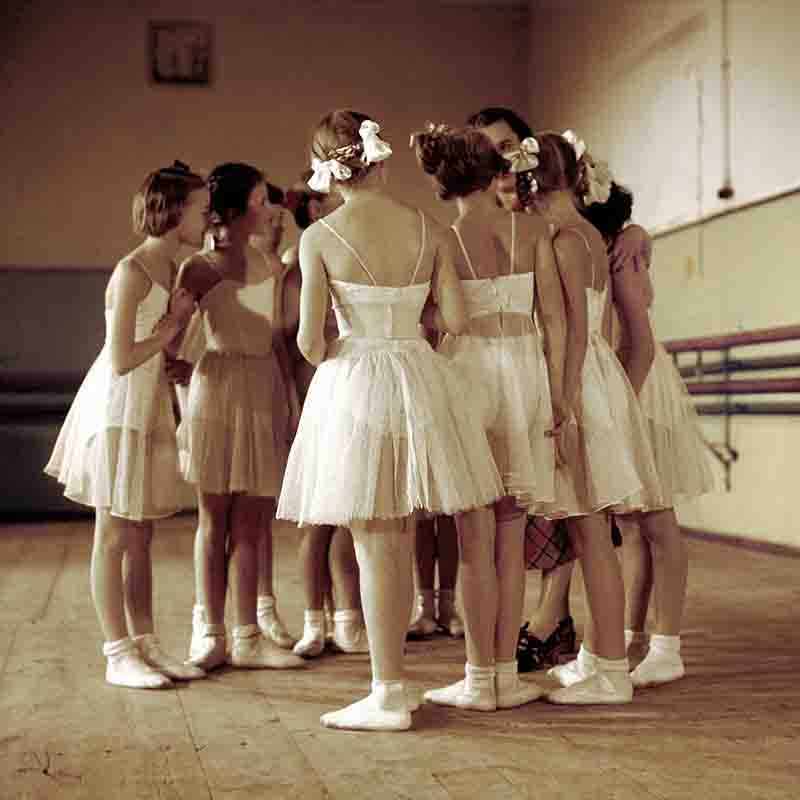
The Bolshoi Theatre is more than a cultural icon of Russia, it is a symbol of the country's shifting political, social, and cultural landscapes.
In the heart of Moscow, just steps from Red Square and the Kremlin, stands an architectural masterpiece that has defined Russian culture for nearly 250 years. The Bolshoi Theatre (Большой театр, meaning "Big Theatre") is not merely a venue for opera and ballet, it is the embodiment of Russia's artistic identity, a stage where imperial splendor, revolutionary fervor, Soviet power, and modern resurgence have all played their parts.
Founded by Catherine the Great in 1776, the same year America declared independence, the Bolshoi has survived fires, wars, political upheavals, and decades of Soviet transformation. Its neoclassical facade, crowned by the Quadriga of Apollo, has witnessed the coronation of tsars, the speeches of Lenin, the cultural diplomacy of the Cold War, and the billion dollar restoration that returned it to its imperial glory in 2011.
Historical Significance
The Bolshoi Theatre represents one of the few continuous cultural threads running through all of modern Russian history. While governments rose and fell, while ideologies shifted from imperial autocracy to communist dictatorship to capitalist democracy, the Bolshoi remained, a constant stage for Russia's cultural expression and a symbol of its enduring artistic excellence.
The Three Pillars of Bolshoi
The Bolshoi Theatre is home to three world-class artistic companies, each with its own storied history and global reputation.
Bolshoi Ballet
Founded 1776
World-renowned for its bold, athletic style and dramatic expression. Home to legendary dancers including Maya Plisetskaya, Galina Ulanova, and Vladimir Vasiliev.
Bolshoi Opera
Founded 1776
Leading venue for Russian opera, staging works by Tchaikovsky, Mussorgsky, and Rimsky-Korsakov. Known for elaborate productions and powerful vocal performances.
Bolshoi Orchestra
Academic since 1964
Awarded the title "Academic" in 1964, the orchestra provides musical accompaniment for both ballet and opera, renowned for its rich, resonant sound.
The Bolshoi Ballet Academy
The Bolshoi Ballet Academy (Moscow State Academy of Choreography), founded in 1773, is one of the world's most prestigious ballet schools. Located in a historic building on 2nd Frunzenskaya Street, the academy has trained generations of world-class dancers. Its rigorous training program emphasizes the Bolshoi's distinctive style, characterized by high extensions, dynamic turns, and powerful jumps.
The academy maintains a branch in Joinville, Brazil, and attracts students from around the globe. Graduates include many of the 20th century's most celebrated dancers, and the school continues to be a primary source of talent for the Bolshoi Ballet company.
Architecture and Design
The Neoclassical Masterpiece
The current Bolshoi Theatre building, completed in 1825, is a masterpiece of Russian neoclassical architecture designed by Joseph Bove (Osip Bove). The facade features a magnificent eight-columned portico supporting a triangular pediment crowned by the famous Quadriga of Apollo, a bronze sculpture of the sun god driving a chariot drawn by four horses.
The building's design reflects the imperial ambitions of early 19th-century Russia. Its monumental grandeur, perfect proportions, and harmonious architectural forms make it one of Moscow's most recognizable landmarks. The theater's iconic facade is even depicted on the Russian 100-ruble banknote.
The 1856 Reconstruction
After a devastating fire in 1853 destroyed everything but the exterior walls and portico columns, architect Alberto Cavos led the reconstruction. The theater reopened in 1856 with significant modifications:
The overall height increased by nearly four meters
The Apollo sculpture was replaced with the current quadriga by Pyotr Klodt
The auditorium was redesigned as a "huge musical instrument" for optimal acoustics
The six-tier auditorium accommodated almost 2,300 people
"I tried to decorate the auditorium as extravagantly but at the same time as lightly as possible, in Renaissance taste mixed with Byzantine style. The white light, interspersed with gold, the bright crimson draping of the interiors of the boxes, the stucco arabesques, different for each floor and the main eye-catcher of the auditorium, the huge chandelier consisting of three tiers of lights and candelabras decorated with crystal—all this has aroused universal approval."
The 2011 Restoration
The 2005-2011 renovation was the most extensive in the theatre's history. Costing approximately $1 billion, the project:
Doubled the building's area from 40,000 to 80,000 square meters
Reduced seating from 2,155 to 1,740 to improve comfort and acoustics
Restored the original Imperial decor, removing Soviet-era alterations
Replaced 2,300 rotting wooden foundation piles with reinforced concrete
Restored the original acoustics, which had been damaged by Soviet modifications
Used 4.5 kg of gold to cover 890 square meters of stucco work
The Soviet coat of arms was removed from the facade and replaced with the double-headed eagle of Imperial Russia. The theatre's original beige and olive colors were restored, and the Quadriga of Apollo was fully renovated—complete with the fig leaf that had been added to the nude Apollo during the Soviet period.
Legendary Productions
The Bolshoi has premiered and perfected some of the most significant works in ballet and opera history. These productions have defined the theater's artistic identity and influenced performing arts worldwide.
Iconic Ballets
Swan Lake (1877) — Tchaikovsky's masterpiece, premiered at the Bolshoi
The Nutcracker — Christmas classic performed annually
Giselle — Romantic ballet standard
Spartacus (1968) — Grigorovich's Soviet-era masterpiece
The Sleeping Beauty — Tchaikovsky-Petipa classic
Major Operas
Boris Godunov — Mussorgsky's historical epic
Eugene Onegin — Tchaikovsky's operatic masterpiece
Ruslan and Lyudmila — Glinka's folk fantasy
Prince Igor — Borodin's epic opera
The Snow Maiden — Rimsky-Korsakov's spring tale
The Bolshoi Style
The Bolshoi Ballet is distinguished by its unique aesthetic, often described as more athletic and dramatic than the refined elegance of the Mariinsky (Kirov) Ballet in St. Petersburg. The Bolshoi style emphasizes:
Athletic power: High jumps, dynamic turns, and physical strength
Dramatic expression: Emotional intensity and theatrical storytelling
Technical precision: Clean lines and exact execution
Ensemble grandeur: Large-scale corps de ballet formations
This style developed in part due to the theater's large stage and the physical demands of the Soviet-era repertoire, which often featured heroic, proletarian themes requiring robust, powerful movement.
The Bolshoi in the Soviet Era
The Russian Revolution of 1917 brought profound changes to the Bolshoi. What began as an imperial institution became a tool of Soviet cultural policy, a transformation that would define the theatre for over 70 years.
Nationalization and Survival
In 1919, the Bolshoi was nationalized by the Bolshevik government. Remarkably, the theatre survived when many other imperial institutions were dismantled. Vladimir Lenin himself initially favored closing the Bolshoi, viewing opera as bourgeois excess, but was persuaded to spare it by Anatoly Lunacharsky and Joseph Stalin, who recognized its propaganda potential.
The theatre became a venue for Communist Party congresses and political gatherings. Lenin's death was announced from its stage in 1924, and the USSR was officially proclaimed from the Bolshoi in 1922. The theatre was awarded the Order of Lenin twice, the Soviet Union's highest honor.
Stalin's Patronage
Under Joseph Stalin, the Bolshoi thrived as the USSR's cultural flagship. Stalin took a personal interest in the theater, attending performances and demanding productions that reflected socialist realism—art that glorified Soviet life and communist ideals.
"The Bolshoi Theatre was a kind of political convention center during the Soviet period. The Central Committee decided when and how productions would be staged. The iconic Soviet ballet 'The Red Poppy,' a tale of Soviet sailors in China, was directly ordered by the Party in 1927."
The 1936 scandal surrounding Shostakovich's "Lady Macbeth of Mtsensk" exemplified the dangers of artistic creation under Stalin. After Stalin attended a performance and left in disgust, a Pravda editorial titled "Muddle Instead of Music" denounced the opera as "bourgeois" and "vulgar." Shostakovich was forced to withdraw the work, and all theatre managers were fired.
Cold War Cultural Diplomacy
During the Cold War, the Bolshoi became a primary tool of Soviet "soft power." The company toured extensively in the West, beginning with its sensational 1956 London debut. These tours were carefully orchestrated to showcase Soviet cultural superiority and win hearts and minds abroad.
Dancers like Galina Ulanova and Maya Plisetskaya became international celebrities, embodying the excellence of Soviet training. However, the artists remained under strict control, defections like that of Alexander Godunov in 1979 were rare but shocking, highlighting the political pressures on performers.
Soviet Alterations
The Soviet period inflicted significant damage on the theatre's architecture and acoustics. The original wooden ceiling that enhanced sound distribution was tightened to the framework, destroying its acoustic properties. The orchestra pit was filled with concrete, and the stage floor was raised and glued to a concrete block, forcing dancers to perform on unforgiving surfaces for decades. These alterations were only corrected during the 2005-2011 renovation.
Historical Timeline
Foundation
Empress Catherine II grants Prince Pyotr Urusov the privilege to establish a public theater in Moscow. The Bolshoi traces its history to this date.
Petrovsky Theatre Opens
The first theater building opens on Petrovka Street, built by English entrepreneur Michael Maddox. It features nearly 1,000 seats and a masquerade hall.
First Fire
The Petrovsky Theatre burns down. The company performs at various private theatres until a new building can be constructed.
New Bolshoi Opens
The current neoclassical building, designed by Joseph Bove, opens on Theatre Square. The inaugural performance includes the ballet "Cendrillon."
Second Fire
A devastating fire burns for three days, destroying the interior. Only the stone walls and portico columns remain.
Reconstruction Complete
The theatre reopens after reconstruction by Alberto Cavos, featuring improved acoustics and the Quadriga of Apollo.
Swan Lake Premiere
Tchaikovsky's "Swan Lake" premieres at the Bolshoi, marking the beginning of the theater's long association with this ballet classic.
Nationalization
Following the February Revolution, the Imperial Bolshoi becomes the State Bolshoi Theatre. It is later used for Communist Party congresses.
USSR Proclaimed
The formation of the Soviet Union is officially proclaimed from the Bolshoi Theatre stage.
Stalinist Peak
The Soviet Constitution is signed at the Bolshoi. The theatre thrives under Stalin's personal patronage, producing socialist realist works.
WWII Bombing
A German bomb hits the theater during the Battle of Moscow. The building survives, though the lobby is damaged. Performances continue despite the war.
London Tour Sensation
The Bolshoi's first tour to London becomes a global sensation, solidifying its international reputation as a ballet powerhouse.
Academic Status
The Bolshoi Orchestra is awarded the title "Academic," further elevating the status of its musical performances.
Godunov Defection
Bolshoi star Alexander Godunov defects during a tour in New York, creating an international incident and highlighting Cold War tensions.
Major Renovation
The theatre closes for six years of extensive reconstruction costing nearly $1 billion, restoring it to Imperial splendor.
Grand Reopening
The renovated Bolshoi reopens with a gala concert attended by President Dmitry Medvedev, restoring its imperial grandeur and original acoustics.
Filin Attack Scandal
Artistic director Sergei Filin is attacked with acid, exposing internal power struggles and corruption within the theatre.
Legendary Artists
The Bolshoi has been home to some of the greatest dancers, singers, and choreographers in history. These artists have shaped not only the Bolshoi's identity but the entire world of performing arts.
Ballet Legends
Galina Ulanova (1910-1998): Prima ballerina assoluta, considered one of the greatest ballerinas of the 20th century. Her interpretation of Giselle became legendary.
Maya Plisetskaya (1925-2015): Iconic prima ballerina known for her technical brilliance and dramatic intensity. Her "Dying Swan" was unparalleled.
Vladimir Vasiliev (b. 1940): Premier danseur noble, famous for his powerful jumps and dramatic roles, particularly in "Spartacus."
Ekaterina Maximova (1939-2009): Beloved prima ballerina known for her charm and technical precision.
Alexander Godunov (1949-1995): Charismatic principal dancer who defected to the West in 1979 and became an international star.
Choreographic Masters
Yuri Grigorovich (b. 1927): Revolutionary choreographer who led the Bolshoi from 1964 to 1995. His productions of "Spartacus," "Ivan the Terrible," and "The Golden Age" defined the Soviet ballet aesthetic.
Alexei Ratmansky (b. 1968): Former Bolshoi artistic director (2004-2008) who revitalized the company with fresh interpretations of classics.
Pierre Lacotte (1932-2023): French choreographer who reconstructed 19th-century ballets for the Bolshoi.
Opera Stars
Ivan Kozlovsky (1900-1993): Legendary tenor and People's Artist of the USSR.
Galina Vishnevskaya (1926-2012): Soprano who performed at the Bolshoi for over 30 years.
Boris Christoff (1914-1993): Bulgarian bass who became synonymous with the title role of "Boris Godunov."
Visiting the Bolshoi Today
Today, the Bolshoi Theatre stands as a fully restored masterpiece, welcoming visitors from around the world to experience its world-class performances and historic grandeur.
Attending a Performance
The Bolshoi operates on a ten-month schedule, with the company touring internationally during the summer months. The theater presents both classic repertoire and new productions across its two stages:
Main (Historic) Stage: The original 1825 auditorium, seating 1,740, hosts the major ballet and opera productions.
New Stage: Opened in 2002, this modern venue hosts experimental works and serves as an alternative space during the main stage's renovation period.
Ticket prices vary significantly based on seating and performance, typically ranging from 2,000 to 15,000 Russian rubles ($25 to $190). Prime seats for major productions can command much higher prices, reflecting the Bolshoi's status as a luxury destination.
Theatre Tours
The Bolshoi offers guided tours that provide behind-the-scenes access to this historic institution. Visitors can explore:
The imperial foyer and Beethoven Hall
The main auditorium with its legendary acoustics
Backstage areas and dressing rooms
The underground Chamber Concert Hall
Historic costumes and set pieces
Tours must be booked in advance and are available in multiple languages. They offer a unique glimpse into the workings of one of the world's premier cultural institutions.
12 Key Facts About the Bolshoi
Founded in 1776: The same year as American independence, Catherine the Great granted the charter establishing what would become the Bolshoi Theater.
Named for Size: "Bolshoi" means "big" or "grand" in Russian, distinguishing it from the smaller Maly Theatre nearby.
Twice Destroyed by Fire: The theatre burned down in 1805 (as the Petrovsky Theatre) and again in 1853, with only the exterior walls surviving the second fire.
Neoclassical Masterpiece: The current building, designed by Joseph Bove, is considered one of the finest examples of Russian neoclassical architecture.
Quadriga of Apollo: The bronze horses on the facade were created by Pyotr Klodt, who also designed the famous Anichkov Bridge horses in St. Petersburg.
Acoustic Innovation: The 1856 reconstruction by Alberto Cavos designed the auditorium as a "huge musical instrument," creating legendary acoustics.
Political Venue: The USSR was proclaimed from the Bolshoi stage in 1922, and Lenin's death was announced there in 1924.
Stalin's Favorite: Stalin took a personal interest in the Bolshoi, attending performances and demanding ideologically correct productions.
Cold War Ambassador: The Bolshoi toured extensively during the Cold War, serving as a tool of Soviet cultural diplomacy.
$1 Billion Renovation: The 2005-2011 restoration cost approximately $1 billion, making it one of the most expensive theatre renovations in history.
Foundation Replacement: The 2011 renovation replaced 2,300 rotting wooden foundation piles with reinforced concrete supports anchored in bedrock.
Return to Imperial Glory: The restoration removed Soviet-era alterations, including replacing the USSR coat of arms with the double-headed eagle of Imperial Russia.
Frequently Asked Questions
The Bolshoi Theatre is renowned for its world-class ballet and opera performances, particularly Swan Lake and The Nutcracker. It is one of the oldest and most prestigious theatre in Russia, known for its distinctive athletic ballet style and grand operatic productions. The theatre's neoclassical architecture and 250-year history make it a symbol of Russian cultural heritage.
The original Bolshoi Theatre was founded on March 28, 1776, but the current neoclassical building, designed by architect Joseph Bove, was completed in 1825 after the previous Petrovsky Theatre burned down in 1805. The building was reconstructed again after another fire in 1853, reopening in 1856 with its current acoustics and the Quadriga of Apollo.
The Bolshoi Theatre is located in the heart of Moscow on Theatre Square (Teatralnaya Square), just a short walk from Red Square and the Kremlin. Its address is 1 Teatralnaya Square, Moscow, Russia. The theatre is easily accessible by metro (Teatralnaya station) and is surrounded by other cultural institutions including the Maly Theatre and the Metropol Hotel.
The current Bolshoi Theatre building was designed by Russian architect Joseph Bove (Osip Bove, 1784-1834) in the neoclassical style. After a devastating fire in 1853, architect Alberto Cavos (1800-1877) led the reconstruction, improving the acoustics and adding the famous Quadriga of Apollo by sculptor Pyotr Klodt. The 2005-2011 renovation restored Bove and Cavos's original vision.
After the 1917 Revolution, the Bolshoi was nationalized and became a tool for Soviet cultural propaganda. Under Stalin, it thrived as the USSR's cultural flagship, producing socialist realist works. The theater hosted Communist Party congresses and served as a venue for political gatherings, including the signing of the Soviet Constitution in 1935. The Bolshoi also became a Cold War cultural ambassador, touring extensively in the West to showcase Soviet artistic excellence.
The Bolshoi underwent a massive six-year renovation from 2005 to 2011 costing approximately $1 billion. The restoration returned the theater to its 19th-century Imperial splendor, removed Soviet-era alterations that had damaged the acoustics, replaced 2,300 rotting foundation piles, and added modern stage technology. The Soviet coat of arms was replaced with the double-headed eagle of Imperial Russia, and 4.5 kg of gold was used to restore the interior decorations.
The Bolshoi Ballet is world-famous for iconic productions including Swan Lake (which premiered at the Bolshoi in 1877), The Nutcracker, Giselle, and Spartacus (the 1968 Soviet-era masterpiece by Yuri Grigorovich). The company's style is characterized by bold, athletic choreography and dramatic emotional expression, distinguishing it from the more refined style of Western European ballet.
Yes, the Bolshoi Theatre offers guided tours that allow visitors to explore its historic neoclassical interiors, backstage areas, and learn about its rich 250-year history. Tours include access to the imperial foyer, the main auditorium, dressing rooms, and the underground Chamber Concert Hall. Tours must be booked in advance and are available in multiple languages.
Continue Reading
← Previous Socialist Realism in the USSR
Next → The Soviet Union Overview
On This Page
Key Figures
Catherine the Great — Founder (1776)
Joseph Bove — Architect (1825)
Alberto Cavos — Reconstructor (1856)
Yuri Fyodorovich Fayer — Chief Ballet Conductor (1923 to 1963)
Yuri Grigorovich — Choreographer (1964-1995)
Sulamith Messerer — Prima Ballerina and and Choreographer
Maya Plisetskaya — Prima Ballerina
Key Data
Founded: March 28, 1776
Current Building: 1825
Location: Theatre Square, Moscow
Capacity: 1,740 seats
Renovation: 2005-2011 ($1 billion)
Status: State-owned
Related Articles
Download
Get the complete Bolshoi Theatre history and timeline.
Bolshoi History PDF (Coming Soon)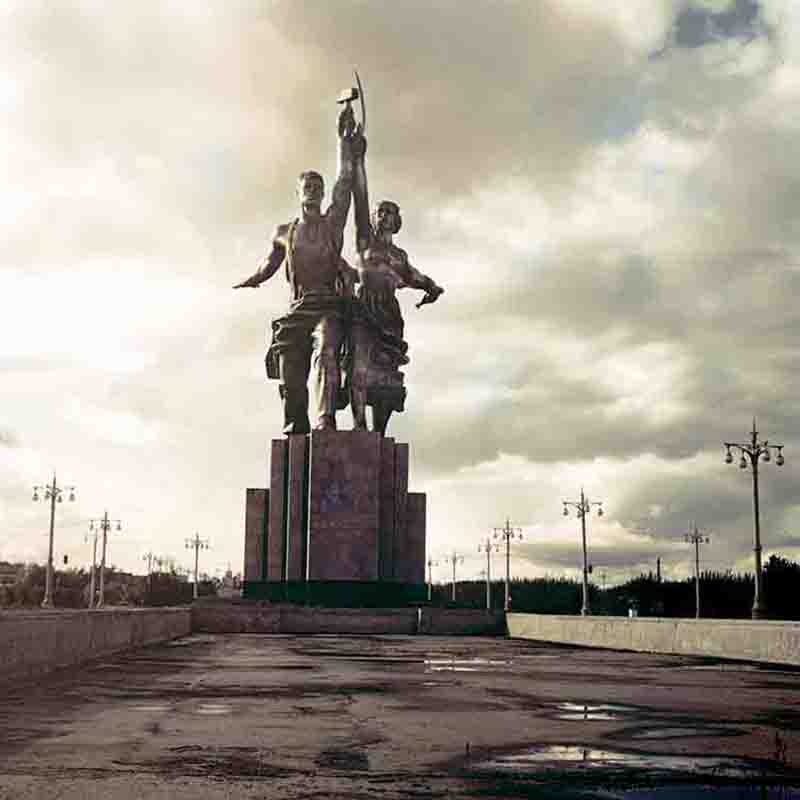
The iconic sculpture "Worker and Kolkhoz Woman" by Vera Mukhina, symbolizing Soviet artistic achievement.
About This Article
This article examines the Bolshoi Theatre of Moscow, tracing its 250-year history from Catherine the Great's 1776 founding through its Soviet-era transformation to the 2011 restoration. Part of the Soviet Union Blog on soviet-union.com
Last Updated: February 12, 2026 | Reading Time: 15 minutes